
Hire Angular developers for enterprise apps that will outlive their original authors

Most of the work is code someone else wrote. When you hire Angular developers from us, you see matched candidates within 7 days of your request.

Abstract 3D illustration of a white scaffold of columns and beams with one block slotted into a bay, in orangeAbstract 3D illustration of a white scaffold of columns and beams with one block slotted into a bay, in orange

TECHNOLOGIES

Tools our Angular developers work with

TypeScript

RxJS

NgRx

Signals

Standalone components

PrimeNG

Angular Material

Angular CLI

Jasmine

Cypress

WHAT THEY TAKE ON

What do our Angular engineers take on?

You get Angular engineers matched to your stack, level and working hours. Before anyone reaches your shortlist, we test their Angular and JavaScript at the seniority they claim, check their English and how they work in a team, and go through their job history.

If you have a tech lead and a backlog, augmenting your Angular team puts engineers in your sprints and your tools. If priorities keep moving and you want us to run the team day to day, a managed Angular team fits better.

Enterprise front ends

Enterprise Angular work tends to live in portals and internal tools, with long forms and role-based screens built on Angular Material or PrimeNG.

When the work spans the server too, full-stack engineers who work with Angular take both ends.

State and reactive data

Signals cover most local state now. A shared NgRx store earns its boilerplate when many screens edit the same data and someone needs to replay how it changed.

RxJS still carries the async work, from search-as-you-type to websockets. Between the two sits NgRx SignalStore, and our engineers choose the lightest option that will hold.

Upgrades and take-overs

Our engineers take on bringing an app up to current Angular, and taking over code another team wrote. Moving off AngularJS is a rewrite in disguise, so it is worth scoping as one.

Each one starts with analysis that sorts what moves with light changes from the modules where an upgrade isn't enough.

Unit and end-to-end tests

Jasmine unit tests and Cypress end-to-end runs are what make the next upgrade cheap. Without them, every ng update is a guess.

TypeScript in strict mode does part of the same job, by failing the build before a user finds the broken screen.

Planning the next year of your Angular app?

Tell us what the app does, who maintains it today and what has to change next, and we will match engineers to that.

ANGULAR IN PRODUCTION

Where Angular carried the front end

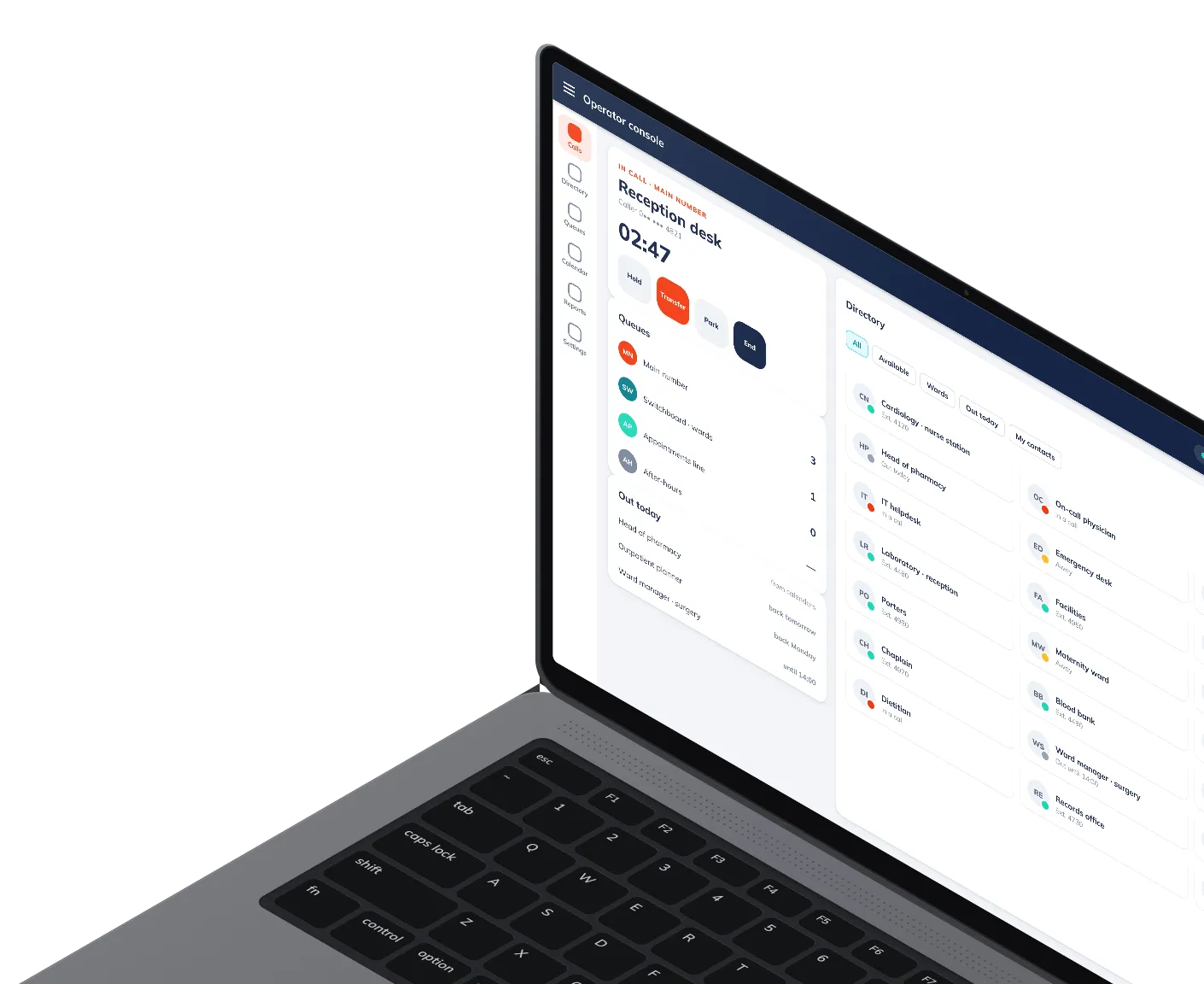
On a live call center console, operators kept working while we moved it from AngularJS to Angular, screen by screen. That is the bar for any AngularJS move. The people using the app notice it only when it gets faster.

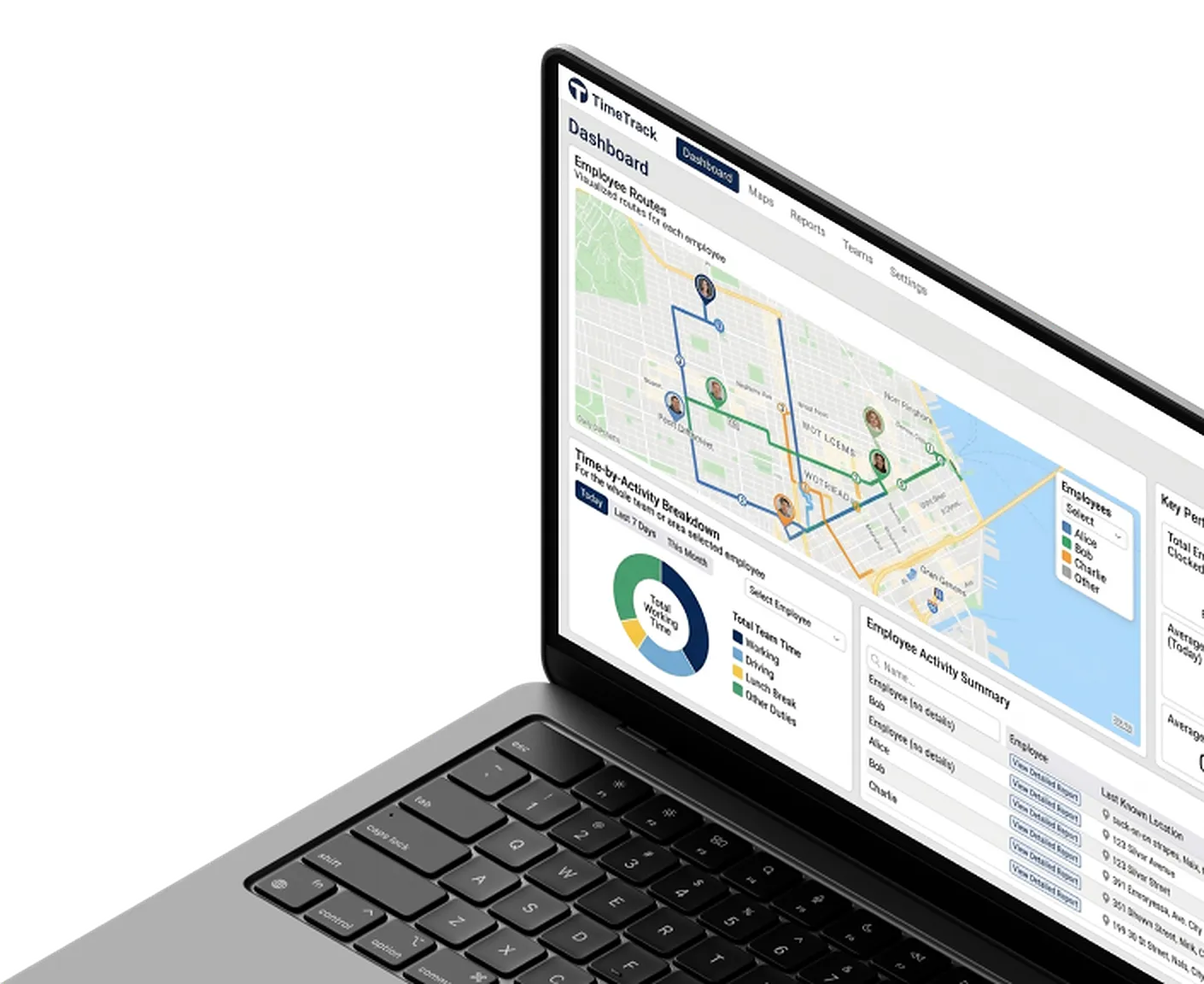
Our team also took part in building a transportation management system with an Angular front end, and we built the Angular web part of a time-tracking suite. If you need the whole system, back end included, that is our enterprise software development practice.

BEFORE YOU DECIDE

Is this the right fit for your Angular app?

Abstract 3D illustration of an older white block structure and a new one side by side, joined by an orange bridgeAbstract 3D illustration of an older white block structure and a new one side by side, joined by an orange bridge

What 'dedicated' means with us

People ask for dedicated Angular developers and mean one of two things. Our managed team works full-time for you only, which we guarantee. Augmented engineers join your sprints under your lead.

When project delivery fits better

No tech lead to direct engineers? Then hiring them is the wrong buy. Hand us the scope and the release, and keep the product decisions and milestone sign-off.

Your hours, stated exactly

US teams get 4+ hours of daily overlap with the West Coast and more with the East. UK and EU teams get the full CET/CEST day. We pick the location and shift the schedule to match.

Rewriting while the product stays live

On a product information system we weighed several options before recommending an Angular rewrite of the Flex front end. Old and new ran side by side, so the client had no downtime.

PROCESS

From requirements to onboarding

These are usual times. Our one commitment is presenting matched candidates within 7 days of your request. It can happen sooner, but that isn't guaranteed. If part of your product runs on another stack, we also staff engineers for other stacks.

  1. STEP 1

    Requirements

    We agree the Angular version you run, the libraries in it, the seniority you need and the hours the engineer should share with your team.

    Usually 1 day

  2. STEP 2

    Matching

    From candidates who have passed our checks, we pick those who fit your stack, level and hours, and send you their CVs.

    Usually 1–2 days

  3. STEP 3

    Your interview

    With staff augmentation you interview each candidate and decide, and you can turn anyone down on the CV or the interview. Our own technical interview can be part of your selection, in full view.

    Usually 1 day

  4. STEP 4

    Onboarding

    Contracts are signed, security steps are done, and access to your repositories and tools is set up.

    Usually 1–2 days

HOW WE WORK

Engagement models and terms

Staff augmentation

Our engineers join your team and work in your process and tools. You manage them; we source, vet and contract them.

Hourly rate per engineer by role and seniority, invoiced monthly.

  • If an engineer isn't the right fit, we replace them within 14 days at no extra cost.
  • Knowledge transfer to the replacement engineer isn't billed.
  • There is no free trial period.
  • 30 days' notice to take an engineer off or end the engagement, with no minimum term beyond it.
  • Out-of-hours on-call only if agreed with you; we set its hours and billing together.
  • After two years, moving an engineer onto your own staff is something we can discuss.

Managed team

An agreed team capacity that we manage. We coordinate delivery and handle the team's make-up. You set the priorities and own the backlog.

Per-engineer rates, or a fixed monthly fee for the agreed capacity.

  • We handle replacements ourselves, and the team keeps its agreed capacity and pace.
  • Engineers work full-time for your team only.

Whichever model you choose

  • We reply to an inquiry from the contact form within 24 hours.
  • We sign an NDA before work starts, and IP passes to you on payment.

ACROSS OUR ENGINEERS

7 years

Average experience, company-wide

80%+

Senior-level or above, company-wide

50+

Projects delivered by our team

Ask us how we'd staff your Angular app

Most of an enterprise Angular app's life is maintenance by people who never met its authors. I'd hire the engineer those people will thank.

Dzmitry Kuchynski, Chief Operating Officer, Octalance

FAQ

Before you sign: questions about Angular hiring

How soon can an Angular engineer start?

You get matched candidates within 7 days of your request. That is when you meet people, not their first working day. After you pick someone, onboarding usually takes 1–2 days. A managed team's start depends on its size, up to a month, and it can begin with a few developers to keep momentum.

How is an Angular engineer billed?

What moves the total is how many engineers you use, under either model, so scaling the team up or down is the lever you control. Staff augmentation bills by the hour; a managed team can also run as a fixed monthly fee. Both are set out under Engagement models and terms.

What if an engineer isn't the right fit?

Tell us as soon as it shows, even in the first week, and say what isn't working. That tells us who to look for next. Under staff augmentation the replacement comes within 14 days. On a managed team, raise it with your delivery manager, and the replacement is ours to arrange.

Who owns the code, and what happens when we stop?

The code usually lives in your repositories, sometimes in ours, and the IP is yours on payment. When you stop, transition-out is routine for us.

Can you take over our Angular codebase, or move us off AngularJS?

Yes, both are work our engineers take on, and both start with reading your codebase. Then we tell you which parts can be upgraded and which have to be rebuilt.

Do your engineers use AI tools on our code?

Only the tools and accounts you approve, and nothing goes to a tool you haven't allowed. Code an AI tool wrote is reviewed by another AI agent and then by a human engineer before it is merged.