



Snowflake consulting services to build, migrate and tune your cloud data warehouse

Snowflake consulting works best when the people who advise also write the models. Our team includes certified Snowflake engineers.

Abstract 3D illustration of stacked white blocks forming a warehouse, fed by pipelines from three data sourcesAbstract 3D illustration of stacked white blocks forming a warehouse, fed by pipelines from three data sources

WHAT IT IS

What are Snowflake consulting services?

Snowflake consulting usually comes down to one of four jobs, and the most pressing is often a credit bill that has outgrown the workload. The other three are starting a new warehouse, moving off a legacy warehouse or Hadoop, and building ingestion and dbt pipelines that hold up when the data volumes grow.

Like the rest of our data engineering work, a Snowflake project starts with your sources, your reporting needs and the architecture you already run, before anyone picks a tool. Choosing Snowflake settles where the data lives. The data model and the loading rules are still open, and we design both when we build the warehouse.

For analytics on top of Snowflake, we work in Power BI and Tableau and point the reports at modeled tables, so nobody rebuilds the numbers from a raw export.

Abstract 3D illustration of data blocks moving from source systems into a central warehouse, with charts above itAbstract 3D illustration of data blocks moving from source systems into a central warehouse, with charts above it

SERVICES

Where we come in on a Snowflake warehouse

A new warehouse on Snowflake

We design the warehouse around the reports you need and the sources that feed them, then build it. Loading and reporting run on separate virtual warehouses, so the morning load doesn't slow the dashboards people open at the same hour. Dev and test get zero-copy clones of production tables, which take no extra storage until someone changes the data.

Migration from a legacy warehouse or Hadoop

We move data and workloads to Snowflake from an older warehouse, such as Teradata, Oracle or SQL Server, or from a Hadoop cluster. It starts with an assessment and a source-to-target mapping. Old and new then run side by side, and row counts and checksums have to reconcile before anyone cuts over. Until they do, the old system stays the one people trust.

Pipelines with dbt and orchestration

Ingestion from your source systems with a tool such as Fivetran, transformation and modeling in dbt, and Airflow to run it on schedule. We build validation and monitoring in with the first pipeline. A model that runs on time with wrong numbers does more harm than one that fails loudly.

Cost and performance tuning, with governance

Snowflake bills compute in credits, by warehouse size and for as long as a warehouse runs, so sizing, auto-suspend and query design all show up on the invoice. Each size up doubles the credit rate, so a larger warehouse that finishes in half the time costs about the same. A query that scans whole tables or spills to storage burns credits that auto-suspend never saves. We find where the credits go, tune those queries and set up governance.

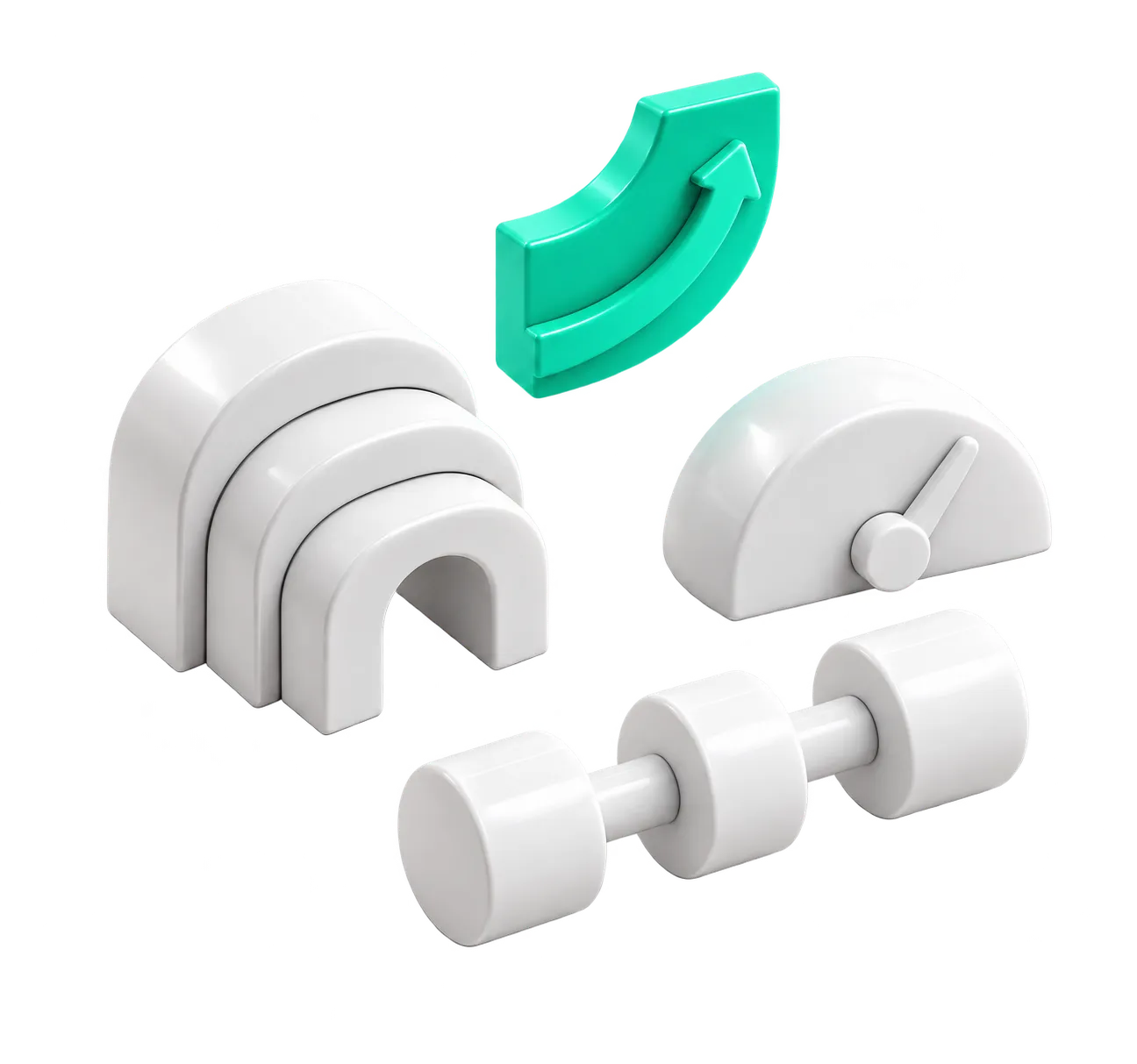
Abstract 3D illustration of four white blocks: a new warehouse, a migration arrow, a pipeline and a gauge for costAbstract 3D illustration of four white blocks: a new warehouse, a migration arrow, a pipeline and a gauge for cost

HOW TO CHOOSE

How do you choose a Snowflake consultant?

Abstract 3D illustration of white blocks around a single orange block, a small team at work on one warehouseAbstract 3D illustration of white blocks around a single orange block, a small team at work on one warehouse

Who will do the work

The engineers we'd put on your warehouse are tested on SQL over large tables, data modeling and a pipeline design task. You can also add Snowflake data engineers to your team directly.

How senior they are

Counted across the whole company rather than for Snowflake alone, 80%+ of our engineers are senior-level or above, and they average 7 years of experience.

A second opinion on the platform

We also work with Databricks, BigQuery and Amazon Redshift, so if your workload leans on Spark and machine learning, we tell you when a lakehouse fits better before you commit.

Work close to yours

Ours is warehouse, dbt and migration work on Redshift. The dbt models, pipeline checks and migration method carry over to Snowflake. What changes is the SQL dialect, loading and compute billing.

Snowflake bill growing faster than your data?

Send us a rough picture of your warehouses and heaviest queries, and we'll tell you where we'd look first.

RELATED EXPERIENCE

Warehouse, dbt and migration experience

Education analytics: Fivetran and dbt

For a professional education company with a warehouse on Amazon Redshift, we analyzed the sources, reporting needs and existing architecture before choosing a tool. We picked Fivetran for ingestion and dbt for transformation, and built end-to-end pipelines from Salesforce, Shopify and SAP into Redshift, with data validation and monitoring.

Mobile software developer: a warehouse migration

A global mobile software developer couldn't download a day's data within the day. We moved its ETL from plain Python scripts to Airflow, migrated the existing warehouse by changing the Redshift cluster and moved the heaviest sources to Redshift Spectrum. On Redshift, the client got 98.8% savings in computing resources, 6x faster queries and 12x faster raw data collection.

DAO platform: an external data warehouse

For a Web3 platform that evaluates DAO contributors, repeated calls to third-party APIs were pushing costs up. We built an external data warehouse with Python, Airflow, AWS Athena, dbt, Amazon S3 and AWS Glue Studio, and data updates went from weekly to daily. The client called the total cost of ownership "virtually negligible".

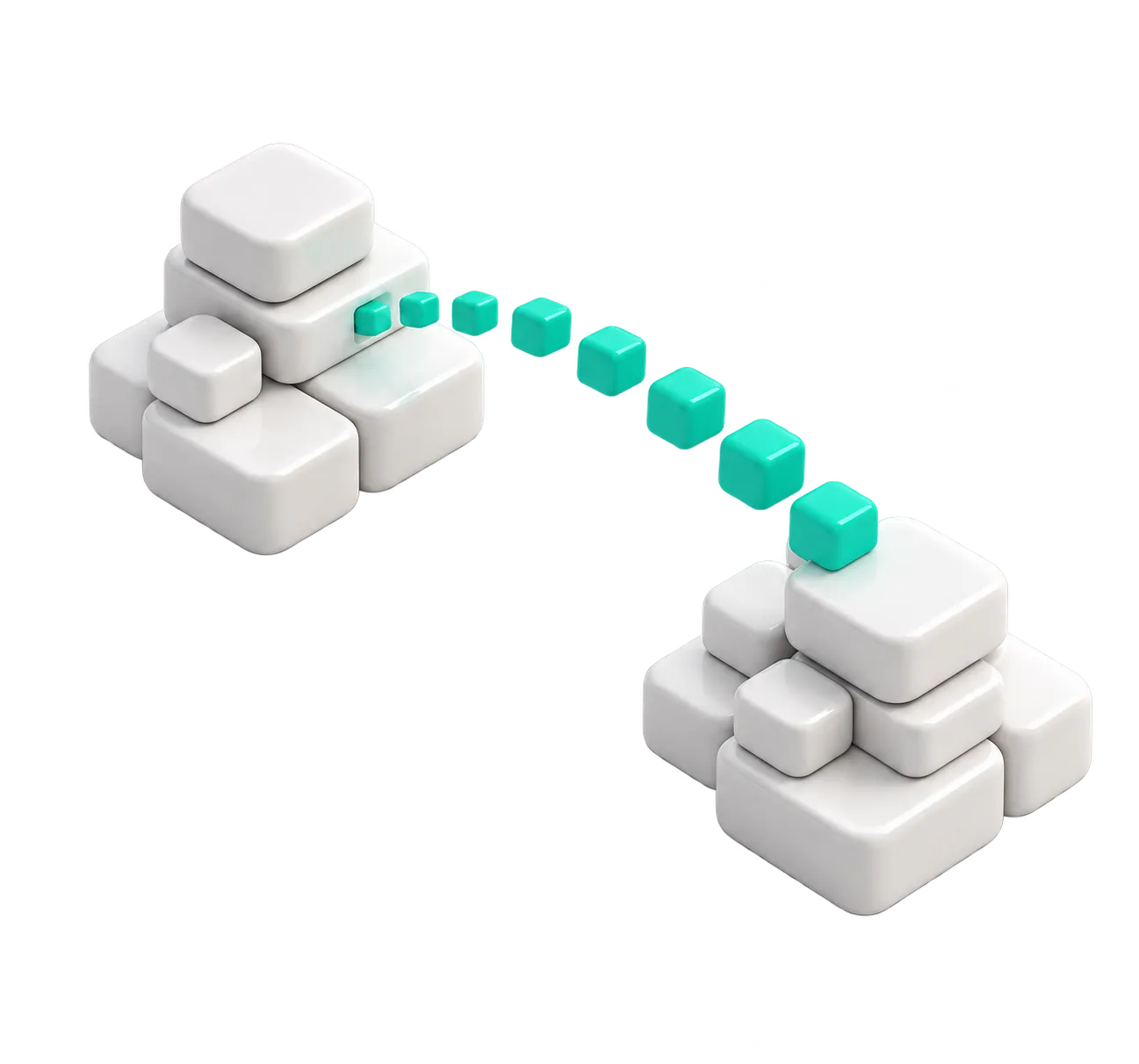
Abstract 3D illustration of a warehouse of white blocks with data moving between two clusters along an orange pathAbstract 3D illustration of a warehouse of white blocks with data moving between two clusters along an orange path

PROCESS

How a Snowflake engagement runs

Every project opens with a discovery phase, whether you need a new warehouse or are moving an existing warehouse to Snowflake. After that the team works remotely in sprints, with a demo after each one, tasks in Jira and the day-to-day talk in Slack.

  1. STEP 1

    Discovery phase

    We review your sources, data volumes, reporting needs and current architecture, and hand over a target design, an estimate and a delivery plan.

  2. STEP 2

    Design the warehouse and the move

    We agree the data model and, for a migration, the source-to-target mapping and the order in which sources move.

  3. STEP 3

    Build in sprints

    Pipelines, dbt models and the warehouse itself grow sprint by sprint, and the sources move in the agreed order.

  4. STEP 4

    Cutover and handover

    The old warehouse stays as the way back until the numbers reconcile and you've cut over. Then your team takes over the code, which usually lives in your repositories already.

TECHNOLOGIES

The stack around a Snowflake warehouse

Snowflake

dbt

Airflow

Fivetran

Kafka

Python

Apache Spark

PySpark

Power BI

Tableau

AWS

Azure

Google Cloud

HOW WE WORK

Engagement models and terms

Project delivery

We deliver an agreed scope end to end: plan, team, milestones, QA and release. You make the product decisions and accept each milestone.

Fixed price per milestone after discovery, or time and materials against an estimate.

  • Scope changes go through change requests.
  • On fixed-price projects, a warranty period agreed in the contract, usually 30–60 days.

Staff augmentation

Our engineers join your team and work in your process and tools. You manage them; we source, vet and contract them.

Hourly rate per engineer by role and seniority, invoiced monthly.

  • If an engineer isn't the right fit, we replace them within 14 days at no extra cost.
  • Knowledge transfer to the replacement engineer isn't billed.
  • There is no free trial period.
  • 30 days' notice to take an engineer off or end the engagement, with no minimum term beyond it.
  • Out-of-hours on-call only if agreed with you; we set its hours and billing together.
  • After two years, moving an engineer onto your own staff is something we can discuss.

Discovery phase

A short phase before a build: requirements and backlog, architecture, an estimate and a delivery plan.

Fixed price, usually 2–4 weeks.

  • The outputs stay with you whether or not the build continues with us.

Whichever model you choose

  • We reply to an inquiry from the contact form within 24 hours.
  • We sign an NDA before work starts, and IP passes to you on payment.

Plan the day the old warehouse switches off

"A migration is finished the day you switch the old warehouse off. Until then, you pay for two and keep checking one against the other."

Dzmitry Kuchynski, Chief Operating Officer, Octalance

FAQ

What data leads ask us before a Snowflake project

How do you price Snowflake work?

Rates are agreed per client, so none is published. On a project, the size of the work and the time it takes move the cost; with engineers who join your team, it is how many you use. A discovery phase sizes the build. The terms for each model are in the Engagement models and terms section.

Can we hire a Snowflake engineer instead of starting a project?

Yes, through staff augmentation. We present matched candidates within 7 days of your request, and you interview them before anyone starts and can turn any of them down. If nobody on your team has run Snowflake before, ask for a lead-level engineer to lead the technical side while your tech lead keeps setting the priorities.

Are you a Snowflake partner?

No. Octalance holds no Snowflake partner status. Our team includes certified Snowflake engineers. There is no published Snowflake case yet, so the comparable work we can show is the warehouse, dbt and migration projects on Amazon Redshift and AWS on this page. A partner tier describes a firm's standing with Snowflake and tells you little about who would sit on your account, so that is the question to put to any firm. If your procurement requires a tier, tell us early.

How long does a Snowflake migration take?

It depends on how many sources move, how much data they hold, how many pipelines need rebuilding and how deep the validation has to go. We prefer to migrate in waves, though your requirements decide, and each wave gets its own validation and cutover. So we give no figure before discovery, which is where the migration gets sized.

Can you bring our Snowflake bill down?

We start with the warehouses and queries that use the most credits. Then we check sizing, auto-suspend settings and whether loading and reporting share one warehouse, and only after that the slow queries. A very short auto-suspend isn't free either: a suspended warehouse loses its cache and bills a minimum minute each time it resumes, so a dashboard that queries every few minutes can end up slower and no cheaper. What it saves depends on your workload, so there is no figure before we have looked. If the bill is all you want looked at, we start with a paid discovery phase scoped to your Snowflake account, and you decide afterwards whether we fix what it finds. To look, we need your usage data, through a named account you issue.

What access do you need to our systems, and where does our data sit?

Our engineers work through named accounts you issue in your Snowflake account, your cloud account and the source systems, each limited to what the role needs and removed when the engineer leaves. Where we handle your data, we sign a DPA. Systems we control are hosted in the EU and we work under GDPR as an EU company, while code and data in your own systems sit wherever you keep them.

How much working-day overlap will we have?

For a US team we can arrange 4+ hours of daily overlap with the West Coast, and more with the East Coast. We do it by choosing where the engineers work and shifting their schedule to your hours. CET/CEST business hours are the default, so UK and EU teams get the full working day.