

Hire .NET developers who own services from API to SQL Server

Need to hire .NET developers for your .NET product, or to work beside your Java team? We present matched candidates within 7 days.

Abstract 3D illustration of interlocking white blocks forming a cube, one block pulled halfway out in orangeAbstract 3D illustration of interlocking white blocks forming a cube, one block pulled halfway out in orange

TECHNOLOGIES

Tools our .NET developers work with

Modern .NET

C#

ASP.NET Core

Entity Framework Core

Blazor

SQL Server

Azure SQL Database

Azure App Service

Azure Functions

CASE STUDY

Our C# service, beside Java and PeopleSoft

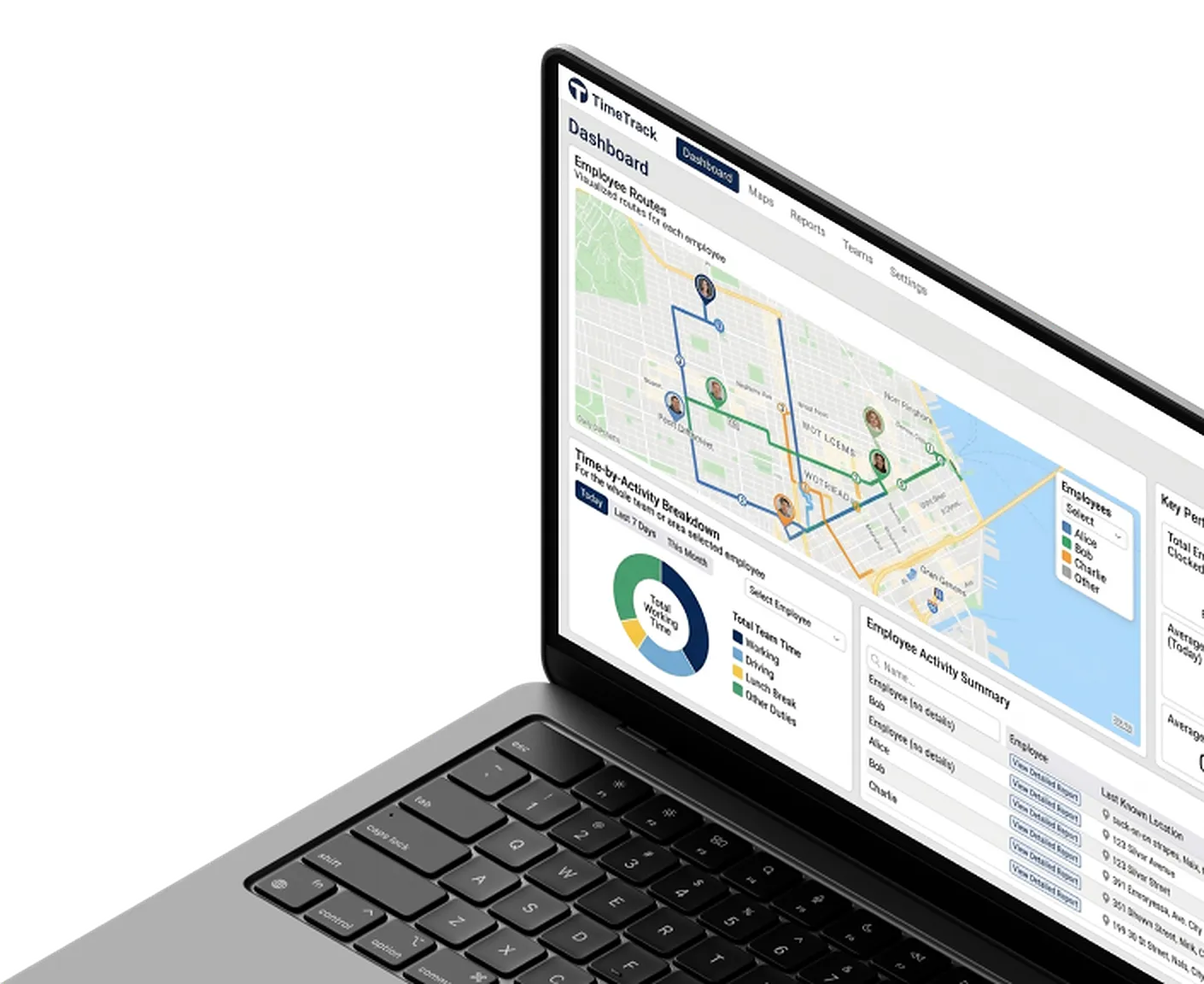
We built a time-tracking suite around PeopleSoft for a global managed staffing and services company. Its .NET part is a supporting service in C# on MS SQL Server, with its own database, behind the supervisors' reports and location tracking.

A Java and Spring service is the apps' API and writes each timesheet into PeopleSoft. The C# service passes the finished hours on to PeopleSoft too. With two stacks side by side, the work is keeping the contract between them honest.

THE WORK

What would a .NET engineer own in your stack?

A .NET engineer from us takes one defined piece of your system and owns it: an ASP.NET Core API, the SQL Server data layer under it, a service on Azure, or older code on its way to modern .NET. They work in your repository and your process, under your tech lead.

With a tech lead of your own, you get .NET engineers who join your team and take tickets from your board. With no one to run them day to day, our bespoke software development practice takes the whole build.

APIs and the data underneath

ASP.NET Core services and REST APIs, with Entity Framework Core over SQL Server, and Blazor screens where your product already uses them.

An ORM saves typing and doesn't choose the indexes your queries need. Reading the SQL that Entity Framework generates is part of the job.

Services running on Azure

App Service, Functions, Service Bus and Azure SQL Database, with managed identities, Key Vault for secrets and Application Insights for monitoring.

Pipelines run in Azure DevOps or GitHub Actions, with tests before merge. Functions suit short, bursty jobs. A worker that runs for hours is usually better off on App Service or Container Apps.

Older code onto modern .NET

We start with analysis. System.Web code, WCF services and Web Forms pages need rework to run on modern .NET, and a NuGet package with no modern build often sets the order.

For a long move, a dedicated .NET team can carry the work module by module while your team keeps the product running.

Keeping modern .NET current

Modern .NET ships a new major version every November, and each one has a support end date. Our engineers move your services up a version with package updates and a full test run.

Wait out two or three releases and a routine upgrade turns into a project of its own, with breaking changes stacked on top of each other.

Tell us which service needs an owner

Name the service, the stack around it and who reviews the code, and we will propose the .NET roles that fit.

VETTING

What does a .NET candidate face before your call?

You want to know how someone will handle a service they didn't write, and a CV can't show it. Before anyone reaches your shortlist, our checks test what they claim, at the seniority they claim. A background check is added only at your request.

Technical skills assessment

C# and the .NET frameworks on the CV. A senior who lists ASP.NET Core gets senior ASP.NET Core questions.

Soft-skills evaluation

How they communicate in English, take feedback and work in a team. On a mixed stack, a lot of the work is talking to the people on the other side of an API.

Job-history analysis

Our own check of the CV and the career behind it.

Live coding interview

For some roles, the candidate writes code live and talks through it, so we hear how they reason and why they chose what they chose.

WHY OCTALANCE

What stands behind each engineer

Abstract 3D illustration of white blocks stacked in layers like a service over its database, one layer in orangeAbstract 3D illustration of white blocks stacked in layers like a service over its database, one layer in orange

80%+ senior, company-wide

The share counts engineers at senior level or above, across all our teams. In a .NET codebase someone else started, seniority shows in what they leave alone as much as in what they change.

Certified Azure engineers

Our team includes certified Azure engineers. That matters when your .NET service lives on App Service or Functions and someone has to own the identity and cost side too.

AI tools, reviewed twice

AI tools such as GitHub Copilot, Cursor or Claude Code are part of the work, within your rules. AI-written code is reviewed by another AI agent, then by a human engineer, before merge.

Independent of Microsoft

Octalance is not a Microsoft partner and works as an independent team. We recommend tools on what fits your system, and when a cheaper Azure tier or an open-source library does the job, we say so.

PROCESS

What happens after you send the request?

Each step shows its usual time. What we commit to is presenting matched candidates within 7 days of your request. If the .NET role is one of several you need, the full list of technologies shows what else we staff.

  1. STEP 1

    Requirements discovery

    We talk through the service, the stack around it, the seniority you need and who the engineer will report to.

    1 day

  2. STEP 2

    Candidate matching

    We match vetted candidates to the brief and send you their profiles.

    1–2 days

  3. STEP 3

    Your interview

    You interview the people you pick, with your own questions and your own engineers on the call.

    1 day

  4. STEP 4

    Contracts, security and access

    Contracts are signed, security steps are done and access to your systems is set up.

    1–2 days

HOW WE WORK

Engagement models and terms

Staff augmentation

Our engineers join your team and work in your process and tools. You manage them; we source, vet and contract them.

Hourly rate per engineer by role and seniority, invoiced monthly.

  • If an engineer isn't the right fit, we replace them within 14 days at no extra cost.
  • Knowledge transfer to the replacement engineer isn't billed.
  • There is no free trial period.
  • 30 days' notice to take an engineer off or end the engagement, with no minimum term beyond it.
  • Out-of-hours on-call only if agreed with you; we set its hours and billing together.
  • After two years, moving an engineer onto your own staff is something we can discuss.

Managed team

An agreed team capacity that we manage. We coordinate delivery and handle the team's make-up. You set the priorities and own the backlog.

Per-engineer rates, or a fixed monthly fee for the agreed capacity.

  • We handle replacements ourselves, and the team keeps its agreed capacity and pace.
  • Engineers work full-time for your team only.

Whichever model you choose

  • We reply to an inquiry from the contact form within 24 hours.
  • We sign an NDA before work starts, and IP passes to you on payment.

Bring us your .NET team's next hire

"80%+ of our engineers are senior. Don't take my word for it: interview them, and turn down anyone who doesn't convince you."

Dzmitry Kuchynski, Chief Operating Officer, Octalance

FAQ

What buyers ask us before they sign

How do you price .NET engineers?

It depends on who runs the work. With staff augmentation you pay an hourly rate per engineer, set by role and seniority and invoiced monthly. A managed team is billed at per-engineer rates or a fixed monthly fee for the agreed capacity. We agree the rate with you once we know the roles, and the Engagement models and terms section on this page covers the rest.

What if an engineer isn't the right fit?

On staff augmentation we replace them within 14 days at no extra cost. On a managed team, replacements are ours to handle, and the team keeps the capacity you agreed.

How soon will we see candidates?

We present matched candidates within 7 days of your request. It can happen sooner, but that isn't guaranteed. The 7 days cover sourcing only: your interviews and onboarding come after the shortlist, so plan the start date from those.

Can we interview the engineers before they start?

Yes. On staff augmentation nobody starts until you have interviewed them, and you can turn a candidate down on the CV or after the interview. Our own technical interview and live coding can also run as part of your selection, with you watching. On a managed team, you interview the key roles.

Can you take over a .NET system someone else built?

Yes, in two ways. If your own team still runs it, our engineers join them and learn the system from the people who know it. If no team is left, that is support and maintenance: we start with an audit of the code, its dependencies and its release setup, and you get a written findings list with what to fix first. A short handover phase follows, covering access, environments, runbooks and the previous team's walkthrough where one is available. When the job is a move to modern .NET, the cutover has a way back if the switch fails, and it goes part by part where the design allows and you agree.

Will nearshore .NET developers share our working hours?

Our engineers work across Eastern Europe, and we match your hours by choosing the location and shifting the schedule. A US client can have 4+ hours of daily overlap with the West Coast, and more with the East Coast. UK and EU clients get the full CET/CEST working day. If you have a location requirement, tell us and we will staff to it. If a location we offer doesn't suit you, we will staff from another one.