
AWS consulting as scoped projects or certified engineers who join your team

AWS consulting from the team behind the data platforms and applications in our AWS cases. None of them is a migration onto AWS.

Abstract 3D illustration of white blocks flowing into an orange-topped stack, like data loading into a warehouseAbstract 3D illustration of white blocks flowing into an orange-topped stack, like data loading into a warehouse

WHAT YOU GET

What does an AWS consultant do?

Advice and hands-on work, in your own AWS account

In an inherited AWS account, the bill and IAM policies are the first things worth reading, because they show what runs and who holds the keys. The work starts there and ends in a target architecture and delivery plan, or a running system. It comes as a scoped project, or as certified AWS engineers in your account.

We also look at your release process and your team's skills. When the plan includes moving existing systems onto AWS, the same team scopes the move.

Abstract 3D illustration of white blocks arranged as a cloud architecture diagram, one block highlighted in orangeAbstract 3D illustration of white blocks arranged as a cloud architecture diagram, one block highlighted in orange

AWS SERVICES

What AWS consulting covers

You rarely need all six areas at once, and the first review of your setup shows which one to start with. If the choice between AWS, Azure and Google Cloud is still open, or part of your estate already runs on Azure, our cloud consulting across providers helps you decide.

Infrastructure is written in CloudFormation or Terraform, whichever your team already reads. We build CI/CD pipelines in CodePipeline and CodeBuild, or in GitHub Actions and GitLab CI if those are already yours.

Data and analytics on AWS

Warehouses and pipelines on Redshift, Redshift Spectrum, Athena, S3, AWS Glue Studio and AWS Batch, with dbt and Airflow around them.

On Athena, columnar files and partitions by date or tenant come first, because they decide how much data each query reads.

Security and access design

Identity design in IAM, encryption keys in KMS and secrets in Secrets Manager, set up before the first workload moves in.

VPC layout with private subnets for anything that has no reason to face the internet.

Cost control and FinOps

We trace where the AWS bill goes with Cost Explorer and cost-allocation tags, then set AWS Budgets with alerts per team or service.

Steady load is a Savings Plans question, interruptible batch work is a Spot question, and the rest usually stays on demand.

Cloud-native engineering

Serverless and container backends on Lambda, ECS or EKS, with API Gateway, SQS, SNS, EventBridge and Step Functions.

Start with ECS, which has less to operate than EKS, and pick Lambda instead for spiky, event-driven work within its run-time limits, or EKS when your team already runs Kubernetes.

DevOps and delivery on AWS

Build and release pipelines, container images, and staging and production environments defined in code and rebuilt from it.

Amazon CloudWatch metrics and logs show when a release started failing, so you can check it against the change that went out.

Planning a move onto AWS

We assess what runs today, map its dependencies and decide what moves first. We recommend moving in waves, and your requirements decide.

The cutover plan carries a rollback path. A landing zone with AWS Organizations and Control Tower is set up when your requirements call for one.

CASE STUDIES

AWS work we have delivered

Application builds that ran on AWS

We built a patient portal for a Dutch eHealth provider and a fair lending platform for a UK-based fintech startup, both in Java and Angular, and both ran on AWS. Each served its Angular front end from S3 through CloudFront and ran its back end on EC2 behind an Application Load Balancer, with Multi-AZ RDS PostgreSQL encrypted with KMS, S3 for documents and files, Secrets Manager and CloudWatch.

Compliance training uploads that skip the backend

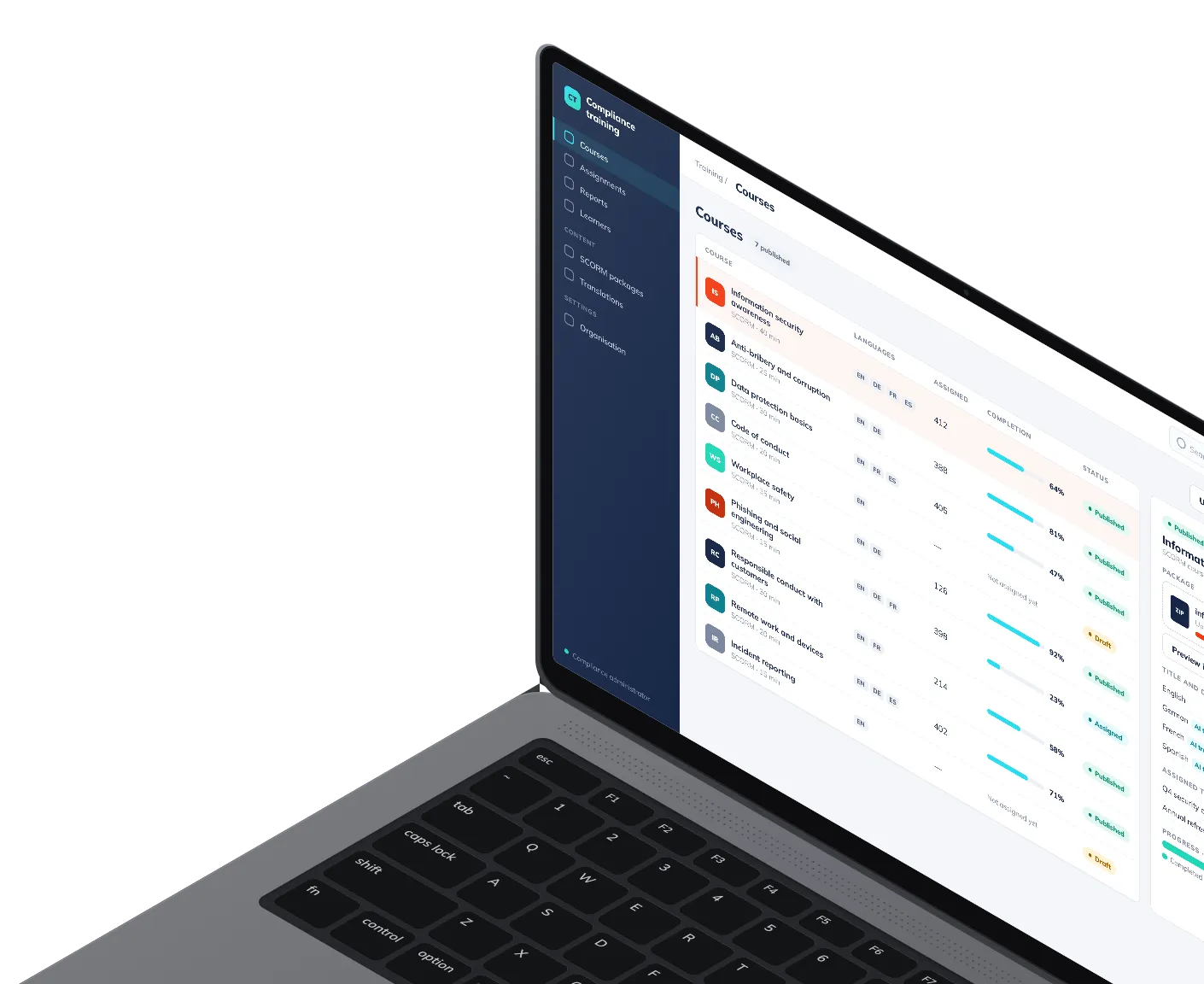
Large course packages for a compliance training module skip the platform's backend, because the browser sends SCORM uploads straight to Amazon S3 through signed URLs. Each URL expires within minutes and allows one file to one location. We built the module in React and Node.js for a governance, risk and compliance software company, and set up its CI/CD pipelines and infrastructure as code.

Mobile software developer: a warehouse that keeps up

Extraction had grown so slow that a day's data couldn't be downloaded within the day. We moved the pipelines from Python scripts to Airflow, changed the Redshift cluster, moved the heaviest data sources to Redshift Spectrum and built a separate AWS Batch and Docker pipeline for a machine learning model's calculations. The case study records 98.8% savings in computing resources, 6x faster queries and 12x faster raw data collection.

Web3 contributor platform: from weekly to daily updates

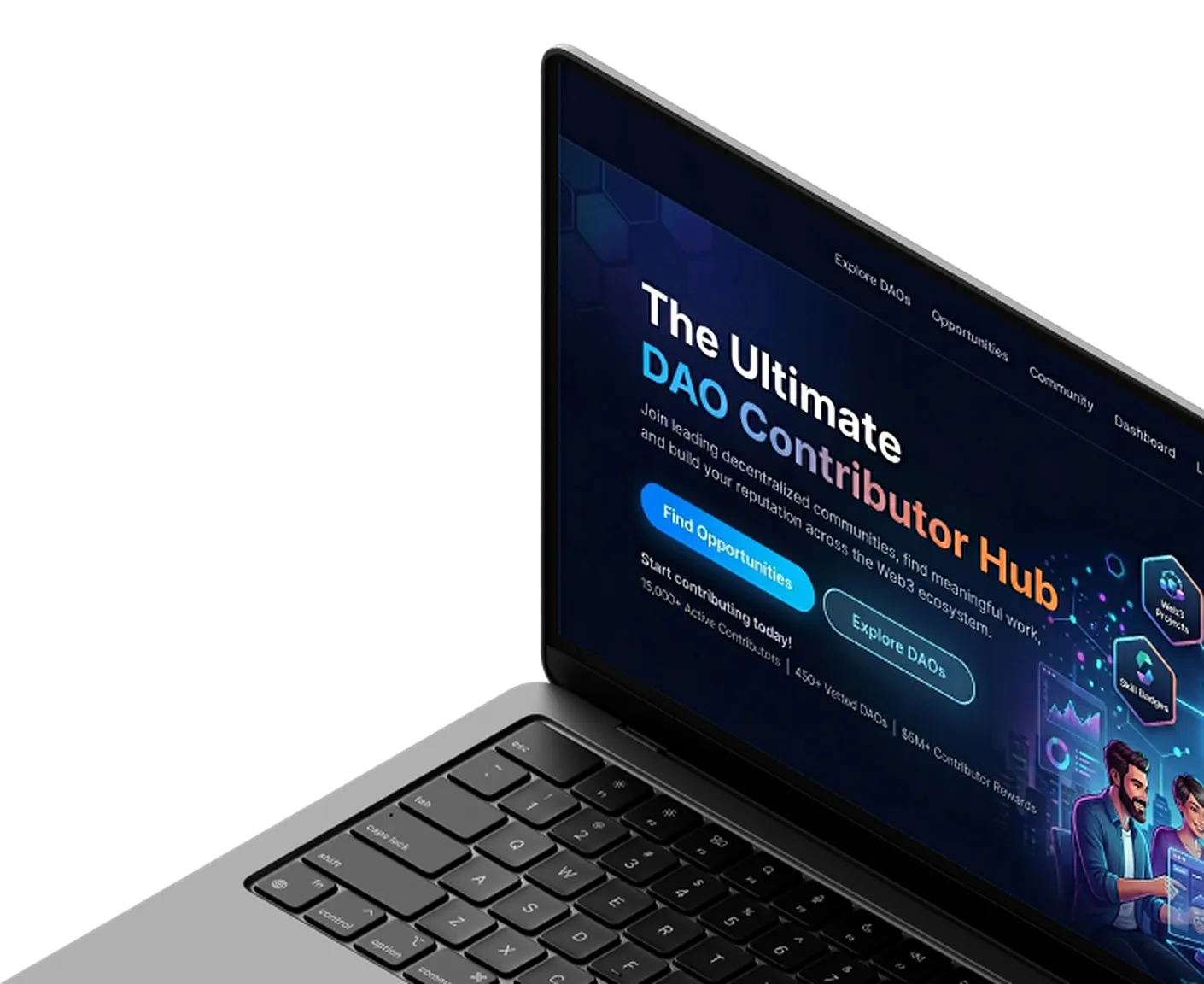
A Web3 platform that evaluates contributors to decentralized autonomous organizations was paying for the same third-party API calls again and again. We built an external data warehouse on Amazon S3, Amazon Athena and AWS Glue Studio, with Python, Airflow and dbt, so the platform queries its own copy of the data. Updates went from weekly to daily.

AWS work on the client's own infrastructure

Some of our AWS work ran on the client's own AWS infrastructure, with no DevOps of ours. We restructured a biopharma company's data warehouse on Amazon RDS for PostgreSQL, and built scheduled price collection for a bus travel company on EC2 Spot and S3. More of our cloud and DevOps work sits under client NDAs.

Abstract 3D illustration of white blocks feeding an orange data warehouse cylinder through a pipelineAbstract 3D illustration of white blocks feeding an orange data warehouse cylinder through a pipeline

CASES ON AWS

AWS projects and what our clients got

All six ran on AWS, and on each of them the CI/CD was ours as well as the code, with containers we set up on four. Pick the one closest to what you run, whether an application backend, a data warehouse or a streaming pipeline. The results on the cards are our clients' own.

TECHNOLOGIES

AWS tools our engineers work with

Amazon Redshift

Redshift Spectrum

Amazon Athena

Amazon S3

AWS Glue Studio

AWS Batch

AWS Lambda

Amazon ECS

Amazon EKS

Amazon EC2

Amazon RDS

Amazon DynamoDB

AWS CloudFormation

Terraform

Amazon CloudWatch

Tell us what you run on AWS today

Send a few lines on your AWS accounts, what runs in them and what has to change, and we will suggest where to start.

PEOPLE AND ACCESS

Who does the AWS work, and with what access?

Certified AWS engineers

Certified AWS engineers do the work. A scoped project fits when you can describe the outcome well enough to plan it. If you already run delivery with a tech lead and need more hands, add AWS engineers to your team, working under your lead. We present matched candidates within 7 days of your request.

Access through accounts you issue

Our engineers sign in through individual named accounts that you issue in your own IAM or SSO, each limited to the access its role needs. When an engineer leaves the engagement, all of their access is removed. Where we handle your data, we sign a data processing agreement with you.

Infrastructure changes as reviewed code

Every change to your AWS infrastructure is a pull request. It is reviewed together with its plan, the preview of what will change, before anyone applies it, and it goes through your own change process.

Guardrails across your accounts

In an inherited AWS estate, turn logging on before adding limits. Start with an organization trail in CloudTrail so every later change has a record, and let GuardDuty raise findings from account activity. Add service control policies in AWS Organizations once the logs show what each account actually does, because a policy written blind tends to break a pipeline that works. Security Hub then gathers the findings in one place.

Abstract 3D illustration of white blocks behind an orange gate, with a single key-shaped block passing throughAbstract 3D illustration of white blocks behind an orange gate, with a single key-shaped block passing through

HOW WE WORK

Engagement models and terms

Project delivery

We deliver an agreed scope end to end: plan, team, milestones, QA and release. You make the product decisions and accept each milestone.

Fixed price per milestone after discovery, or time and materials against an estimate.

  • Scope changes go through change requests.
  • On fixed-price projects, a warranty period agreed in the contract, usually 30–60 days.

Staff augmentation

Our engineers join your team and work in your process and tools. You manage them; we source, vet and contract them.

Hourly rate per engineer by role and seniority, invoiced monthly.

  • If an engineer isn't the right fit, we replace them within 14 days at no extra cost.
  • Knowledge transfer to the replacement engineer isn't billed.
  • There is no free trial period.
  • 30 days' notice to take an engineer off or end the engagement, with no minimum term beyond it.
  • Out-of-hours on-call only if agreed with you; we set its hours and billing together.
  • After two years, moving an engineer onto your own staff is something we can discuss.

Discovery phase

A short phase before a build: requirements and backlog, architecture, an estimate and a delivery plan.

Fixed price, usually 2–4 weeks.

  • The outputs stay with you whether or not the build continues with us.

Whichever model you choose

  • We reply to an inquiry from the contact form within 24 hours.
  • We sign an NDA before work starts, and IP passes to you on payment.

Settle what to build before you build it

"The AWS choices hardest to undo are made early, like how accounts are split and who has admin. Those belong in a discovery phase."

Dzmitry Kuchynski, Chief Operating Officer, Octalance

FAQ

Questions to settle before an AWS engagement

We already run AWS. Do we need a consultant, or just more engineers?

Ask which question is still open. If it is what to build, or whether your current design will hold up, you need a review and a recommendation. If the plan is settled and you are short of people, you need engineers. You can move between the two, and starting with one doesn't rule out the other.

When is Athena enough, and when do we need Redshift?

Athena runs SQL directly on files in S3 and by default bills by the data each query scans, which suits occasional or exploratory queries over data you already keep there. Redshift is a warehouse for heavy queries that run again and again, such as the ones behind daily dashboards. Redshift Spectrum lets a Redshift cluster query data that stays in S3, so rarely used data can sit there and still join against warehouse tables. Start with Athena while your query patterns are unclear, and move the hot workload to Redshift once they settle.

Can we start with a discovery phase and decide on the build afterwards?

Yes. A discovery phase is sold on its own as well as the first stage of a project. An architect, a business analyst and a delivery manager run it, and you can take the plan it ends with to your own engineers or build it with us.

How is an AWS engagement priced, and who pays the AWS bill?

AWS bills you directly for what runs in your account, because the work happens in an account you own. Our fee depends on scope. The price type for each engagement model is under Engagement models and terms on this page.

Can you run our AWS environment after the project ends?

Yes, as a managed cloud service, or as support and maintenance for what we built. It runs in CET/CEST business hours by default, and for a US client we shift the schedule to match yours. We don't run round-the-clock shifts. Support carries response times agreed with you in the support contract, and is usually a retainer plus hours or tickets by priority. If you would rather keep operations in-house, an engineer placed in your team can take part in your on-call rotation or incident process on terms agreed with you.

Are you an AWS partner?

No. Octalance has no AWS Partner status and works as an independent team. Before an AWS engineer reaches you, they pass a practical task on a real-world AWS setup, judged on the security and the cost of the design.