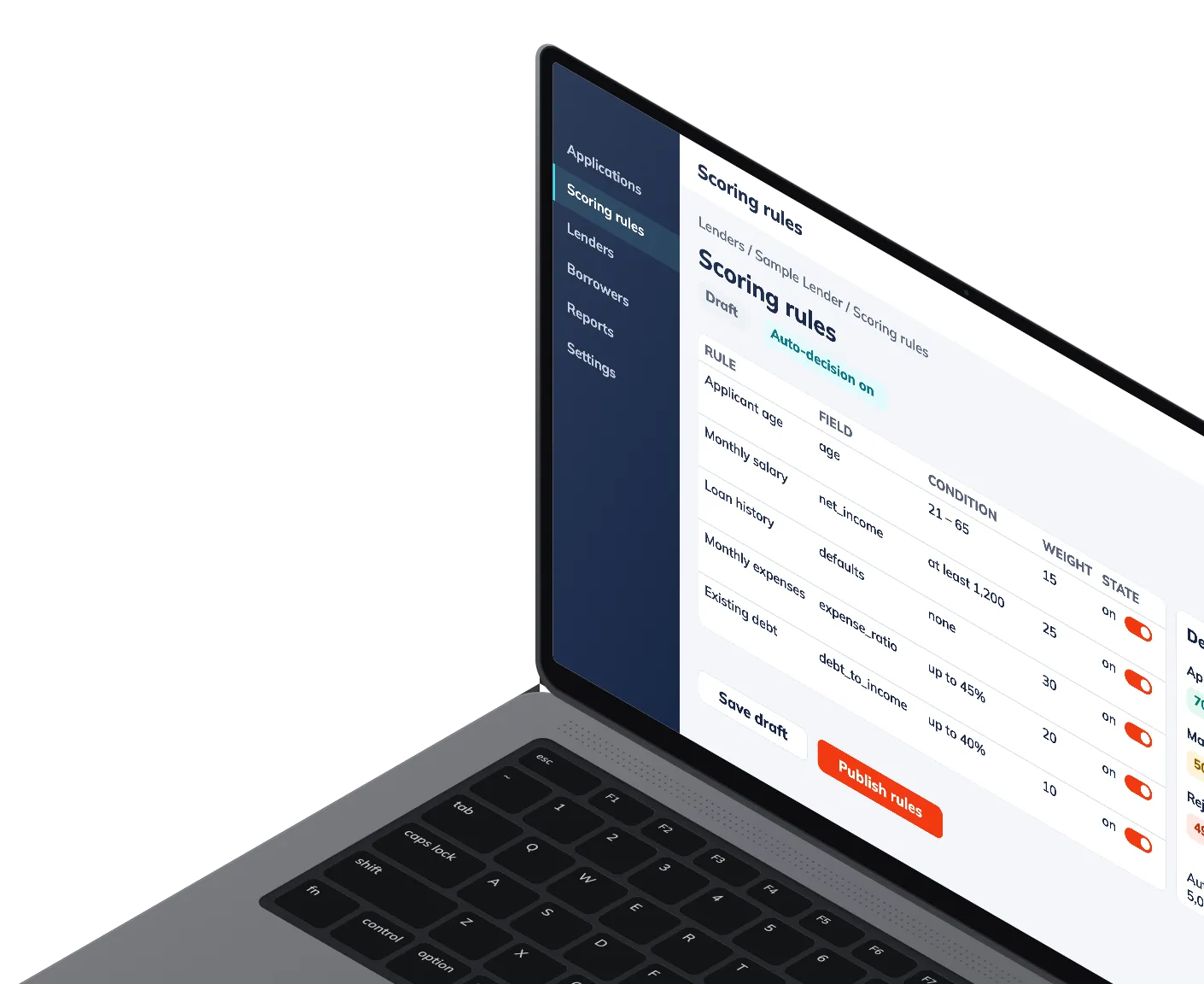





Dedicated development team we run while you own your backlog

A dedicated development team run as a managed team: we coordinate delivery, keep it staffed and handle replacements.

Abstract 3D illustration of a dedicated development team working through a stack of prioritized tasks, top priority in orangeAbstract 3D illustration of a dedicated development team working through a stack of prioritized tasks, top priority in orange

What the label means

Who runs a dedicated team, you or the vendor?

With a dedicated team from Octalance, we run the team for you. The team is a group of engineers whose roles and capacity are agreed up front and who work for a single client. We coordinate the delivery, keep the team staffed and handle replacements. Deciding what gets built, and in what order, stays with you.

The label hides the question worth asking any vendor first. Some vendors use the same words for engineers who join your team and take direction from your tech lead, which we call staff augmentation. This page is the other setup, the managed team. Whenever a vendor offers you a dedicated software development team, ask who manages the engineers day to day and who replaces one who leaves.

Abstract 3D illustration of prioritized tasks and a fitted cluster of blocks joined by a coordinating piece: a managed teamAbstract 3D illustration of prioritized tasks and a fitted cluster of blocks joined by a coordinating piece: a managed team

How it works

Who runs what day to day

You rank the backlog

The backlog is yours. You add work, cut it and change the order whenever your plans change.

Sprints start from the top

Work for each sprint comes off the top of your backlog. Whatever you rank first gets built first.

A demo after every sprint

You see working software at the end of each sprint and can reorder the backlog before the next one starts.

Slack for questions, Jira for the work

Day-to-day questions go through Slack. Tasks and their history live in Jira.

A delivery manager as your contact

A delivery manager on our side coordinates the team and is your regular contact. The engineers don't report to you, and nobody on your side has to run their day.

Steering committee meetings

Beyond the sprint demos, we hold steering committee meetings with you on a regular basis. You set the team's direction there, and we report on how delivery is going.

Replacements are ours to handle

If an engineer leaves or isn't the right fit, we handle the replacement. The new engineer starts from the same backlog, the same code and the task history in Jira, so the handover costs the team as little as possible.

Your environment and repositories

The team usually works in your environment, with the code in your repositories.

Abstract 3D illustration of a fitted stack of blocks beside a ranked list of tiles: who runs the team, who owns the backlogAbstract 3D illustration of a fitted stack of blocks beside a ranked list of tiles: who runs the team, who owns the backlog

Engagement models

When does a managed team fit?

A managed team suits you when priorities keep moving, the roles and capacity can be named up front, and someone on your side owns the backlog. That last one matters most. A team with nobody ranking its work ends up guessing. If none of this fits, see other ways of working with us.

When the requirements or architecture aren't settled, a discovery phase before the team starts gives you a backlog worth ranking. Once the product is live and changes slow down, support and maintenance after launch may fit better.

Dedicated team: we manage

Unlike hiring in-house, nobody on your side recruits, schedules or replaces engineers. You direct the work through the backlog, and we run everything around it.

Case studies

Where a dedicated team delivered

For a lending software provider, our dedicated team of 10 moved scoring rules from code into an editable UI, so new partners go live 67% faster. Automating smaller loans in the same product got our client 75% faster application processing.

Our team of 14 moved the front end of a PIM solution serving global retailers off Adobe Flex to Angular with no downtime, then built new modules on it. Our client now launches new products with a 30% shorter production cycle.

Tell us what the team should build first

Send the roles you have in mind and the top of your backlog, and we will propose a team and explain how it would be priced.

Roles

Which roles the team can include

There is no standard line-up. We staff the roles your product needs, in the mix you agree with us. If the product changes, we agree the mix again. If you only need one skill in your own team, start with specialists by technology.

Web and mobile engineers

They build frontends in React.js, Angular and Vue.js, and backends in Java, .NET, Node.js and Python. On mobile, they work in Flutter and React Native.

Project and product managers

Added when the team needs them: project managers for team delivery, and a product manager to work the roadmap and backlog with you.

Business analysis specialists

They map your workflows and turn goals into requirements the team can estimate and build.

Getting started

How does the team get set up?

Four steps take you from a list of roles to a working team. You take part in two of them, agreeing the roles and interviewing the key people. We vet every candidate and staff the team. Across the company, 80%+ of our developers are senior-level or above, with 7 years' average experience.

  1. STEP 1

    Agree the roles and capacity

    You tell us what the product needs next. We agree the roles, their seniority and the team's capacity with you, and price the team on that.

  2. STEP 2

    We vet and propose the team

    Every candidate passes a technical skills assessment, a soft-skills evaluation and an analysis of their job history before we propose them.

  3. STEP 3

    You interview the key roles

    You meet them before they join. We set up the rest of the team and answer for it, so you don't interview every engineer yourself.

  4. STEP 4

    The first developers start

    Depending on the team's size, the start takes up to a month. A few developers can begin first, so work moves while the rest join.

Pricing

What moves the price of a dedicated team?

The price follows how many engineers the team has, which roles they fill and the capacity you agree on. An old or tangled codebase doesn't raise it by itself.

We quote once we know the roles and what the team should build first, and from then on the monthly cost is one you can plan. The delivery manager is included in that price. Rates are agreed per client, which is why you won't find one on this page.

Abstract 3D illustration of role pieces and capacity columns adding up to one monthly slab: how a team's cost is builtAbstract 3D illustration of role pieces and capacity columns adding up to one monthly slab: how a team's cost is built

How we work

Engagement models and terms

Managed team

An agreed team capacity that we manage. We coordinate delivery and handle the team's make-up. You set the priorities and own the backlog.

Per-engineer rates, or a fixed monthly fee for the agreed capacity.

  • We handle replacements ourselves, and the team keeps its agreed capacity and pace.
  • Engineers work full-time for your team only.

Staff augmentation

Our engineers join your team and work in your process and tools. You manage them; we source, vet and contract them.

Hourly rate per engineer by role and seniority, invoiced monthly.

  • If an engineer isn't the right fit, we replace them within 14 days at no extra cost.
  • Knowledge transfer to the replacement engineer isn't billed.
  • There is no free trial period.
  • 30 days' notice to take an engineer off or end the engagement, with no minimum term beyond it.
  • Out-of-hours on-call only if agreed with you; we set its hours and billing together.
  • After two years, moving an engineer onto your own staff is something we can discuss.

Whichever model you choose

  • We reply to an inquiry from the contact form within 24 hours.
  • We sign an NDA before work starts, and IP passes to you on payment.

Start with whose priorities move

"I ask whose priorities move, and how often. If they shift between sprints and you own the backlog, I recommend a managed team."

Dzmitry Kuchynski, Chief Operating Officer, Octalance

FAQ

Questions to settle before the team starts

How soon can the team start?

Up to a month, and the team's size decides where in that range you land. A small team comes together faster than a large one. If the date matters more than the full line-up, we start a few developers first and add the rest as we staff them.

Do we interview every engineer ourselves?

No, only the key roles. On a managed team we set up the team and answer for it, so interviewing everyone would hand you back the part we are there to do. If you want to interview each person before they start, that is how staff augmentation works.

What happens when an engineer leaves or isn't the right fit?

We find the replacement and bring them in, so you don't reopen a search. Keeping the team staffed is part of the managed model, and your delivery manager is the person you talk to while it happens.

What if nobody on our side can own the backlog?

Then a managed team is the wrong fit as things stand. One of our product managers can work the roadmap and backlog with you, though the product decisions stay yours on every model. If you would rather hand over the planning as well, project delivery is the model where our product manager co-owns the roadmap and you accept the milestones.

How many hours will the team overlap with ours in the US?

CET/CEST is our default working day, and we choose where the team works and adjust its working hours to match yours. With the West Coast we can arrange 4+ hours of daily overlap, and more with the East Coast. We don't run shifts, so there is no round-the-clock cover.

Who owns the code, and what happens when we end the engagement?

IP passes to you on payment. The code usually sits in your repositories, sometimes in ours. When the engagement ends, transition-out is a routine part of the work, and every engineer's access to your systems is removed as part of it.

What access does the team get to our systems and data?

Each engineer works through a named account you issue in your own identity management, IAM or SSO, with only the access their role needs. If you need the people on your systems to work from a particular location, we staff to that requirement. Systems we control are hosted in the EU, your own repositories and cloud stay wherever you keep them, and we work under GDPR as an EU company. Where we handle your data, we sign a data processing agreement.