User research and personas
Interviews with the people who will use the product come first. Personas, empathy maps and journey maps then show who it is for and where they get stuck.


UI/UX design services with a designer who stays through our build or hands off to yours. Our engineers and designers average 7 years of experience.
The short answer
Research, interface design and testing turn a product idea into screens people can use. UX decides how the product works and feels, and UI how it looks. You end up with user flows tested on real users, a clickable Figma prototype, a design system and the files engineers build from.
Founders and product owners come to us for design and build from one team, or for design alone when they already have engineers. Either way, the work can start on a new product, with design for an MVP, or on a live product whose screens have grown hard to use. Once the design is signed off, the same team can build and test it.
The first decision
Our designers do the research, prototypes and UI, then hand off to your engineers, who build from the Figma files. You sign off the handoff. Pick this when you already have a front-end team that builds from designs and a person who owns the product decisions. Paying us for a second build team would buy you nothing.
Here the designers stay through development and answer the engineers' questions on their screens. The prototype your users tested is the one that gets built. It suits a new product, or a company where nobody has the time to turn designs into tickets for developers.
If your team already runs its own process and only needs more design hands, the UI/UX designers you can add to the team join through staff augmentation. They work in your tools and answer to your lead.
What we deliver
We design web and mobile products, from the first user interview to the files engineers build from. Our mobile app engineers can take those files into development, and a product manager can join the designers.
The work covers the product interface: how it works, how it looks and whether people find their way through it. Digital experience, customer experience and brand identity work are services of their own. We design in Figma, so engineers and product owners open the same files.
Interviews with the people who will use the product come first. Personas, empathy maps and journey maps then show who it is for and where they get stuck.
Each screen is laid out and every path between screens mapped in plain boxes, so the arguments about structure happen before anyone argues about fonts.


You and your users try the product before development starts, while a change is still an edit to a file.


Screens for web and mobile apps, drawn from a component library that grows into a design system.
Engineers reuse each component, so a button is built once and looks the same everywhere.


Real people work through a prototype or your live product, and the design changes where they struggled.
Watching one person get lost in a flow settles arguments a meeting can't.


Signed-off Figma files and the design system, ready for whichever engineers build the product, ours or yours.


Process
Each step ends with something on your desk to review or sign off, and the next one starts from it. Testing can run on a prototype or on your live product. If the scope is still unclear, a discovery phase can come first: fixed price, usually 2 to 4 weeks.

STEP 1
We talk to the people who will use the product and sum up what we heard. You review the personas, empathy maps and journey maps.

STEP 2
Wireframes and user flows turn into a clickable Figma prototype. Real users try it, and you approve the tested version before development starts.

STEP 3
We draw the visual interface for web or mobile on a component library. You sign off the design system the engineers will build from.

STEP 4
Users work through the finished design or your live product. You get the findings and the changes we made because of them, before the handoff.

STEP 5
You sign off the handoff, and the Figma files and the design system go to the engineers who build the product.
Design in practice
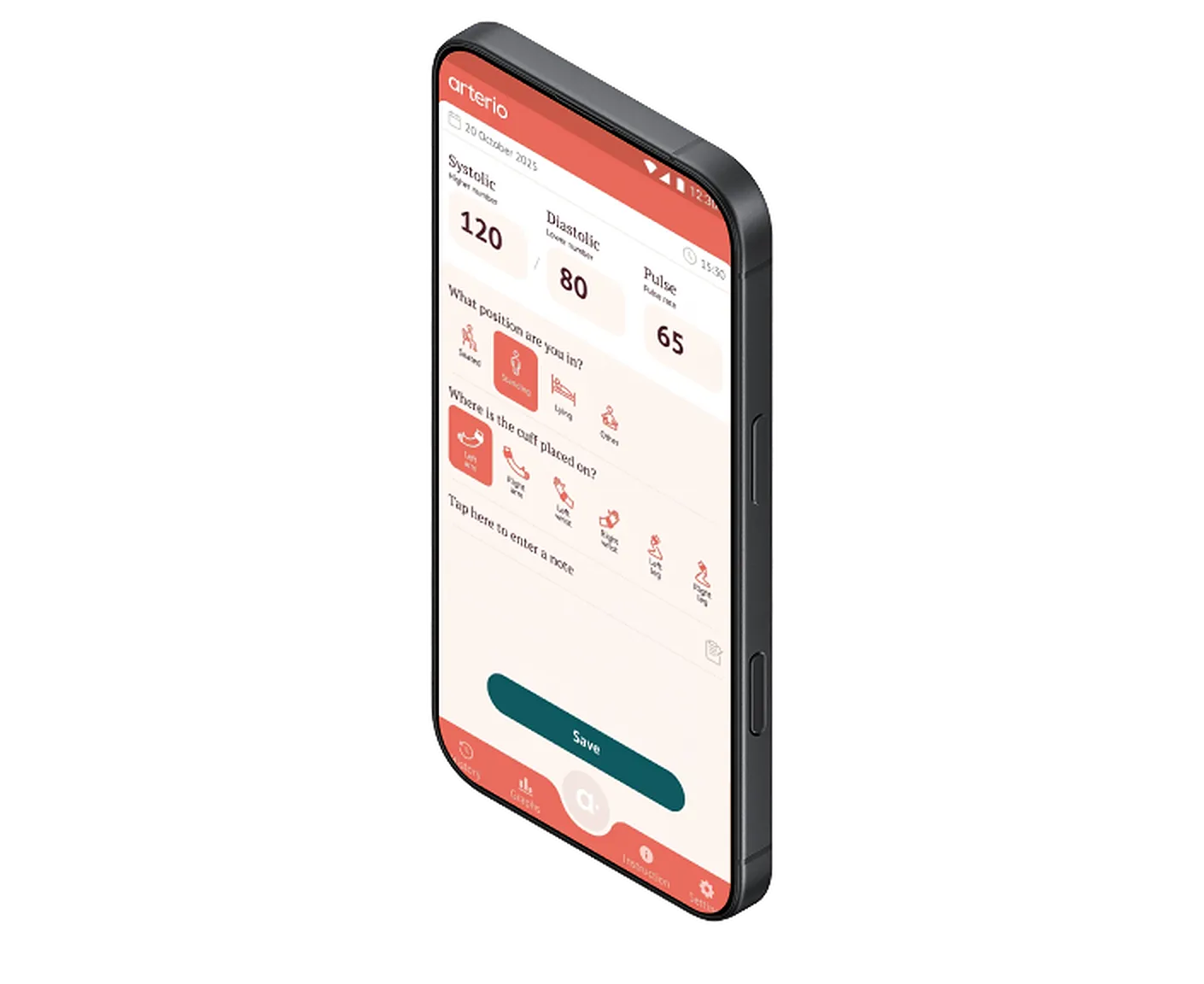
Arterio is a mobile app for patients with hypertension and cardiovascular risks, and we ran both the design and the build. Before anyone drew a screen, we interviewed cardiologists about what patients and doctors struggle with, and turned the interviews into 4 persona profiles and 4 empathy maps.
Those personas shaped the design prototypes for an accessible patient app. Readable type was one of their needs, and the prototypes were approved before development started. Accessibility was designed in for all user groups, elderly patients included.
Our engineers then built the native Android app in Kotlin, with Material Design 2.0.
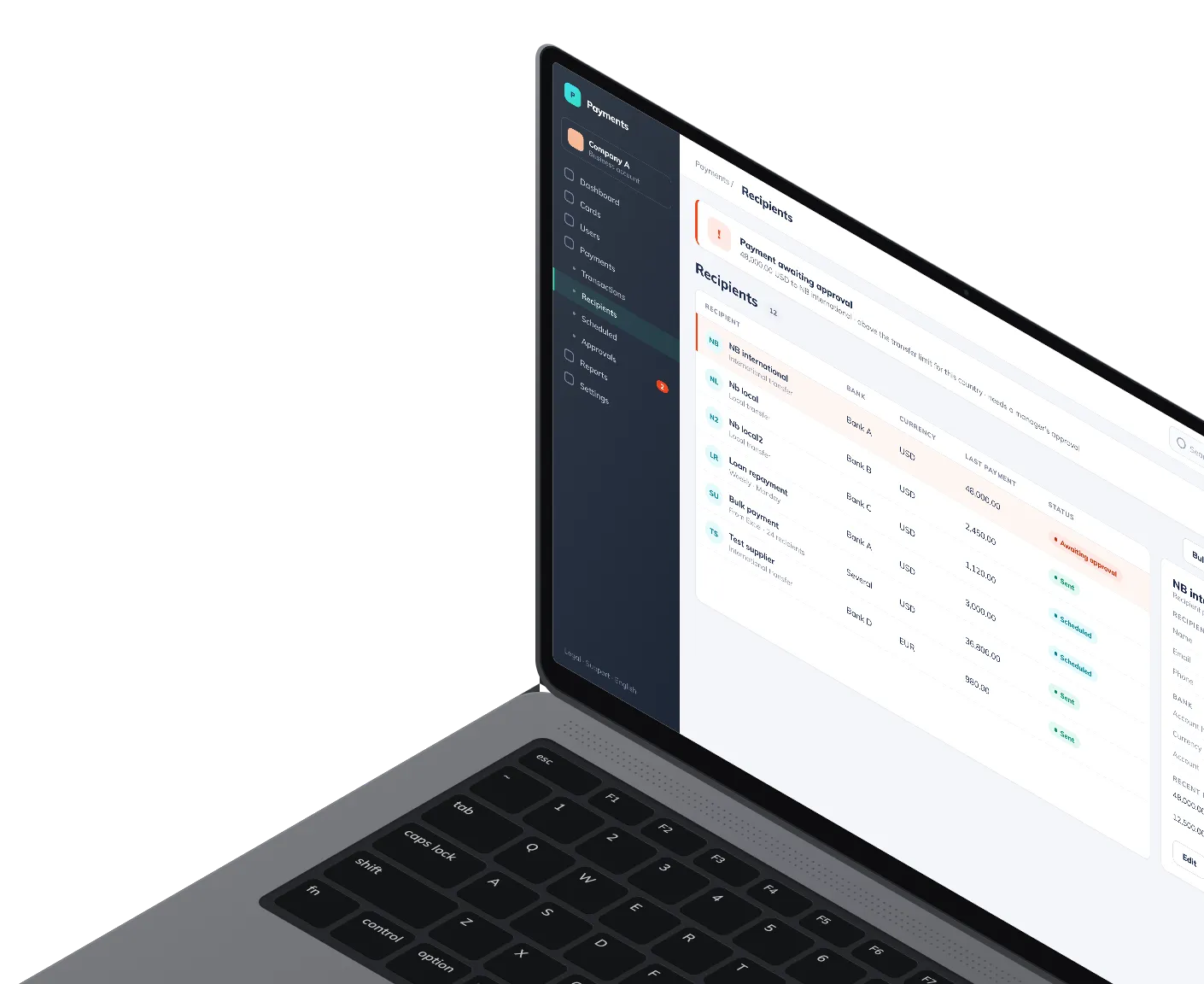
For a fintech company's corporate payments platform, we built the frontend, with UI/UX designers on our team, while the client's other teams built the backend. Our lead designer built a design system so the screens look and behave alike across the platform, and each payment recipient got a page of its own. Its users spend about 15% less time preparing and submitting payments. It came mainly from the UI/UX work: clearer flows, more intuitive payment screens, the recipient pages and the design system.
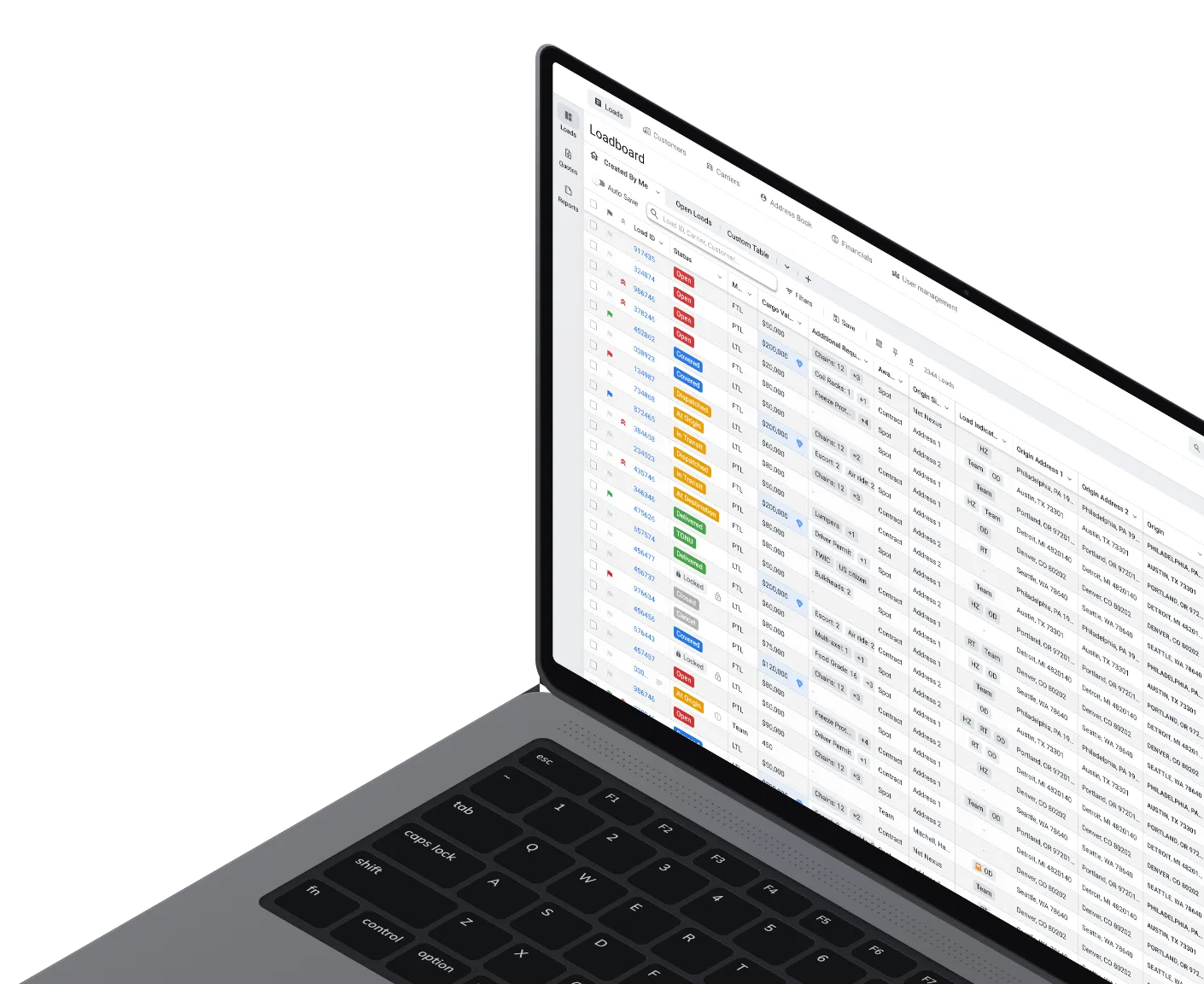
Here our designers worked inside the client's own team. The start was under time pressure, so a concept for the load board came first, and it was approved in 2 weeks. In the next 3 weeks we built a design system for a transportation management system, on Google Material, so everyone had shared patterns to work from. Each approved design then went into Storybook for the developers. Creating one load takes 30 seconds in the built system, down from 3 minutes in the old one.
Case studies
Each case page goes further than its summary on this page, from the problem the client brought to what changed for the people using the product. Judging a design team? Read the problem first. It tells you how much the designers had to work out for themselves.
Send the idea, the screens you already have or the product that needs work, and we will suggest where the design should start.

Cost
One flow, a new product or the redesign of a live one. A single checkout flow and a whole product are different jobs, and the quote follows the one you need.
Every extra role (an admin, a buyer, a support agent) brings its own flows and states to design, and each of them needs testing.
A few interviews to check one assumption are a small job. Full personas, empathy maps and journey maps are a bigger one, and worth it when you don't yet know who your users are.
Each platform gets its own layouts. With one design system under both, the second platform can reuse many of the components.
If you have one, we work inside it. Without one, building the component library becomes part of the scope.
The flows you need designed, the platforms they run on, and whether you already have a design system. With those three we can scope the work and give you a quote.
How we work
We deliver an agreed scope end to end: plan, team, milestones, QA and release. You make the product decisions and accept each milestone.
Fixed price per milestone after discovery, or time and materials against an estimate.
An agreed team capacity that we manage. We coordinate delivery and handle the team's make-up. You set the priorities and own the backlog.
Per-engineer rates, or a fixed monthly fee for the agreed capacity.
Our engineers join your team and work in your process and tools. You manage them; we source, vet and contract them.
Hourly rate per engineer by role and seniority, invoiced monthly.

"Much of design happens after the handoff, when an engineer hits the case nobody drew. That's when you want the designer still around."

Dzmitry Kuchynski, Chief Operating Officer, Octalance
FAQ
A person on your side who makes the product decisions and accepts each milestone. Beyond that, an idea, a few screens or a live product will all do as a starting point. If you can introduce us to a handful of your real users, say so early. Research with the people who will actually use the product is worth more than research with stand-ins.
Yes. Accessibility is considered while the screens are designed, which is when it is cheapest to get right. If a contract or a regulator sets a particular standard for your product, tell us before we scope the work. It changes what we design and test, and it belongs in the estimate.
Yes, we run usability tests on live products with real users, and it is a sensible first step when you're unsure how big the redesign should be. The findings show which flows fail and how badly, and sometimes that the redesign can be smaller than planned. When the research handles your users' data, we sign a data processing agreement, and we work under GDPR as an EU company.
Then a discovery phase usually comes first. It sets the requirements and backlog, the architecture, an estimate and a delivery plan, and lists the risks. Our designers build a prototype during it when one is needed. You keep the outputs whether or not the build continues with us.
Yes, through staff augmentation, and a designer can also join part-time. In place of the technical assessment engineers take, a designer goes through a portfolio review and a practical design task, then a soft-skills evaluation. You see the portfolio, and the design-task output if you ask for it, before you interview them. The staff augmentation billing, notice and replacement terms apply to designers as they do to engineers.
The discovery phase is fixed price. After it, the design is priced per milestone at a fixed price, or as time and materials against an estimate if you'd rather keep the scope open. The Engagement models and terms section sets out how each model is billed.