
AI-ready data pipelines and architecture built for each AI use you plan

We build AI-ready data for the use you name, with pipeline checks and a data dictionary. We have certified Databricks and Snowflake engineers.

Abstract 3D illustration of scattered data blocks sorted into labeled, checked stacks that feed one AI applicationAbstract 3D illustration of scattered data blocks sorted into labeled, checked stacks that feed one AI application

WHAT IT MEANS

What does it mean to have AI-ready data?

Data is AI-ready when one defined AI use can rely on it. That means accurate and complete enough for the job, documented so each field has a written meaning, traceable to its source, current, open only to the right people, and representative of the cases the system will meet.

Say you have one table of support tickets. An assistant that finds past answers can use it today, because the text is there and every ticket is tagged by product. A model that forecasts ticket volume can't, because three months are missing and the timestamps mix time zones. One table, two verdicts.

So the useful question is never whether a company's data is AI-ready. In general, nobody's is. Ask which use comes first, then test the tables it touches against that use. Once the data fits its job, the AI build can start.

Abstract illustration of one data table checked against two uses, passing for one and held back for the otherAbstract illustration of one data table checked against two uses, passing for one and held back for the other

BEST PRACTICES

How do you make your data AI-ready?

No single checklist exists, and vendors and consultancies split the work in different ways. Where a card leans on published guidance, from NIST, Google Cloud or data researchers, it names the source. Most of the work is data engineering on the tables the AI use reads.

One use case, one test set

Name the AI use first. Then hold back a test set the model never trains on. For a forecast, it comes from later dates than the training data.

Keep that set apart for good. Once a team tunes the model against it, it stops showing how the model will do on new data.

Inventory and document data

List each source with its owner and format. Then write down what the dataset is for, how it was collected and what it must not be used for.

"Datasheets for Datasets" (Gebru et al., 2018) sets out the questions such a record should answer. Some teams also keep shared business definitions in a semantic layer.

Automated quality checks

Agree what good enough means for this use, such as how many empty values, duplicate keys or late loads it can take, and test it on every load.

Google Cloud's Well-Architected Framework calls for schema validation and anomaly detection on incoming data, and for validating data integrity.

Lineage and freshness

Record where each dataset came from and how it changed on the way to the model. The NIST AI Risk Management Framework Playbook suggests tracing data lineage (MAP 2.3).

Update data as often as the use needs, and recheck it whenever a source changes. Readiness doesn't end at go-live, because live data drifts away from what the model trained on.

Access and permitted use

Give each dataset a named owner, grant access by role and keep an audit trail of who read or changed what.

Data governance also decides whether the data may serve this purpose at all. Records collected to bill customers aren't automatically cleared for training a model.

Coverage and text data

Check that the data covers the cases the system will meet (NIST Playbook, MAP 2.3). For generative AI features built on that data, documents must be current and deduplicated.

For a retrieval assistant, the index should also carry each document's source permissions, or the assistant can surface what the asker may not read.

OUR PART

What we build into your pipelines

Checks built into the pipelines we deliver

Validation and monitoring go into the transformation workflows of the pipelines we build. A check inside the pipeline catches a problem while it is still one batch. A check after training finds it in the model. Our engineers work with Airflow, dbt and Kafka. A team that already runs its own pipelines can bring in data engineers to prepare the data and keep the work in its own process.

Architecture and a data dictionary

Models and assistants stand on the data architecture underneath, so we start with a current-state assessment of what you run today and hand over a target-state design and a phased roadmap. Data modeling then adds a data dictionary and source-to-target mapping, and with them each field has a written meaning and a known origin.

Platform choice and a go-live bar

The platform you already run may be enough. Where a new one is needed, we offer a lakehouse on Databricks or a cloud warehouse on Snowflake, and on Databricks we set up catalogs, permissions and lineage in Unity Catalog. If we also build the AI use, a discovery phase can show first that AI isn't the answer for it. When it is, we agree the test set and the go-live bar with you before the build starts.

Access to your systems, and where things are hosted

Our engineers reach your sources, warehouse and cloud account through named accounts you issue in your own identity management, with only the access their role needs, and they lose all of it when they leave. Systems we control are hosted in the EU. Code and data in your own systems stay where you keep them. Where we handle your data, a data processing agreement is part of the engagement, and we work under GDPR as an EU company.

Illustration of a data pipeline with check gates between stages, an open data dictionary and a key for accessIllustration of a data pipeline with check gates between stages, an open data dictionary and a key for access

IN PRACTICE

Pipeline practices from our case studies

Validation inside the pipelines, at an education company

A professional education company had a warehouse on Amazon Redshift and needed pipelines from Salesforce, Shopify and SAP to fill it. We chose Fivetran for ingestion and dbt for transformation, then built end-to-end pipelines with data validation and monitoring in the transformation workflows.

Updates from weekly to daily for a Web3 platform

Repeated calls to third-party APIs were driving costs up for a Web3 platform that evaluates contributors to decentralized autonomous organizations. We built an external data warehouse with Python, Airflow, AWS Athena, dbt, Amazon S3 and AWS Glue Studio, and moved its updates from weekly to daily. For an AI use, that cadence decides whether a model sees yesterday's data or last week's.

Illustration of three data pipelines filling one warehouseIllustration of three data pipelines filling one warehouse

HOW WE WORK

Engagement models and terms

Project delivery

We deliver an agreed scope end to end: plan, team, milestones, QA and release. You make the product decisions and accept each milestone.

Fixed price per milestone after discovery, or time and materials against an estimate.

  • Scope changes go through change requests.
  • On fixed-price projects, a warranty period agreed in the contract, usually 30–60 days.

Discovery phase

A short phase before a build: requirements and backlog, architecture, an estimate and a delivery plan.

Fixed price, usually 2–4 weeks.

  • The outputs stay with you whether or not the build continues with us.

Staff augmentation

Our engineers join your team and work in your process and tools. You manage them; we source, vet and contract them.

Hourly rate per engineer by role and seniority, invoiced monthly.

  • If an engineer isn't the right fit, we replace them within 14 days at no extra cost.
  • Knowledge transfer to the replacement engineer isn't billed.
  • There is no free trial period.
  • 30 days' notice to take an engineer off or end the engagement, with no minimum term beyond it.
  • Out-of-hours on-call only if agreed with you; we set its hours and billing together.
  • After two years, moving an engineer onto your own staff is something we can discuss.

Whichever model you choose

  • We reply to an inquiry from the contact form within 24 hours.
  • We sign an NDA before work starts, and IP passes to you on payment.

CASE STUDIES

Data we prepared for models and retrieval

A forecast and a drafting assistant break on different data problems. Gaps and errors in the history throw a forecast off, so cleaning comes before training. An assistant goes wrong on stale or missing documents, and there the work is choosing what to index and keeping it current.

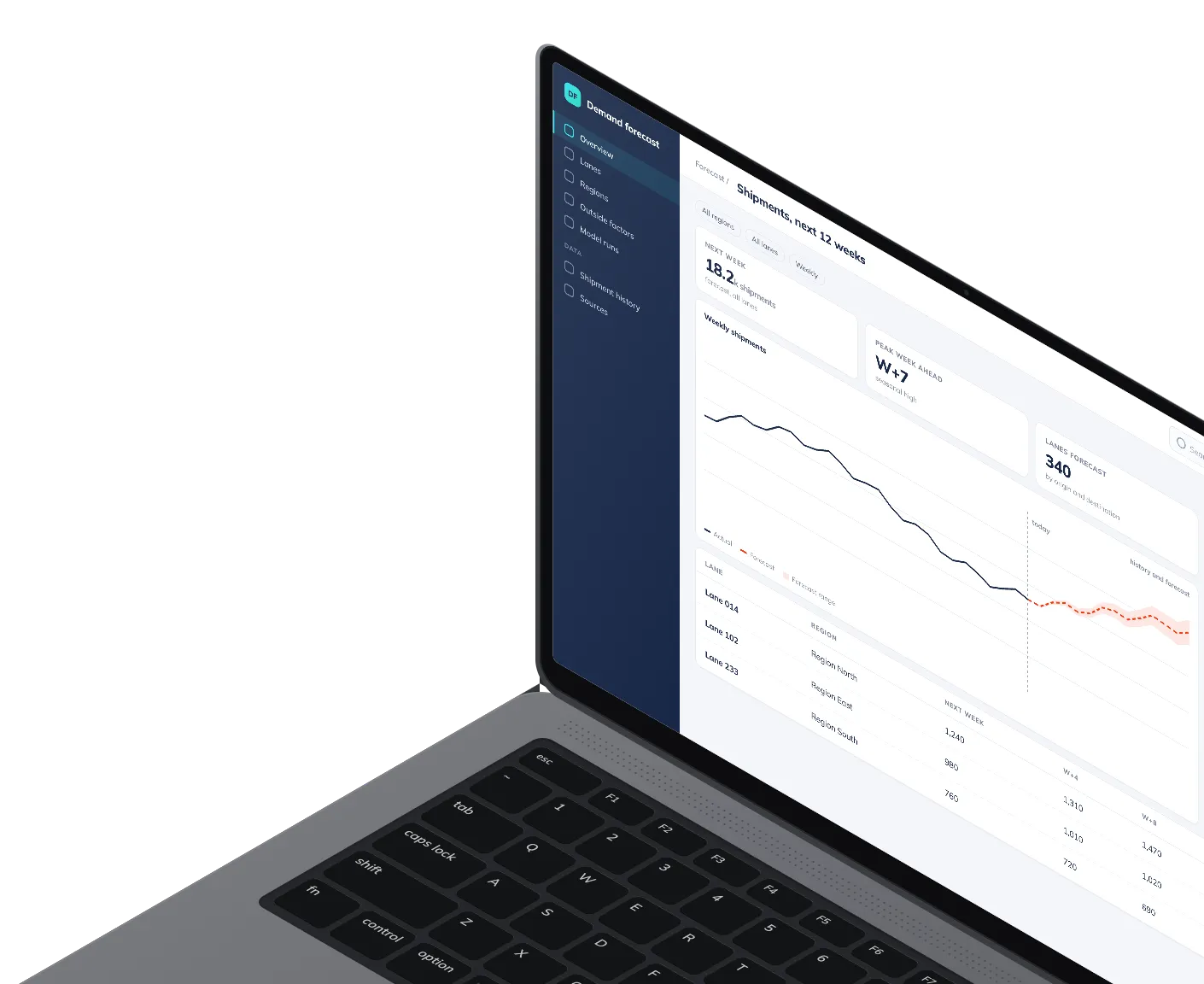
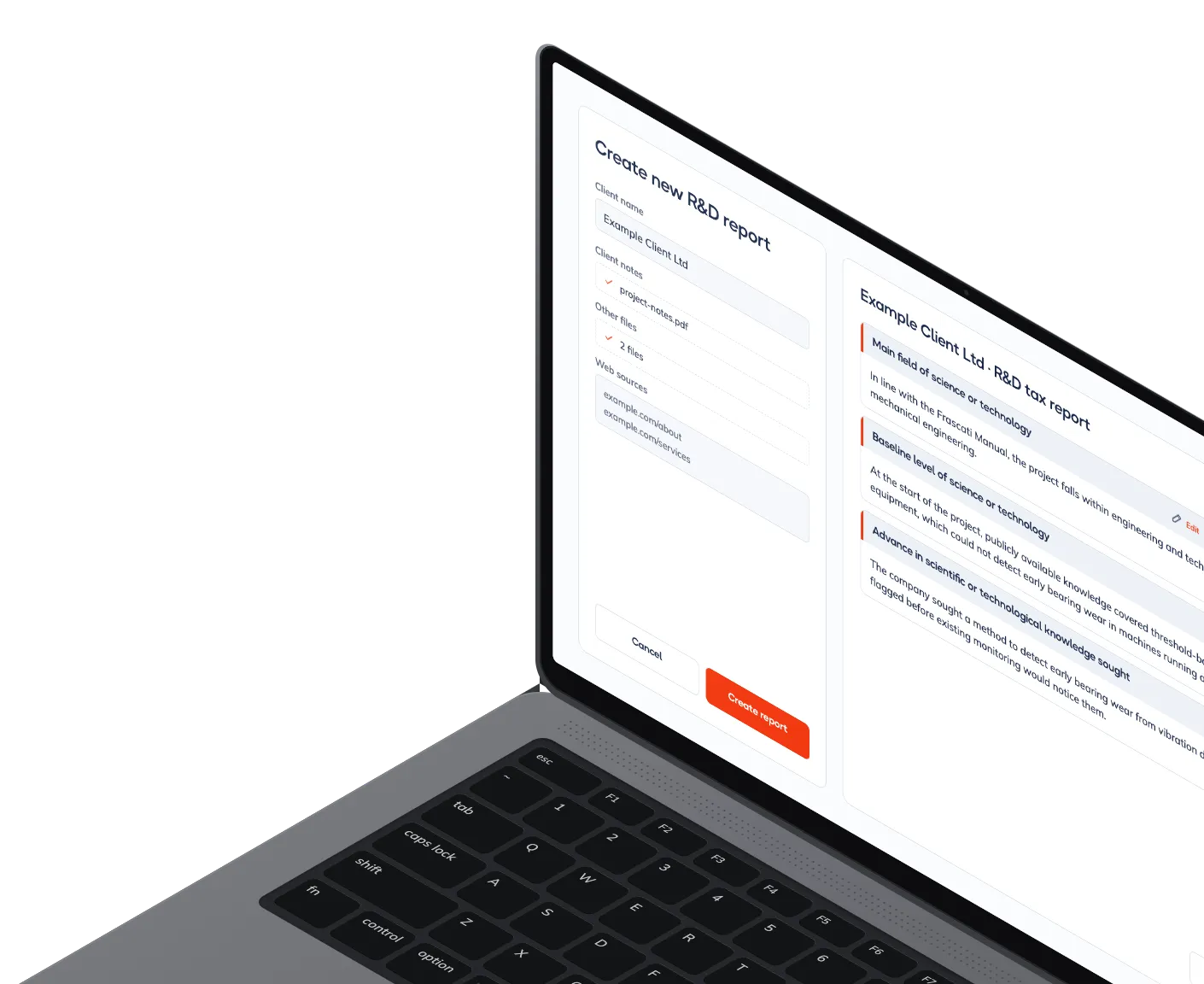
At the logistics company, we cleaned and pre-processed the shipment history before the model used it. For the tax firm, no model was fine-tuned. The firm's knowledge stays in the guidelines and past reports we indexed for retrieval, where it can still be updated.

Not sure your data can carry an AI use?

Name the AI use you have in mind, the systems that hold its data and who owns them, and we'll take it from there.

FAQ

Questions to settle before a data project starts

What do you need from us before you start?

Time with the people who know the data and where it comes from, whatever documentation exists, even if it is out of date, and the AI use you are planning for.

Do you build the AI itself, or only prepare the data?

Both are possible. A project can stop at the data foundation, or continue to the AI use once the data passes the test set agreed with you beforehand. We release in stages into your systems, and a person reviews uncertain outputs at first. When we rebuilt a logistics company's demand forecasting on Databricks and Azure, we cleaned and preprocessed its historical shipment data and added ML models that account for seasonality and outside factors.

Where do you start when nobody has documented the data?

With what exists today. Even undocumented data has tables, the jobs that fill them and people who remember why a field is there. A discovery phase starts from that, writes down the requirements, designs the architecture with the reason for each technology choice, and ends with an estimate and its risks. For a professional education company, the first step meant analyzing the data sources, the reporting requirements and the existing architecture before choosing any tools.

Will our data pass through AI coding tools while you work on it?

Only through the tools you allow. Our engineers use AI tools across development, and on your code and data your rules decide. We work in the tools and accounts you approve, and nothing goes to a tool you haven't cleared. AI-written code is reviewed by another AI agent, then by an engineer, before it is merged.

Does the EU AI Act apply to our data?

Only if the AI system is sold or used in the EU, or its output is used there. Where your company is based doesn't decide it. Most of the data duties fall on high-risk systems, such as AI used in hiring or to assess creditworthiness. For those, Article 10 asks for training, validation and testing data that is relevant, representative and as free of errors as possible, with a record of where the data came from and, for personal data, why it was first collected. Whether your use is high-risk is a question for your legal counsel.

Who owns the pipelines, the code and the data dictionary at the end?

You do. The code usually lives in your repositories, sometimes in ours, and transition-out at the end is routine, so the data dictionary and the mappings go with everything else. The rest is under Engagement models and terms on this page.

How soon would we see a first result?

It depends on which result. Data work starts with discovery, and the plan it produces sets the dates, so there is no honest date before it. For the AI use itself, a proof of concept typically takes up to a month and a proof of value up to two, and neither requires discovery first.