Agreed metric definitions
One written definition per metric, settled with the person who owns it. Is a churned customer one who cancels, or one who stops paying? Somebody has to decide, once.


Teams hire data analysts when two reports give different answers to one question. We present vetted candidates within 7 days of your request.


WHAT THE ROLE COVERS
Your analyst owns the metric definitions, works out why a figure changed and builds the reports people act on. Through us, you get one who works in your tools and process, reports to your lead, and you interview them before they start.
You can bring in analysts added to your data team under your own lead, or have us run a managed data analytics team. When nobody on your side can direct an analyst, we take on data analytics as a project.
One written definition per metric, settled with the person who owns it. Is a churned customer one who cancels, or one who stops paying? Somebody has to decide, once.
When a figure drops overnight, check the load and the source first, then the segments.
A senior analyst also pushes back on a badly framed question before writing any SQL.


In Power BI, a semantic model with measures written in DAX, so a total stays right when someone filters the page.
In Tableau, calculated fields, level-of-detail expressions and a reasoned choice between an extract and a live connection.


A good analyst checks each query against the source before anyone reports the number.
When the fault sits upstream, the analyst takes it to whoever owns the pipeline instead of patching it inside a report.


BY THE NUMBERS
7 years
Average experience across our team
80%+
Senior or above, engineers and analysts
50+
Projects delivered by our team
CHOOSING THE ROLE
Start from the symptom, then pick the role
It makes sense to hire a data analyst when the data is there and the trouble is what it means. Nobody can say why a figure changed, or a pricing test ends in three opinions on whether it worked. Other symptoms point to other roles, and hiring for the wrong one leaves the real problem where it was.
That is analyst work. An analyst owns the definitions, explains why a figure moved and builds reports on a data model that already exists. The transformation layer is where the roles meet: a senior analyst can write and maintain dbt models on tables an engineer loads, while ingestion, orchestration and warehouse design stay with the engineer.
If the backlog is forty dashboards to build and few questions to answer, you are looking for a BI or Power BI developer. Our data practice also builds Power BI reports and dashboards as a project.
An analyst who spends the week rerunning broken loads is doing an engineer's job, slowly. Pipelines, orchestration and the warehouse itself belong to data engineers who prepare the tables analysts use.
Reports describe what has already happened. Predicting demand, churn or risk is modeling work, tested against data the model hasn't seen, and it goes to a data scientist. An analyst's trend line is where that conversation starts.


TECHNOLOGIES
SQL
Power BI
DAX
Power Query
Tableau
Python
dbt
Snowflake
BigQuery
Amazon Redshift
Databricks
Azure Synapse
Microsoft Fabric
Excel
Send the role and seniority, the reporting tools you run, and the metrics or reports the analyst will own. We start matching from there.

CASE STUDIES
A Power BI review dashboard for a hotel chain, and a Redshift warehouse behind Tableau reporting
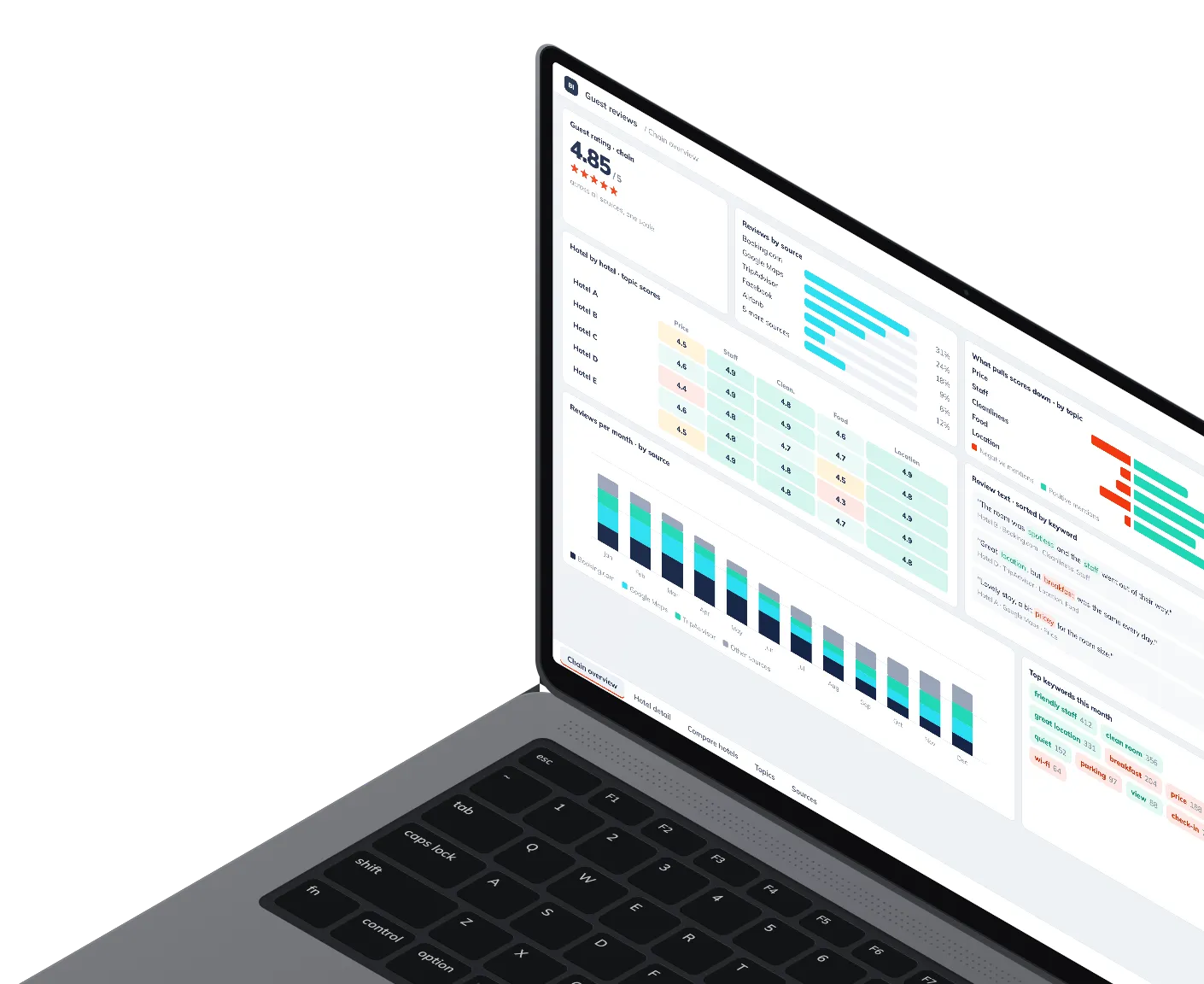
We built reporting dashboards for a hotel chain on Power BI. Reviews and ratings from 10 sources, Google Maps, TripAdvisor, Booking.com and Facebook among them, go into one data model, so a review from any site is sorted by the same keywords and one hotel compares directly with another.
The client sees which topic, price, staff or cleanliness, pulls a hotel's score down, per hotel and for the chain, without reading each site. Our client's guest rating was 4.40 before the launch and 4.85 after.
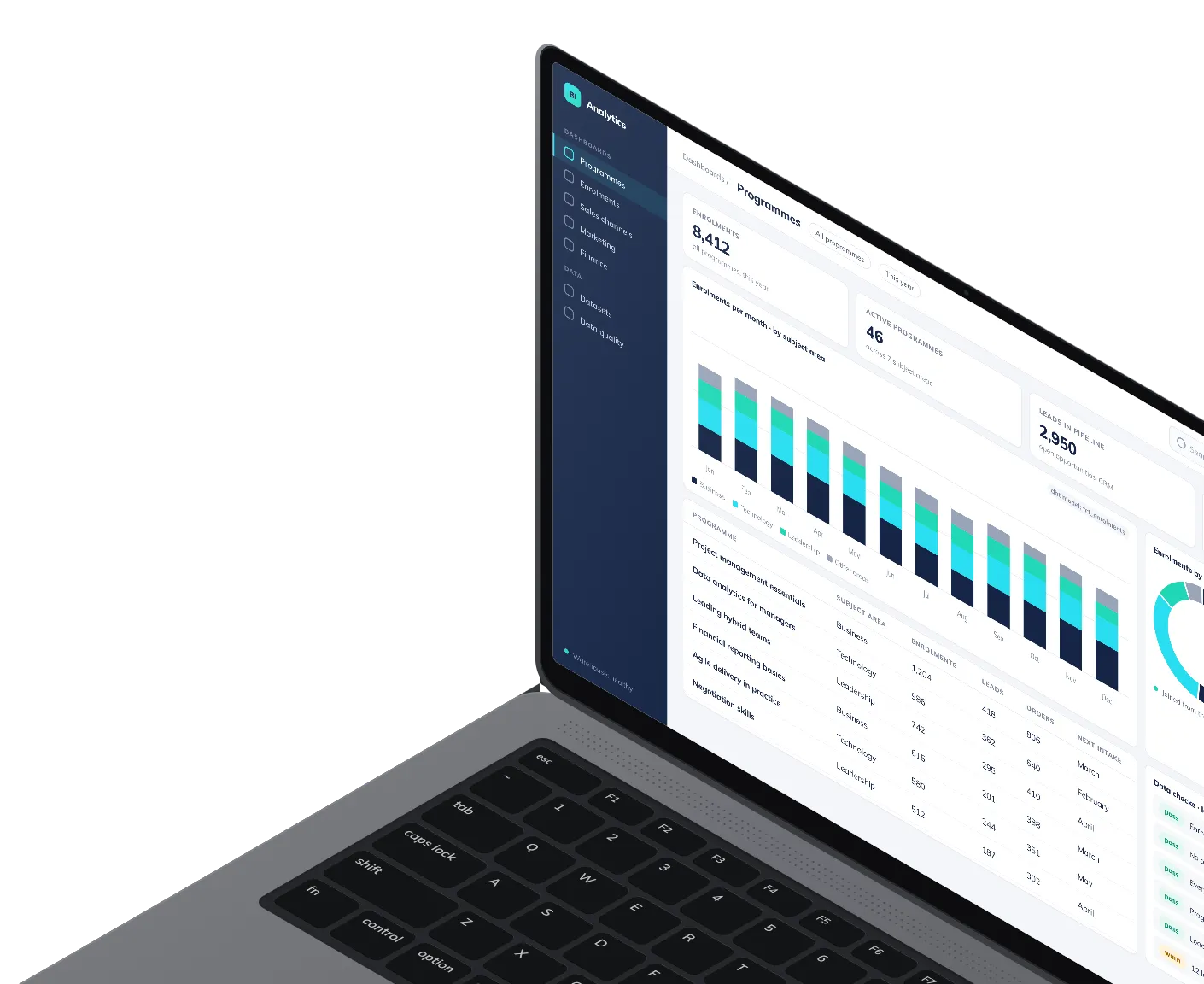
A professional education company already ran its warehouse on Amazon Redshift. After analyzing its sources, reporting requirements and existing architecture, we chose Fivetran for ingestion and dbt for transformation, and set up the transformation workflows, data validation and monitoring. Its Tableau dashboards read from that warehouse, so reporting can now start from analytics-ready tables.
An analyst you hire through us would work on models like these, writing the measures and the metric definitions that sit on top of them.


VETTING
Every analyst we present has passed three checks before reaching your shortlist. For Power BI roles, the technical assessment includes a DAX and data-model task, because a measure that breaks under a filter is the error a polished report hides best.
Some roles also get a live coding interview, where the candidate writes code live and talks through each choice, so we see how they reason. A background check that confirms the CV is genuine runs only when a client asks for one.
The languages and tools a candidate claims, tested at the seniority level they claim.


How they communicate in English, take feedback and work in a team.


Our own check of the CV, done before a candidate reaches your shortlist.


PROCESS
Staffing an analyst runs in four steps, each shown with its usual time. What we commit to is presenting candidates within 7 days of your request. Hiring for other roles too? Browse engineers for data, cloud and AI roles.

STEP 1
We agree the role, seniority and reporting tools, and write down the metrics and reports the analyst will own.
1 day

STEP 2
We shortlist analysts whose tested skills match your tools and the work you described.
1–2 days

STEP 3
You interview the candidates you choose and decide who joins. Our own technical interview can be part of your selection, with full visibility.
1 day

STEP 4
We sign the contracts and an NDA and handle the security setup.
1–2 days
HOW WE WORK
Our engineers join your team and work in your process and tools. You manage them; we source, vet and contract them.
Hourly rate per engineer by role and seniority, invoiced monthly.
An agreed team capacity that we manage. We coordinate delivery and handle the team's make-up. You set the priorities and own the backlog.
Per-engineer rates, or a fixed monthly fee for the agreed capacity.
We deliver an agreed scope end to end: plan, team, milestones, QA and release. You make the product decisions and accept each milestone.
Fixed price per milestone after discovery, or time and materials against an estimate.
MORE CASE STUDIES
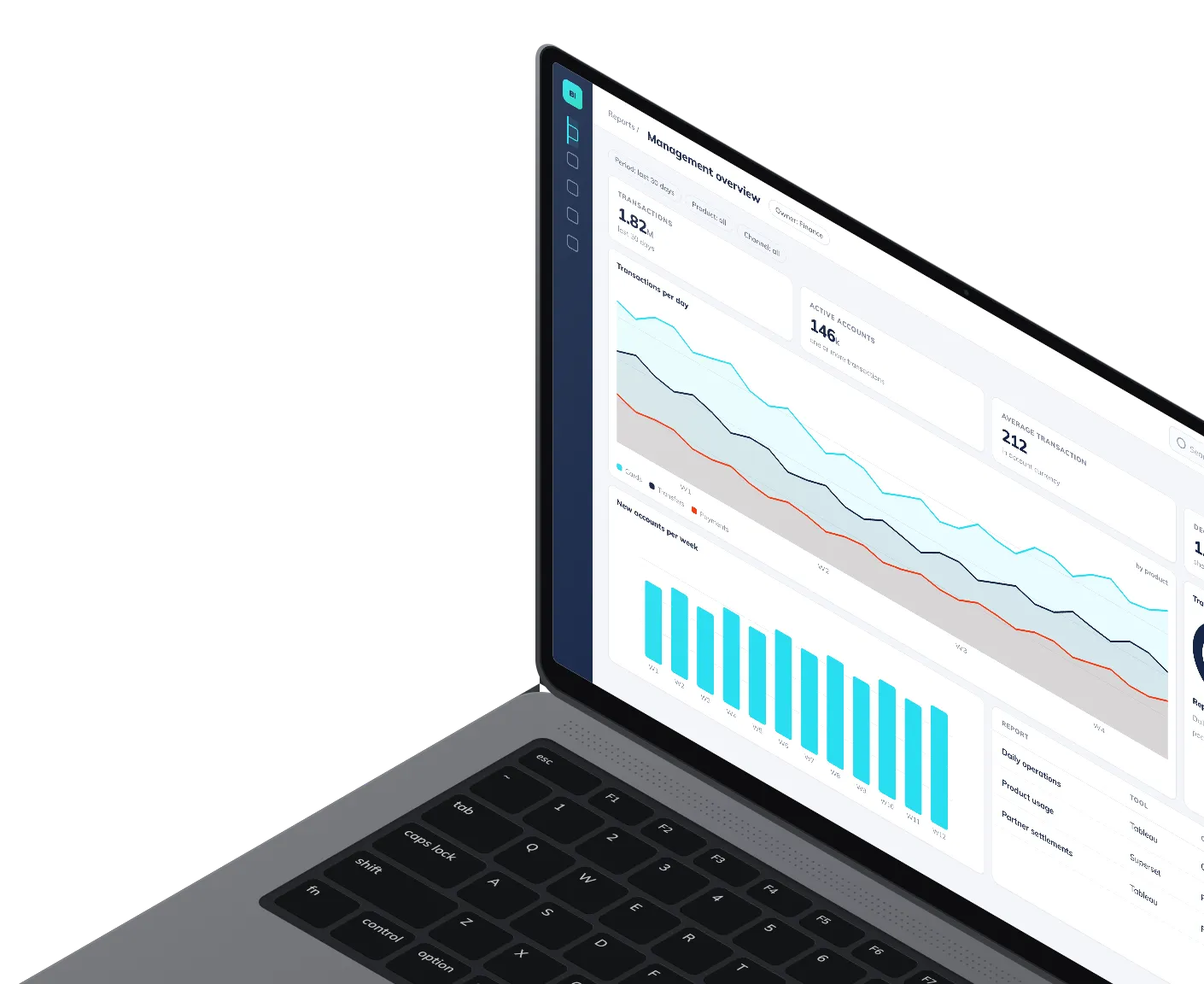
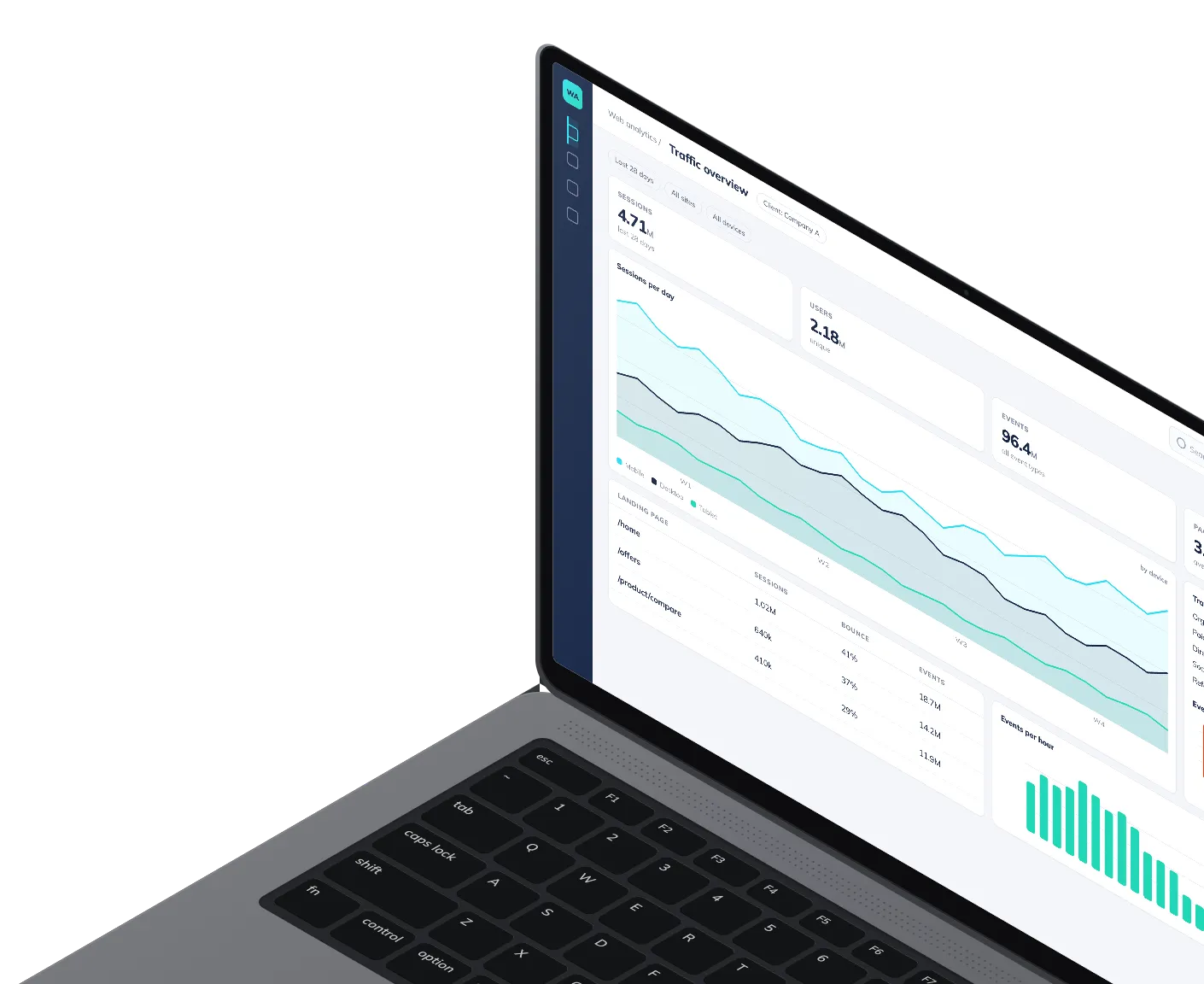
Reports are where people judge a data project, because reports are what they open. When we refactored an AdTech company's inherited Google Analytics to BigQuery pipeline, the old and new versions ran side by side, and the Tableau reports gave the same figures as before.
Ask where your reports will read their data from. At a fintech company, analytics ran as queries on the production database, which was slow and disrupted transactions. We led the build of a warehouse, and the production databases now carry no analytical load.

"The analysts I'd hire ask where a number came from before they chart it, and what decision it feeds before they query it."

Dzmitry Kuchynski, Chief Operating Officer, Octalance
FAQ
Under staff augmentation, your lead does, in your process and tools, and the analyst works full-time for you only. The person who matters most is whoever can say yes or no to a definition. An analyst with nobody to settle what a qualified lead is will produce careful reports that still disagree. If nobody on your side can play that part, a project fits better.
We match your day by choosing the location and shifting the schedule, and CET/CEST business hours are the default. UK and EU teams get the full working day. For the US we can arrange 4+ hours of daily overlap with the West Coast, and more with the East Coast. Having people across Eastern Europe doesn't create overlap by itself, so the hours are planned for each client.
Your interview is the first filter, and you can turn anyone down on it. If someone still isn't the right fit, under staff augmentation we replace them within 14 days at no extra cost. The rest of the terms are under Engagement models and terms on this page.
Named accounts that you issue in your own identity and access management, limited to what the role needs and removed when the engagement ends. Where we handle your data, a data processing agreement is part of the engagement. Power BI licenses are bought by you from Microsoft and aren't part of our fee.
You do, once the work is paid for. The reports and models usually live in your own workspaces and repositories. When we run the work as a project, the handover is a walkthrough of each report and the data dictionary behind it.
The start follows your interview and the onboarding step, so your interview calendar matters as much as ours. Once you pick someone, contracts, the NDA and the security setup usually take 1 to 2 days. Issue the accounts for your warehouse and BI tools before the first day, and that day goes on real numbers.
Yes, as a project. It starts with a fixed-price discovery phase, usually 2 to 4 weeks, that sets out your sources, reporting needs, an estimate and a delivery plan. You keep its outputs whether or not the build continues with us.