Telecommunications
Call center console moved off Java 7 and AngularJS with more than 8x better performance
An 8-month migration off a stack past its long-term support, while operators kept taking calls on the console
Legacy modernization
Who we worked with
IT services company
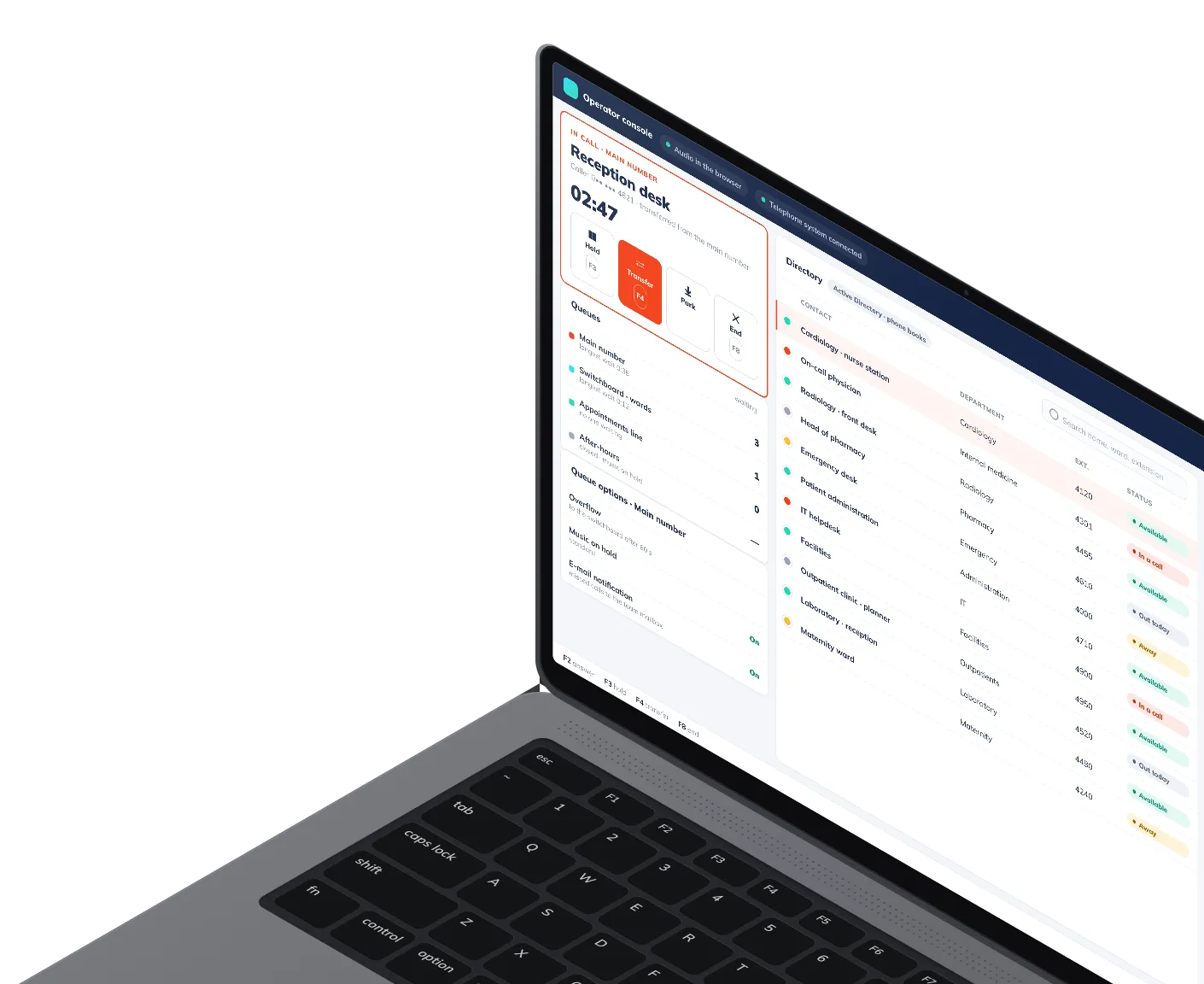
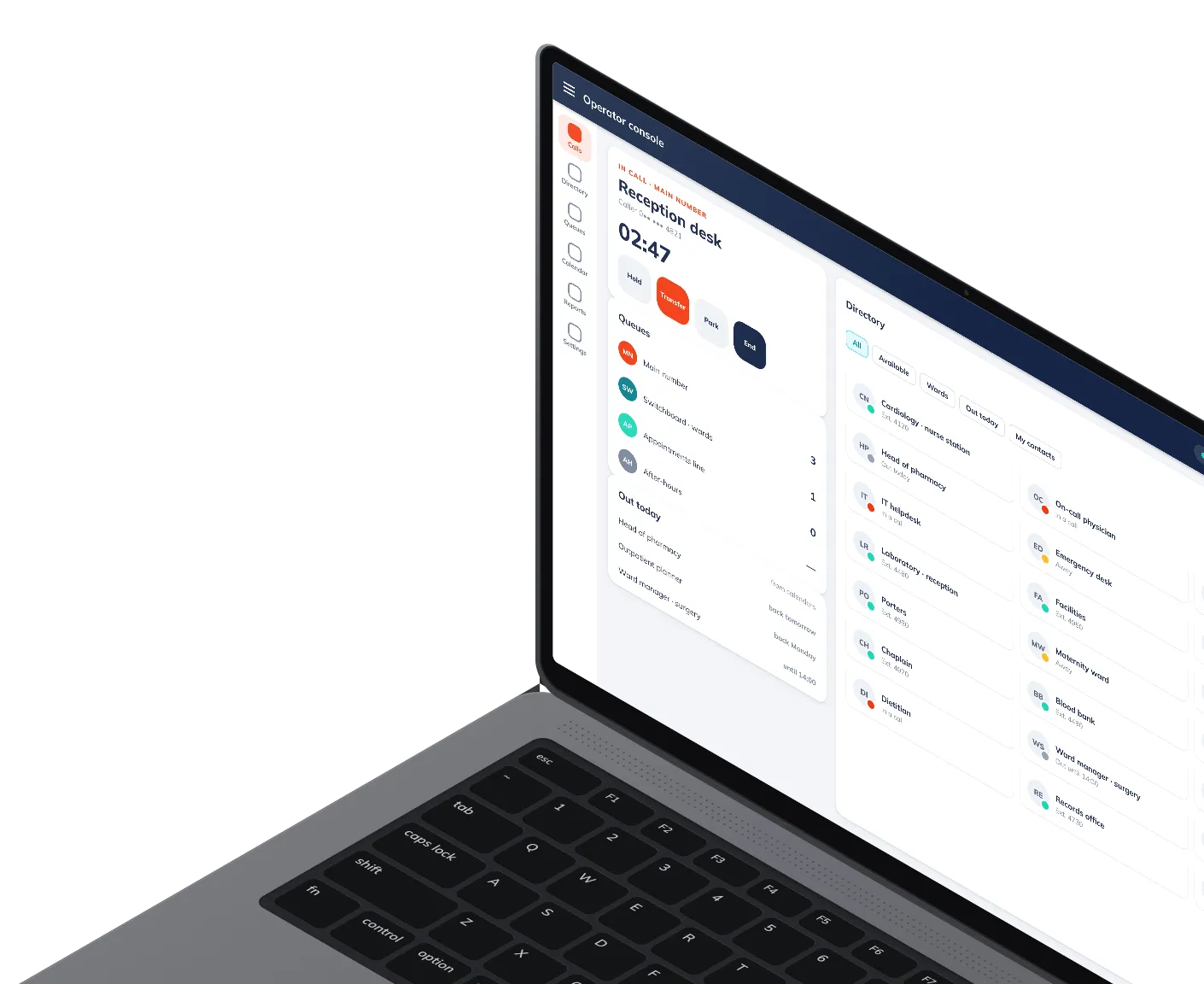
An IT services company that sells its own unified communications software. Call center agents, switchboard operators and receptionists, many of them in hospitals, answer and route calls in its browser-based operator console. We took over the console's development and support mid-project and ran them for more than 5 years. The console had to become secure and fast again, and it had to keep taking calls while it did.
What we did
Off Java 7 and AngularJS, with operators on calls
A stack that had stopped getting security fixes
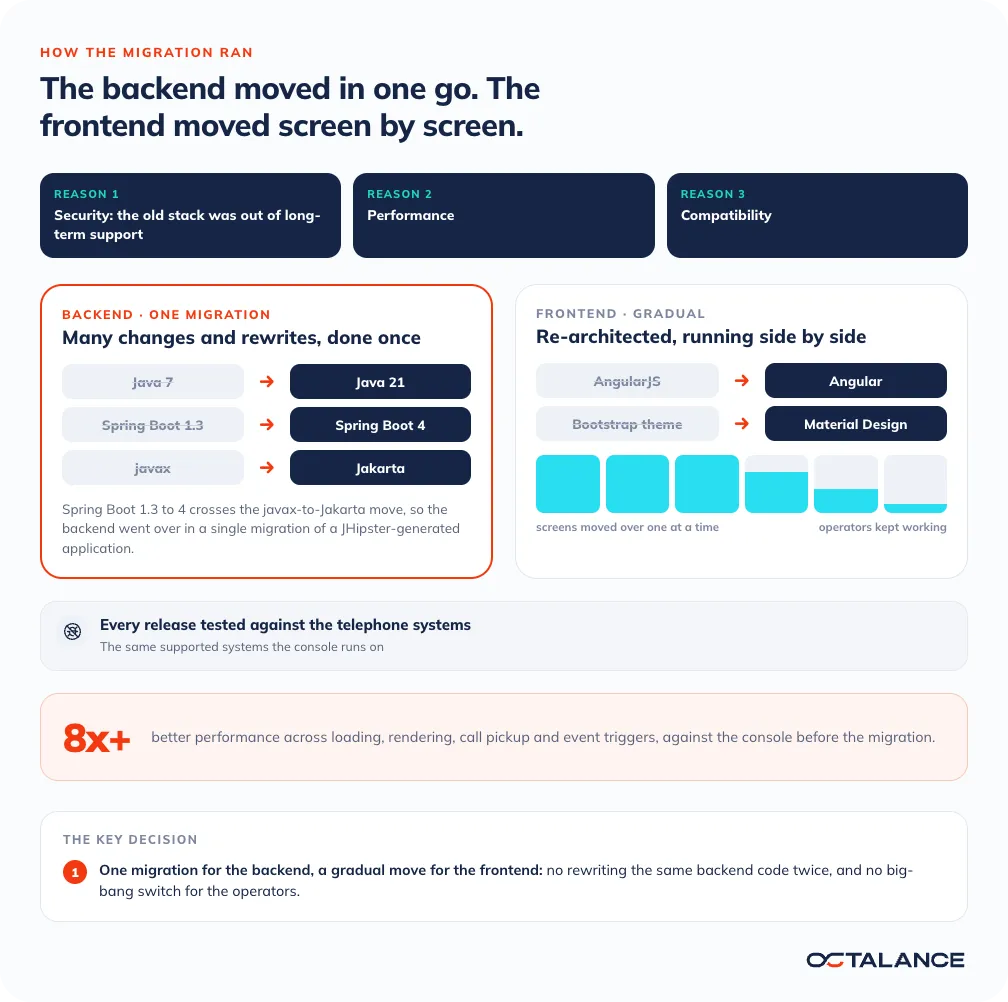
The console was generated with JHipster years earlier and still ran on Java 7, Spring Boot 1.3 and an old AngularJS. All three were past their long-term support and carried well-known vulnerabilities. It was slow to load and render, and slow to pick up calls and react to events. Browsers, libraries and the systems around it had moved on, and the old stack couldn't follow.
Both layers migrated, every release tested
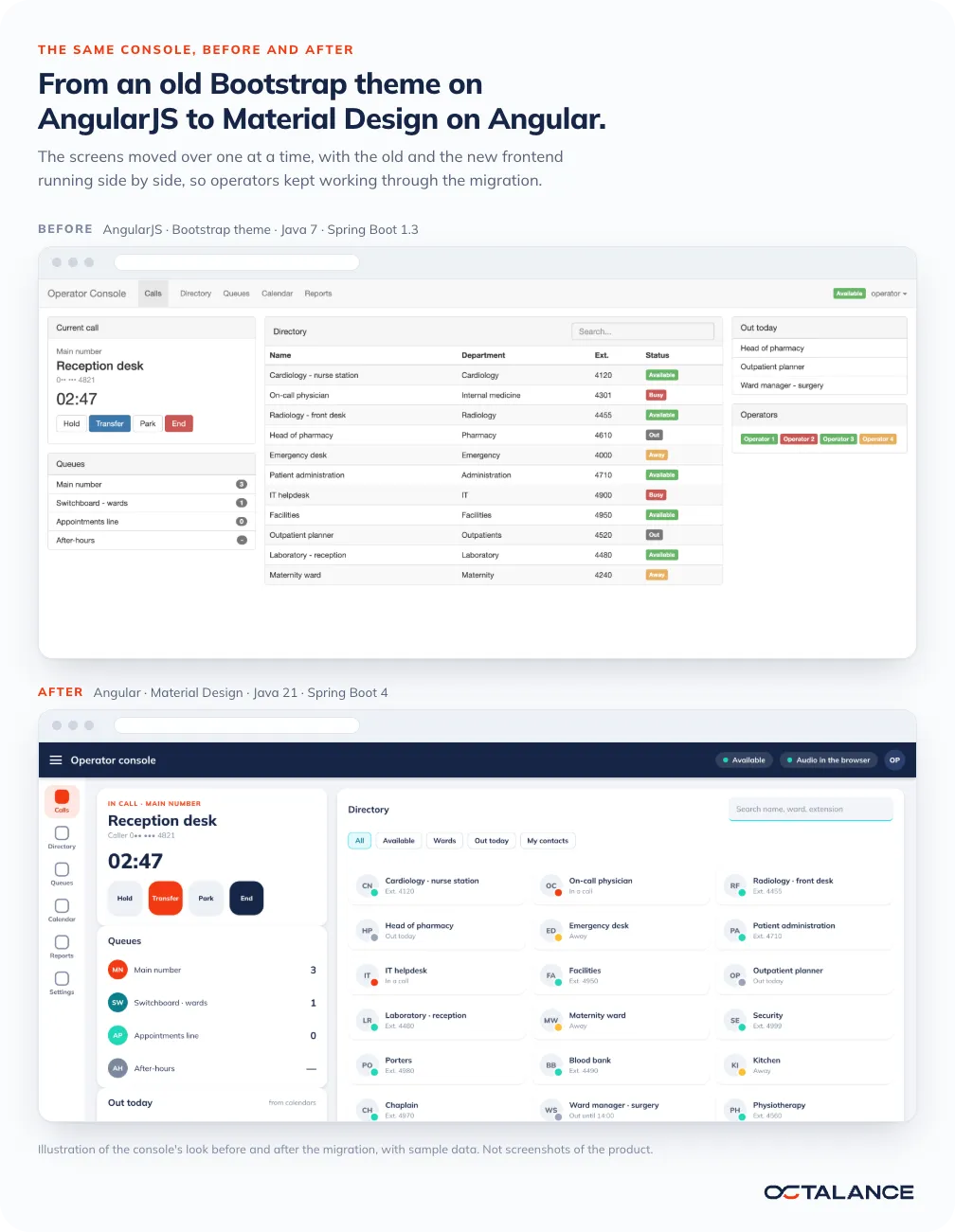
We migrated both layers of the console. The backend moved to Java 21 and Spring Boot 4. The frontend was re-architected in Angular, and its old Bootstrap look became Material Design. Every release was tested against the telephone systems the console supports, Avaya, Cisco, innovaphone and Microsoft Teams, before it reached the client's customers.
Back on supported versions, with better performance
Performance is more than 8x better than the console before the migration. The measures included the console's load time and how long a call takes to reach the operator's screen after its SIP signal arrives. During the migration we also cut nightly batch processing from 6 hours to 1 hour, with caches and improved algorithms. And the console gets security fixes again.
Why two speeds
The server jumped, the screens moved over
Operators never see the server, but they notice every change on their screen, so the backend and the frontend of the console moved at different speeds.
The backend in one migration
Spring Boot 1.3 to 4 crosses several major versions, including the move from javax to Jakarta packages that came with Spring Boot 3. Stepping through every version in between would have meant paying for the same rewrites twice, so the backend went across to Java 21 and Spring Boot 4 in a single migration.
The frontend side by side
Operators work in the console all day, and a big-bang switch would have landed on all of them at once. So the new Angular frontend ran beside the AngularJS one, and screens switched over one at a time.
What changed for our client
> 8x
Better performance than the old console
8 months
To migrate the backend and frontend
Where it started
The console's stack before the migration
Java 7
Spring Boot 1.3
AngularJS
Bootstrap
JHipster
Where it runs now
The console's stack after the migration
Java 21
Spring Boot 4
Angular
Material Design
Console past its support, too busy to stop?
Tell us what your application runs on today and who uses it while it changes. We reply to every enquiry within 24 hours.

Case studies