Generative AI and LLM apps
Assistants and internal tools that answer from your documents. A RAG assistant can be built so each answer points to its source, and so it says when the documents don't cover a question.


Our AI development services cover generative AI, agents and machine learning, and we tell you when a problem doesn't need AI at all.
AI DEVELOPMENT
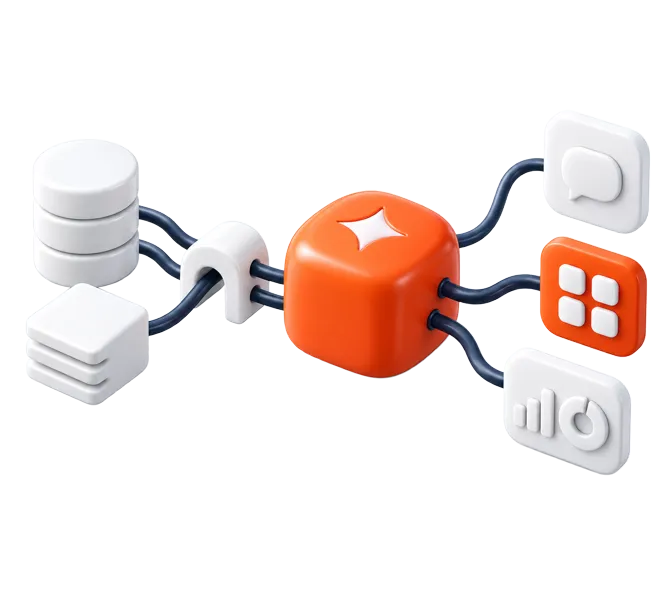
AI development is building software that puts a model to work on your own data, inside the systems you already run. Most of it falls into a few kinds: generative AI and LLM apps, machine learning models that predict or classify, AI agents that carry out tasks, and AI wired into existing products.
The engineering in an AI build sits mostly around the model, in the retrieval behind an assistant, the connection to your CRM and the tests that show its answers hold up. If you buy AI software development services from us, our ways of working with clients differ in who runs that work day to day. We can deliver it as a project, or our engineers can join your team.
The model is rarely the hard part. Data decides what it can do. An assistant fed two versions of your returns policy will quote whichever one it finds first, with the same confidence either way.

AI SERVICES
One build often mixes several kinds of AI work. An agent that handles invoices needs document extraction first, and an assistant earns its keep only once it is wired into your systems. Two kinds have pages of their own, generative AI development and AI agents.
Assistants and internal tools that answer from your documents. A RAG assistant can be built so each answer points to its source, and so it says when the documents don't cover a question.
Multi-step tasks with tools, such as reading a request, looking up the records and drafting a reply for a person to send.
Each agent gets only the tools and access its job needs, connected to your systems through the Model Context Protocol or plain APIs.


Fields pulled from invoices, contracts and forms, then classified and checked. OCR reads the page and an LLM works out what each field means.
A well-designed pipeline sends low-confidence results to a person for review first.


Forecasting, anomaly detection, scoring, and text and image classification. Our machine learning development covers the model, its versioning and the monitoring around it in production.


Models and LLM APIs wired into your CRM, ERP and older in-house software.
Most AI integration is ordinary engineering: access control, error handling and a fallback for the hour the model API is down.


AI consulting is for the questions that come before any build, such as which use case to try first and whether it needs generative AI or classical machine learning.
A discovery phase says when AI isn't the right answer.


BEFORE YOU BUILD
If the decision follows rules your team could write on one page, write the rules. Code that applies them gives the same answer every time and costs nothing per call. A model would add a running cost and a margin of error to a problem that had neither.
A product on the market may already cover the task. If your data is allowed to go there, buy it and spend the budget on something only you can build. Custom work pays off when your data, your permissions or the systems around the task make the tool a poor fit.
A model can't settle records that disagree. If the same product carries three prices in three systems, any answer about price is a coin toss, and no prompt fixes that. Build on the data once it agrees with itself.
Some steps are too costly to get wrong, such as moving money, changing a contract or writing to a customer. There the useful system often stops at a draft that a person sends, and an AI that drafts well is worth more than one that acts.
Tell us the problem and where its data lives. We'll say whether AI fits it, and if it does, which kind of work to start with.

DATA FOUNDATION
A model works only with what it is given, so we look at data readiness for AI before anyone picks a model. Where the gaps are large, the first project is the data work itself: pipelines that validate what they load, and a warehouse or lakehouse a model can query.
List the systems that hold what your use case needs, from databases and business apps to shared drives and inboxes. Each source needs an owner who can explain it and approve its use.
If "active customer" means one thing in sales and another in finance, a model or an assistant repeats the conflict back to you. Agree the definitions before any training or retrieval work starts.
Count the duplicates, gaps and stale records, and how often each turns up. A measured problem can be planned around. An unmeasured one shows up later as a wrong answer in front of a user.
Know who may see which records and where personal data sits. An assistant that searches your documents has to respect the same permissions as the person asking it.
Forecasting and classification learn from past examples, often labeled ones. Check how far back the data goes, and whether the outcome you want to predict was ever recorded.
A model or assistant is only as current as its last data load. Scheduled pipelines with validation keep it up to date, and our data practice builds these data foundations for AI. In one of its published data cases, for a professional education company, validation and monitoring run inside the transformation workflows of Fivetran and dbt pipelines into Amazon Redshift.

CASE STUDIES
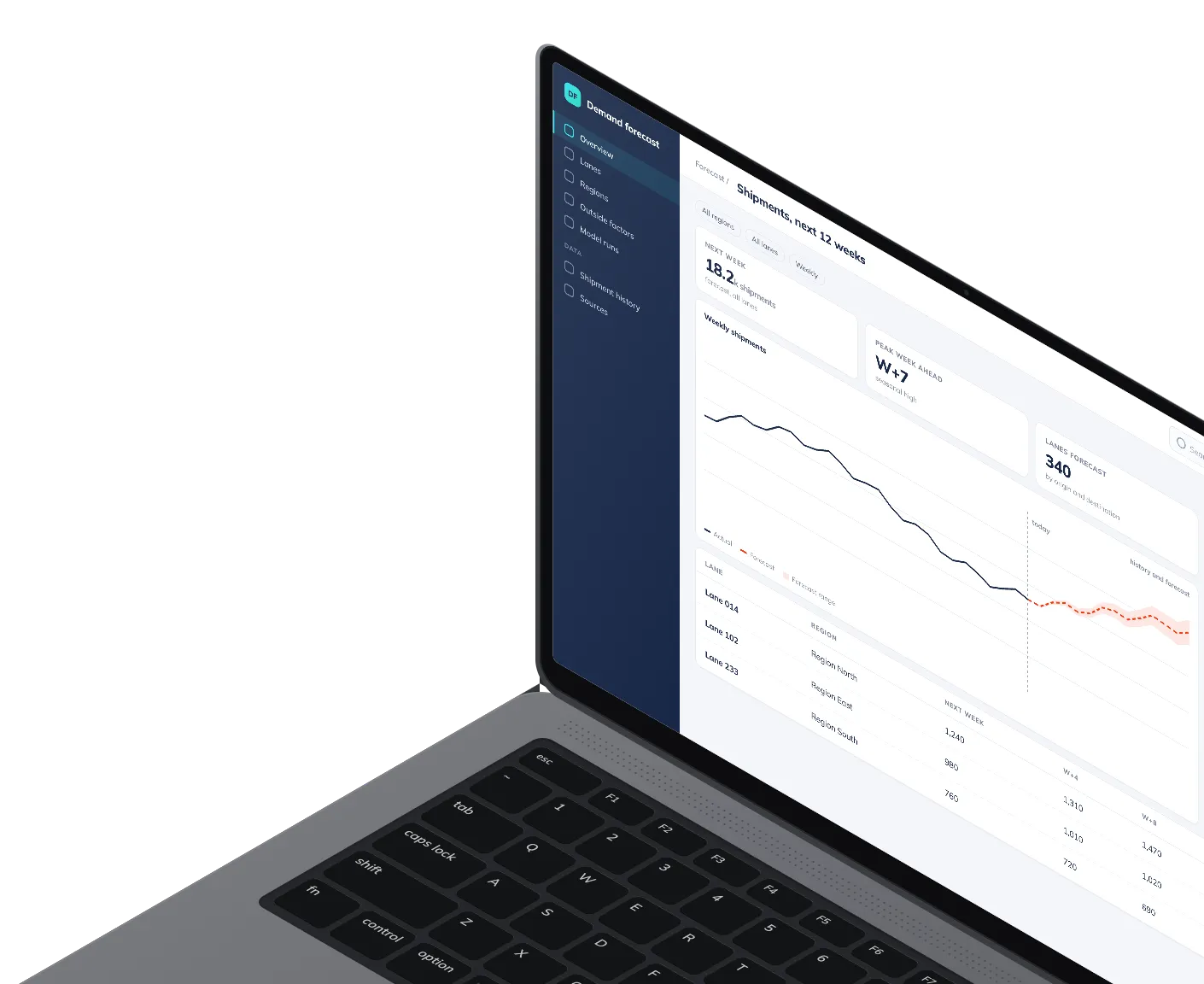
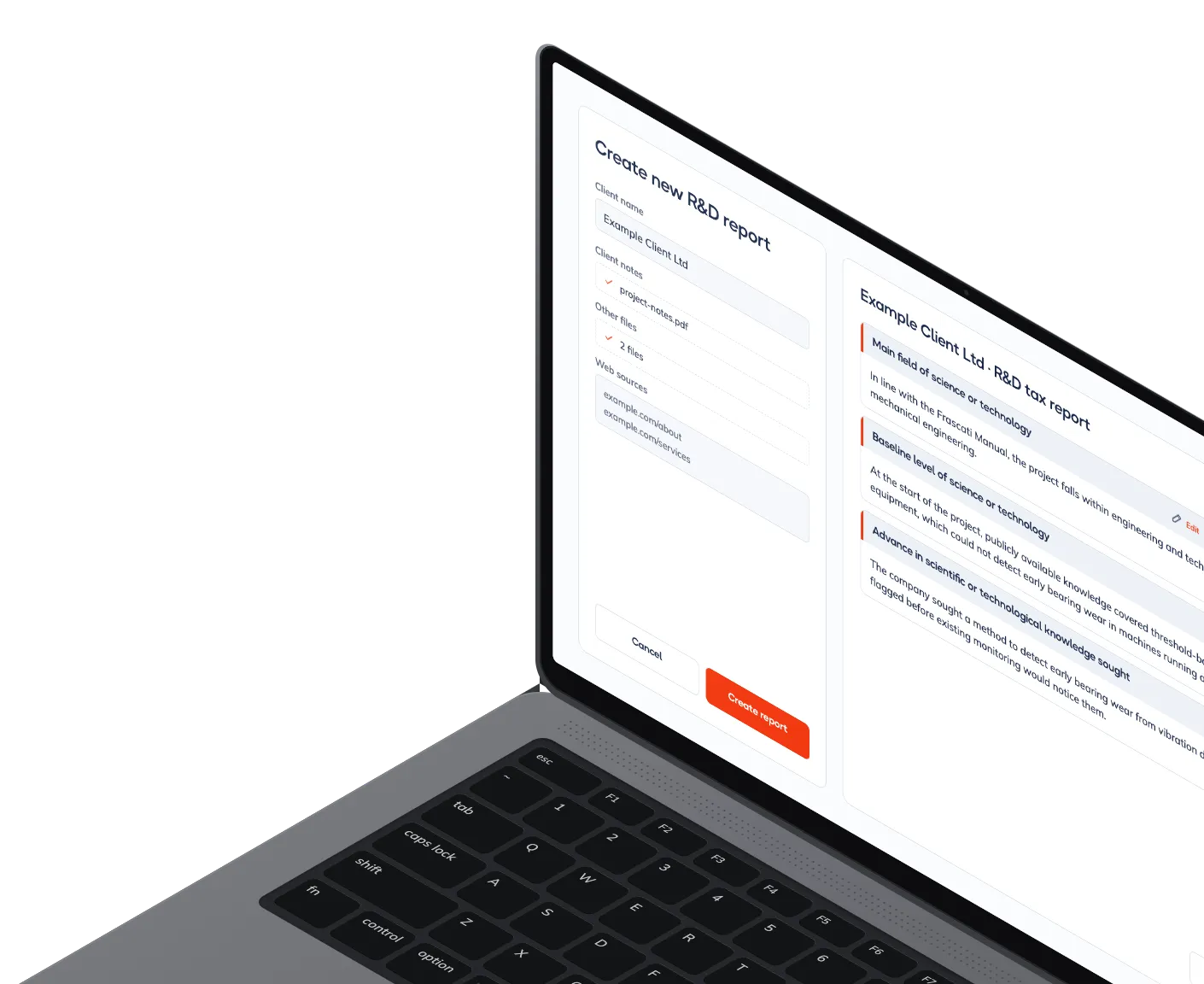
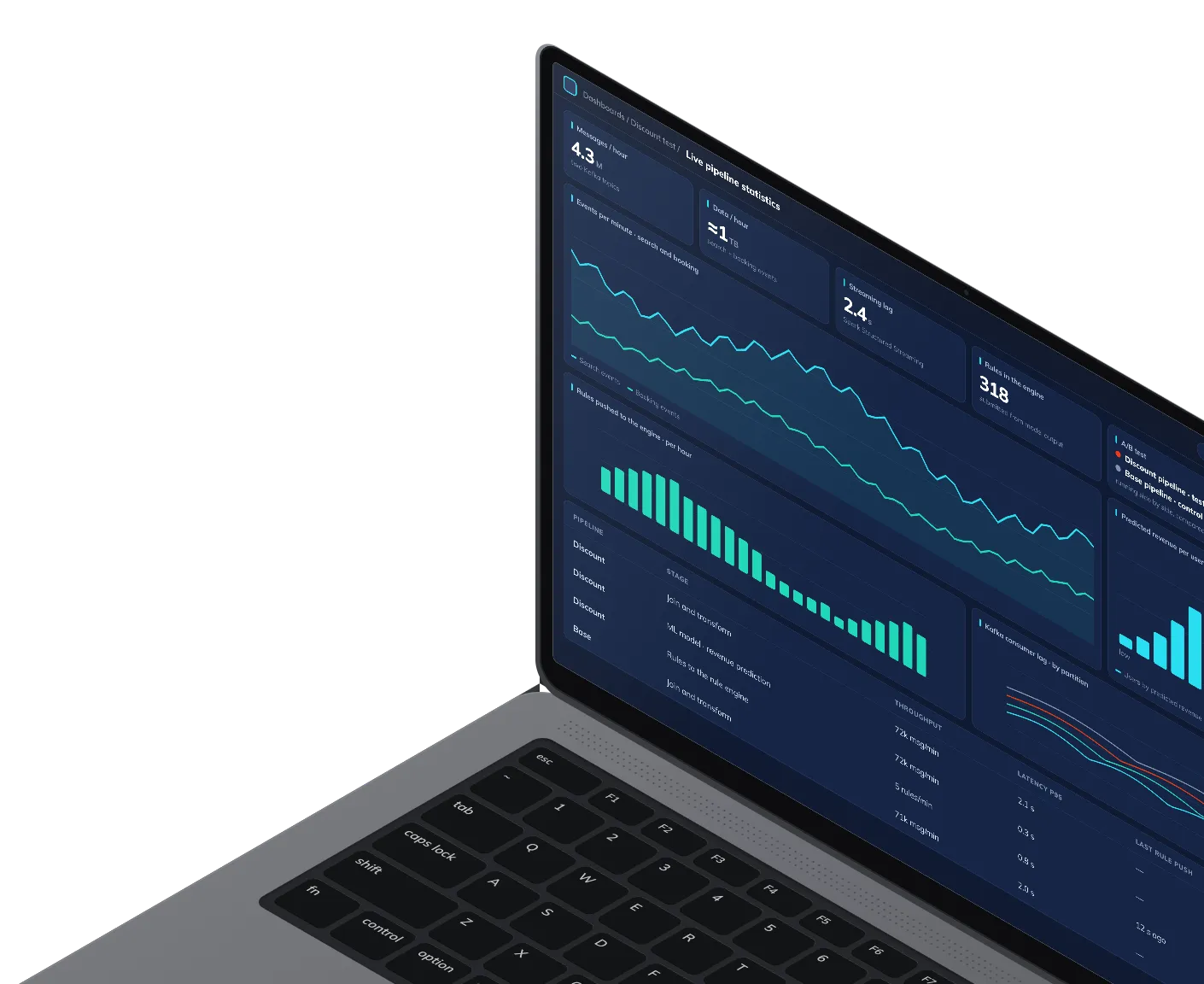
Each system runs on the client's own data. A logistics company's forecast learns from its shipment history, which we cleaned first. A tax firm's drafting system retrieves from its guidelines and past reports, and a travel company's revenue model reads live search and booking events.
PROCESS
A demo that impresses proves little about an AI system. What counts is how it does on your data, with its duplicates and gaps, and on the questions your users really ask. Each step moves you closer to knowing that.

STEP 1
We review the use case, data and systems, and say if AI isn't the answer. Where you can share data under the NDA, we run the riskiest part on a sample of it before you commit to a build.
Usually 2–4 weeks

STEP 2
Before the build, we agree with you the test set the system is scored on and the score it needs to go live.

STEP 3
Bi-weekly demos show the system running on your data, and you judge progress on its scores.

STEP 4
We release in stages into your systems, and at first a person reviews the outputs the system is unsure about.

STEP 5
Live systems drift as data and models change. Our data scientists check live outputs and watch for drift.
TECHNOLOGIES
Python
PyTorch
scikit-learn
Mistral
OpenAI API
Anthropic Claude
Google Gemini
Llama
Amazon Bedrock
Azure OpenAI
Google Vertex AI
LangGraph
LlamaIndex
pgvector
Langfuse
MLflow
SECURITY AND DATA
Some data can go to a hosted LLM API, and some should never leave infrastructure you control. Which is which is decided with you. A middle route is calling the model through your own Amazon Bedrock, Azure OpenAI or Google Vertex AI account, so it runs under your account in your cloud.
Systems we control are hosted in the EU, and we work under GDPR as an EU company. Code and data in your own systems, such as repositories and cloud accounts, stay wherever you keep them. Where we handle your data, a data processing agreement is part of the engagement.
Each engineer and data scientist works through a named account you issue in your own systems, with the access their role needs. All of it is removed when they leave the engagement.
A prompt sent to a hosted model is data leaving your systems. Keep personal data out of prompts and logs wherever the task doesn't need it. Masking names and account numbers before the call is often enough, and it is cheaper than explaining a leak.
Text inside a document can try to give the model orders of its own, which is called prompt injection. Treat document text as content to read, and limit what the system can reach, so a line planted in a supplier's PDF can't send an email or change a record.


WHY OCTALANCE
Technical assessment, soft-skills evaluation, job-history analysis. The assessment gives AI engineers RAG, evaluation-set and drift scenarios. Data scientists get a modeling task checked for leakage.
Across the company, our engineers average 7 years of experience and 80%+ are senior-level or above. That matters in AI work, where the model is only one part of the system.
We have certified AWS, Azure, Databricks and Snowflake engineers, and hands-on Google Cloud experience. AI builds usually read their data from one of these platforms.
Our engineers use AI tools in every engagement, and only the ones the client approves. Code an AI wrote is reviewed by another AI agent, then by a human engineer, before it is merged.
The R&D tax drafting system keeps the firm's knowledge in its documents, with no fine-tuning. The logistics forecast also reads fuel prices, and the travel revenue model works on live events.
HOW WE WORK
We deliver an agreed scope end to end: plan, team, milestones, QA and release. You make the product decisions and accept each milestone.
Fixed price per milestone after discovery, or time and materials against an estimate.
A short phase before a build: requirements and backlog, architecture, an estimate and a delivery plan.
Fixed price, usually 2–4 weeks.
Our engineers join your team and work in your process and tools. You manage them; we source, vet and contract them.
Hourly rate per engineer by role and seniority, invoiced monthly.
PEOPLE
Already have a tech lead and a process? Browse AI engineers and data scientists for hire and add them to your own team. We present matched candidates within 7 days of your request, and you interview each one before anyone starts.
AI engineers who join your team and data scientists on your team work in your process and tools, and your tech lead sets their priorities. Paired on one problem, the data scientist checks whether a model beats a simple baseline and the engineer makes it run in your product.
LLM features, RAG pipelines, agents and the evaluation around them, built inside your codebase.
A lead-level engineer can take the technical lead on AI work your team hasn't done before.


Framing the question, exploring the data, and building and testing predictive models.
The work often starts with an analysis that shows whether a model is worth building.


Pipelines and warehouses your AI reads from, built on Databricks, Snowflake or your cloud's own data services.
We also staff DevOps and cloud engineers for AWS, Azure and Google Cloud.


Tell us what the system should do, and whether you'd rather hand over a project or add engineers to your own team.
FAQ
There's no price list, because the cost of an AI build depends on things nobody can see from outside: your data, your systems and how good the answers have to be. A discovery phase ends with an estimate and a delivery plan. The number moves with how many use cases you start with, since each needs its own data work and its own test set, with how ready the data is, with how deeply the system connects to yours, and with how strict the go-live bar is. Running cost sits apart from the build: a hosted model bills by use, and a model you host yourself trades those fees for servers. After discovery, project delivery is priced per milestone at a fixed price or as time and materials against an estimate. The rest is under Engagement models and terms.
It depends on what you need to learn first. A proof of concept typically takes up to a month, and a proof of value, which tests whether a use case pays off, up to two months. An MVP usually takes 2 to 4 months, after a discovery phase of usually 2 to 4 weeks. A proof of concept or a proof of value can run without one. These are typical ranges, not commitments, and the plan for a larger build comes out of discovery.
Run the tool on twenty or thirty of your own real cases before you decide, the awkward ones included, since a vendor's demo runs on examples the vendor picked. Often the answer is both: a bought product for the general work and a small custom piece for what is specific to you.
Before the build, we agree with you a test set of real questions or past records with known answers, and the minimum score the system must reach. Scores come from people who know the subject, or from a model used as a judge whose marks people spot-check. Where one kind of error costs far more than another, such as a wrong refund against a slow reply, the bar can set a stricter limit for it. Re-run the whole set whenever a prompt, a model version or the data changes, because an improvement on one kind of question can quietly break another. If the scores fall short of the bar, the release waits. For tracing and evaluation our engineers work with Langfuse, LangSmith and Ragas.
Whenever an action is hard to undo. A useful test: if reversing it would mean an apology to a customer, a person approves it first. Each part of the system can reach only what its job requires, so a mistake stays small, and autonomy grows only as the results allow.
Yes, two AI cases, and a streaming case that applies an ML model. The R&D tax case shows retrieval over a firm's own guidelines and past reports, with Azure OpenAI running in the client's Azure account. For a logistics company, we rebuilt a forecasting system on Databricks and added seasonal and economic factors. The travel case is a streaming pipeline on Apache Kafka that applies an ML model. Much of our other AI work is under client NDAs. Whoever you choose, ask how they will score the system before launch.
It can. The EU AI Act, Regulation (EU) 2024/1689, reaches providers that place AI systems on the EU market, and systems whose output is used in the EU, wherever the company behind them is based. It sorts AI systems by risk, with stricter obligations for higher-risk uses. Whether your system falls under it, and in which category, is a question for your legal team.