Java engineers
Spring Boot services for a large product that has to run for years and connect to many other systems.

Hire software developers by role, or bring us the problem and we'll name the role. Ours average 7 years of experience, 80%+ senior-level or above.

BACKEND
Hire by role. Name the role, its seniority and the stack it works in, and we match engineers from our own bench to that brief and send you a shortlist. If you know only the problem, describe it and we'll tell you which role fits, then match for that.
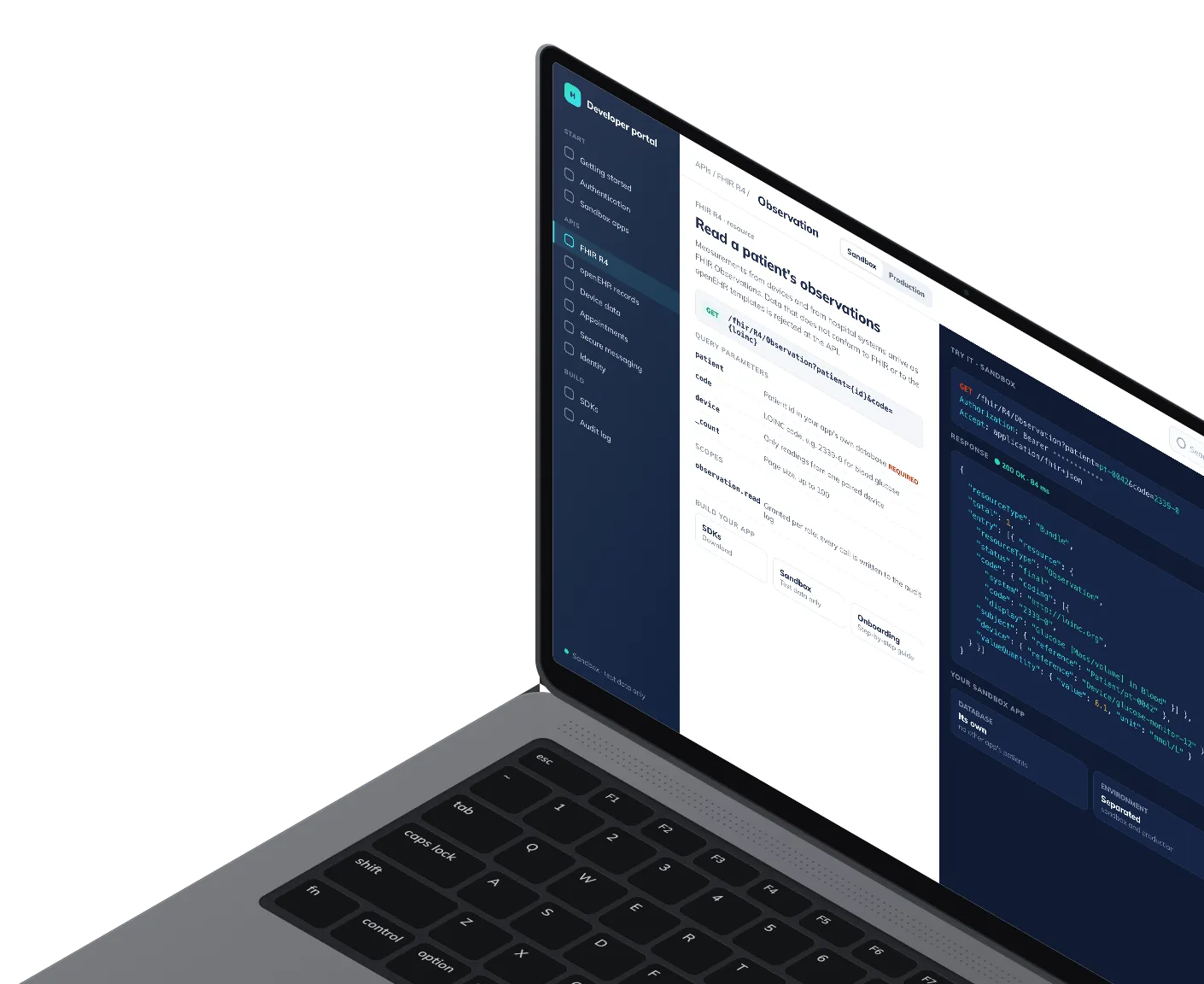
For the back end, the first filter is the stack you already run, since a second backend language is a cost your team keeps paying. For a Dutch eHealth software services provider we built a white-label backend on Spring Boot, and our client's platform passed ISO 27001, NEN 7510 and MedMij.
Spring Boot services for a large product that has to run for years and connect to many other systems.
C# services and APIs for a business built on Microsoft, and the hire when an old .NET Framework system has to move to modern .NET.

Worth it over a general JavaScript developer when the hard part sits on the server, such as API load, real-time traffic or many integrations.

Django or Flask backends that sit close to data or automation work. If the job is only pipelines and a warehouse, a data engineer is the better hire.

FRONTEND
Pick the framework you already ship. A front end rewritten from one framework to another rarely pays for itself, and the screens your users rely on don't care which one built them. Change it when the old one is out of support or slows every release.
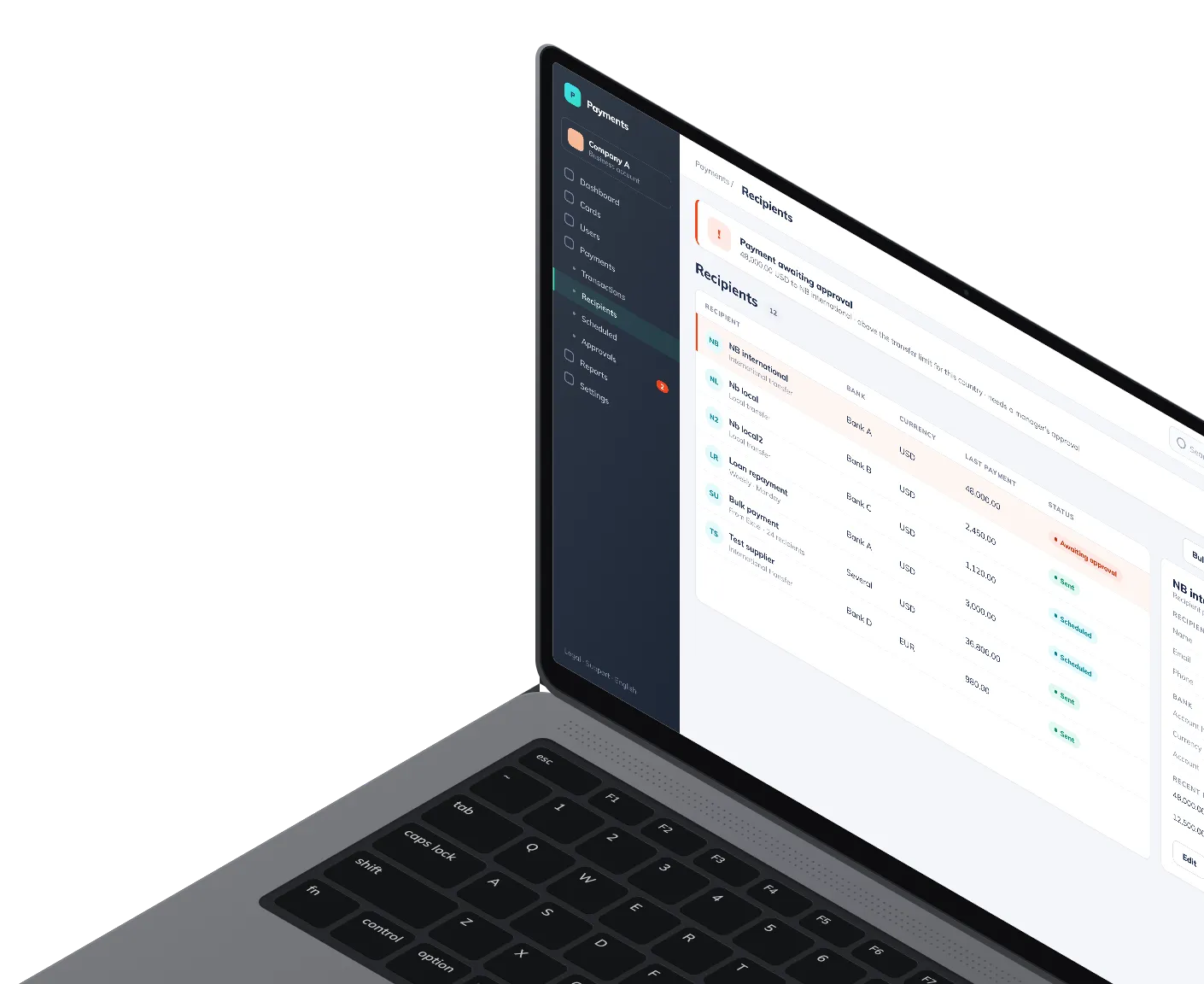
On a fintech company's corporate payments platform, we moved the React frontend from a single-page application to microfrontends on single-spa. Our client's users take about 15% less time to prepare and submit payments, mostly thanks to the UI/UX work.
An interactive product with many screens and states, or a web team that wants to share logic, hooks and state code with a React Native app.


Several teams on one large TypeScript front end. Angular's opinionated structure keeps them building the same way.

Vue already runs your front end, or a server-rendered site gains interactivity a piece at a time. Add Nuxt when you want server rendering and routing conventions, Pinia when components share state.


One person who ships a feature from database to screen, which suits a small team or an early version. When one layer needs depth, hire the specialist for it.


MOBILE
Cross-platform or native is the first decision, and the phone's hardware decides it. An app that mostly shows data and takes input runs well from one Flutter or React Native codebase. One that lives on Bluetooth, sensors or background work is usually cheaper built native.
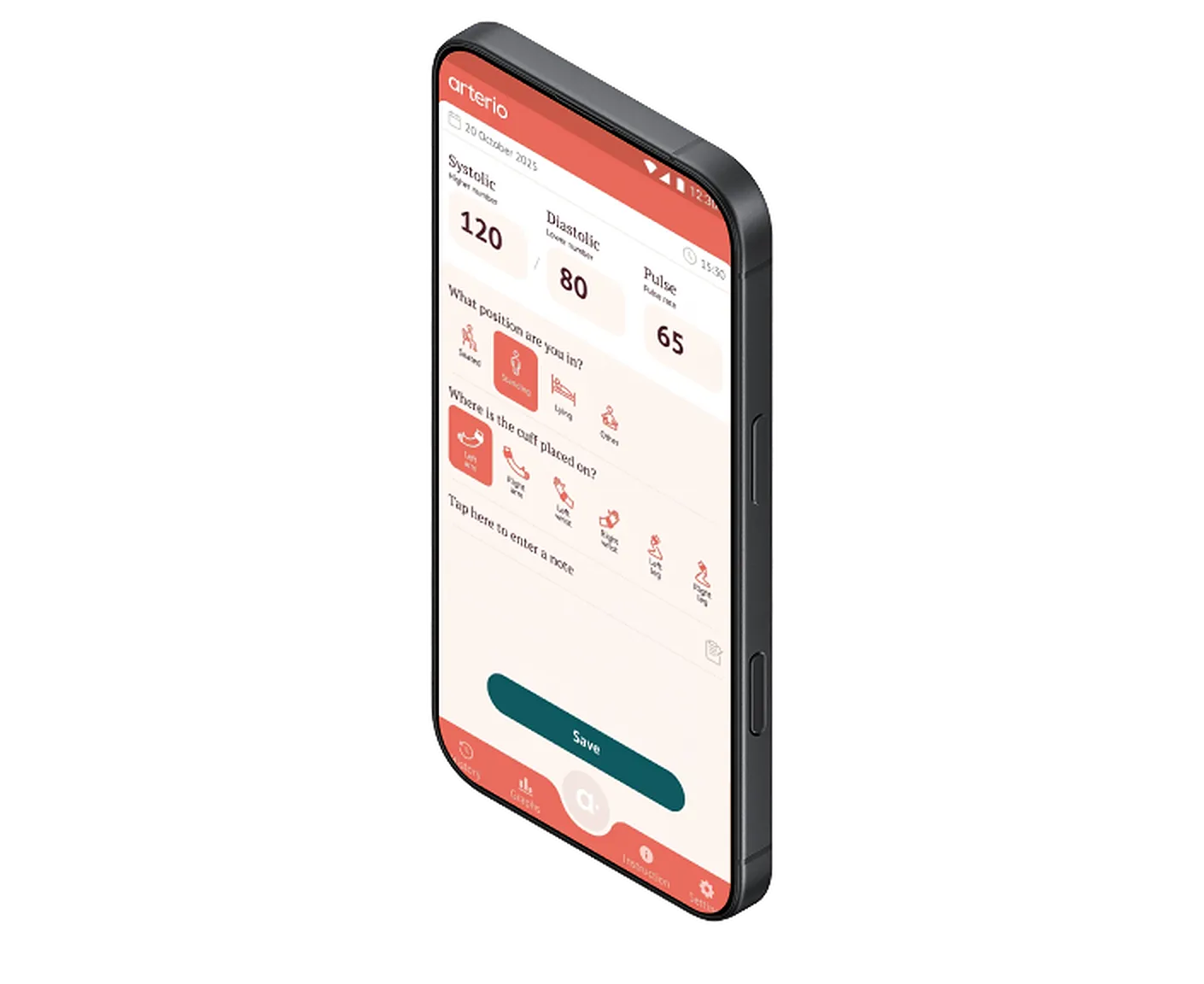
We built Arterio, a native Kotlin app patients with hypertension use to record blood pressure, with readings taken from the monitor over Bluetooth. Our client saw 70% less error in blood pressure logs than with paper logs.
One Dart codebase for iOS and Android, and one team to maintain it.

The web team already writes React, and the mobile app should be in the same language, built by people who can move between both.

Kotlin and the platform's own tools for an app that has to feel native on Android, or an older Java app that needs maintaining or moving to Kotlin.

Swift and SwiftUI for an app that is iOS-first or has to feel fully native on iPhone and iPad.


DATA & AI
Data work runs in an order. Engineers build the pipelines, analysts turn the data into numbers people trust, and scientists and AI engineers build models on top. Hire a data scientist before the pipelines exist and you pay them to clean data.
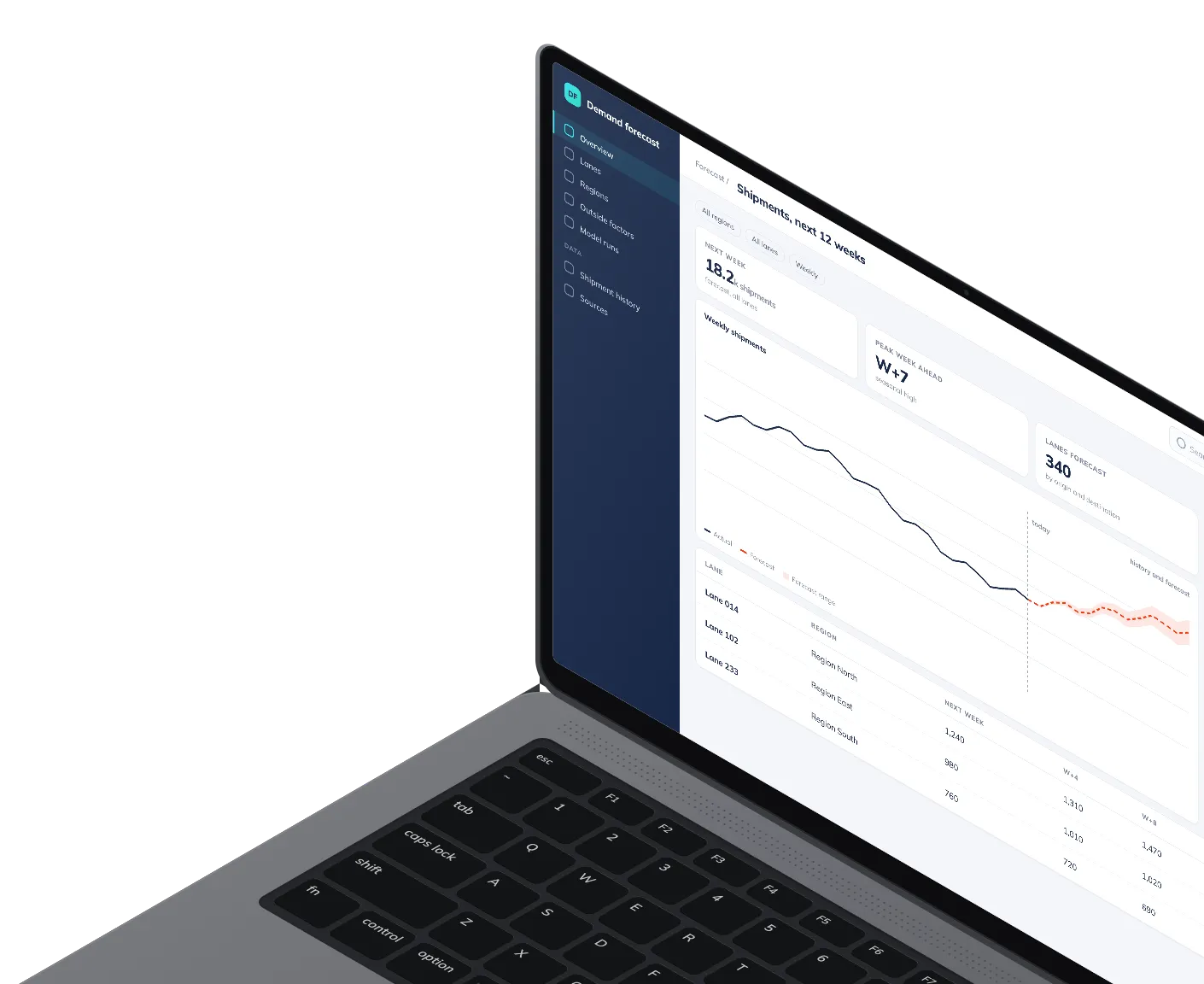
For a logistics company, we rebuilt the demand forecasting system on Databricks and Azure, bringing seasonal changes, economic indicators and competitor data into the models. Our client reports forecast accuracy rising from 70% to 92%.
LLM features and models taken to production inside your product, whether the model is yours or a vendor's.


The open question is what your data can predict or explain, answered in Python or R. Once a model works, an AI engineer puts it into the product.


Reports run slow, numbers disagree between systems, or data never reaches the people who need it. Pipelines and warehouses, built with Apache Airflow, dbt and Apache Spark.


Someone has to define the metrics and explain why a number moved. SQL and BI tools, on top of the warehouse you already have.


CLOUD & DEVOPS
If your releases still depend on one person's laptop, start with DevOps. This group sets up the cloud your software runs on and the pipelines that test and release it, and certified AWS and Azure engineers are part of it.
An AdTech company's inherited Google Analytics to BigQuery pipeline ran on a server left on all day for jobs that took minutes. We refactored it so those jobs start on an event, and cloud infrastructure cost fell from $10 to $0.25 a day.
CI/CD, containers and Terraform. An AWS developer builds the application, while a DevOps engineer builds how it gets tested and released and keeps environments from drifting apart.


Your product runs on AWS and new features should be built on its managed services, such as Lambda, or on containers in ECS or EKS.


Sign-in already goes through Microsoft Entra ID, and new applications should live in the same cloud as the rest of your Microsoft estate, often beside .NET.

PRODUCT & QUALITY
Testing and design are the work that slips first when developers do it on the side. Bugs reach users, screens get designed in code review, and nobody owns either until a release goes wrong in front of a customer.
Our designers worked inside a logistics company's team on its transportation management system, and creating one load went from 3 minutes in the old system to 30 seconds. Automated QA ran on the patient portal and the fair lending platform we built.
Functional, regression and exploratory testing of web and mobile apps, plus API checks by hand, when your developers are still testing their own work.


Releases wait on a round of manual checks. End-to-end and API suites wired into your CI run those checks on every change.


Research and Figma prototypes before a build while the flows are still open, or a fix for a live product where users keep dropping off at the same screens.


TEAM OR PROJECT
Then add engineers to the team you manage. They work in your sprints and your tools and take direction from your tech lead. It suits a team that lacks a skill, or has a known backlog and too few hands.
We run a managed team of dedicated developers for you. A delivery manager on our side is your regular contact and keeps the team staffed, and you decide what gets built first. It fits when priorities keep moving but the roles can be named up front.
We take on software development projects from discovery to release. Discovery comes first and sets the requirements and the architecture, then the team builds in sprints with a demo every two weeks, and the delivery is ours to answer for.
We build data platforms and pipelines for reporting and AI, and take on AI development projects through to production. Before an AI build we agree a test set and a go-live bar with you, and discovery tells you when AI isn't the right answer at all.
Our cloud and infrastructure services cover designing an environment on AWS, Azure or Google Cloud, moving existing systems into it and building the CI/CD pipelines your releases go through. We prefer to migrate in waves, each one tested in the target before cutover.


To hire engineers, send the roles, seniority and stack you're missing. For a build, send the problem, and we'll suggest who should do it.

THREE STEPS, EVERY CANDIDATE

Candidates are tested on the stack and seniority they claim. A data engineer gets SQL on large tables and a pipeline to design, an AWS engineer a real setup judged on security and cost.
How they speak English, take feedback and work in a team. Your people will talk to them every day, so we weigh this step as heavily as the code.
Our check of the CV and the career behind it. It is one step of three because a CV can't show how someone copes when a deadline moves or the spec changes halfway.
The candidate writes code live and talks it through, so we see how they reason. In staff augmentation you can watch it as part of your own selection.
We run it only when a client asks for one. It confirms the CV is genuine. Whether the person can do the job well is what the vetting steps test.
HIRING PROCESS
The times on each step are the usual ones. What we commit to is presenting matched candidates within 7 days of your request. Your interview is the step that moves the most, because it runs on your team's calendar.

STEP 1
We talk through the roles, seniority, skills and team setup you need, and agree what a good match looks like.
1 day

STEP 2
We match engineers to the brief and send you a shortlist, with the reason behind each match.
1–2 days

STEP 3
You interview the shortlist and decide who joins. You can turn anyone down, on the CV or after the call.
1 day

STEP 4
We sign the contracts and the NDA, and your team opens the accounts the engineer will work in.
1–2 days
TERMS OF WORK
Our engineers join your team and work in your process and tools. You manage them; we source, vet and contract them.
Hourly rate per engineer by role and seniority, invoiced monthly.
An agreed team capacity that we manage. We coordinate delivery and handle the team's make-up. You set the priorities and own the backlog.
Per-engineer rates, or a fixed monthly fee for the agreed capacity.
We deliver an agreed scope end to end: plan, team, milestones, QA and release. You make the product decisions and accept each milestone.
Fixed price per milestone after discovery, or time and materials against an estimate.
ACCESS AND DATA
You get our own engineers, employed by Octalance, some under a B2B contract. Only when our bench can't cover a role in time does a partner supply vetted engineers, and they pass the same steps. They work across Eastern Europe on CET/CEST by default, and we shift the schedule to match yours. For a US team we can arrange 4+ hours of daily overlap with the West Coast, and more with the East Coast.
In your cloud and tools, they work through named accounts you issue in your own IAM or SSO, with only the access their role needs. When an engineer leaves the engagement, all of it is removed.
Systems we control are hosted in the EU, and we work under GDPR as an EU company. Code and data in your own systems stay wherever you keep them. Where we handle client data, we sign a data processing agreement.

CASE STUDIES
Each role group on this page has one project in these cards, so you can see that kind of work in a shipped product. A case page names the stack, what our team was responsible for and the results our client reports.
Read each for the part that was ours. On the payments platform we built the frontend, and the client's teams built the backend. On the logistics redesign our designers set the patterns first, then our team took part in the build, Angular on the front end and Node.js on the back.

"If nobody on your side can review a pull request, more engineers will wait on you. That's when we suggest a project instead."

Dzmitry Kuchynski, Chief Operating Officer, Octalance
FAQ
It comes down to how many engineers you use, and the role and seniority behind each one's rate. Rates are agreed per engagement, so the quickest way to a figure is to send us the roles. How each model is billed, from an hourly rate under staff augmentation to a fixed price per milestone on a project, is in Engagement models and terms on this page.
Under staff augmentation, yes, every one of them. With a managed team or project delivery, we set up the team and answer for it, so you can interview the key roles, and we select the rest.
On a managed team, replacements are ours to handle and the team keeps its capacity. On a project, the team's make-up is ours, because we answer for the scope. Under staff augmentation we replace them within 14 days at no extra cost.
A UI/UX designer can be placed part-time if the work calls for it. Engineers work full-time for you alone, under staff augmentation and on a managed team, where we guarantee it.
You do. The code usually lives in your own repositories, sometimes in ours, and if you'd like an NDA before you share project details, we sign one at that stage. IP passes to you on payment, and handing everything over at the end is a routine part of the engagement.
The start follows your interview. Once you've chosen someone, contracts and access usually take one to two days. The commitment in our hiring process covers presenting candidates, not a start date. A managed team starts within a month, depending on its size, and can begin with a few developers.
Yes. We also staff PHP, Go and JavaScript developers, Power BI and Google Cloud developers, project managers, business analysts and product managers, and site reliability and platform engineers. Name the role and the stack it works in when you write to us.