A feature, end to end
The schema change with a safe migration, the endpoint, the screen and the Docker and CI/CD pipeline that ships it to your cloud. When infrastructure becomes work of its own, add a DevOps engineer.


When you hire full-stack developers through us, we present matched candidates within 7 days, and say so when a specialist is the better hire.


THE WORK
Send us the role, the seniority and the frontend and backend you run. We present matched candidates who have passed our three vetting steps. You interview them and choose, and the engineer joins your team, where your tech lead directs the work like anyone else's.
Some products need a whole build rather than one engineer, and for those we take on product software development. Discovery settles the requirements and the architecture first. Then our team carries the full-stack development of the agreed scope end to end.
The schema change with a safe migration, the endpoint, the screen and the Docker and CI/CD pipeline that ships it to your cloud. When infrastructure becomes work of its own, add a DevOps engineer.
REST or GraphQL endpoints with authentication, plus the code that connects your product to payment providers, email services and the systems you already run.


Early on, before the team is big enough for specialists, one engineer can take an idea to something users can click through and you can show investors.


Extending a repository another team started, with thin documentation and missing tests. A sound first step is tests that pin down how the code behaves today, so the next change shows what it breaks.


Describe the product and the team around it, and we will tell you whether one full-stack engineer or a pair of specialists fits better.

THE HIRING DECISION
A rule for when to add a frontend or backend specialist
One full-stack engineer is the right first hire for a small product team, an early product, or a feature that has to go from database to screen with no handoff. It suits a CTO who is still the only senior engineer, too. Hiring specialized developers that early buys depth the product can't use yet.
Most full-stack engineers lean to one side, frontend or backend. Pick the lean that matches where your product is hardest. The other half still has to pass our assessment.
Add depth where the product asks for it. A frontend specialist belongs where the interface is a product of its own, with many screens, complex state and heavy logic in the browser. A backend specialist belongs where most of the weight sits behind the API. Your full-stack engineer then keeps the seam between the two, the part specialists tend to leave to each other.
Past that point, the question is who runs the work. If your tech lead does, keep adding full-stack engineers to your team through staff augmentation. Priorities that keep moving and a monthly cost you can plan fit a dedicated full-stack team that we manage. With no tech lead to direct an engineer day to day, start with project delivery, where we plan the work and run the team.
Full-stack work, as we staff it, pairs React.js, Angular or Vue.js in front with Node.js, Java, .NET or Python behind. TypeScript, a SQL database and REST or GraphQL APIs are the common ground. Angular with Java is a common pairing in long-lived business applications, and it is the combination we can show in published case studies.
When the interface outgrows one person, add a frontend specialist who knows your framework. We staff React developers, Angular developers and Vue.js developers as hires of their own.
The backend usually follows what you already run. Node.js puts TypeScript on both sides of the API, so one engineer moves between screen and service without switching languages. Java with Spring Boot suits services and systems meant to last a decade. .NET fits teams already invested in Microsoft tooling, and Python fits products where data processing or machine learning sits close to the API. For a backend that carries most of the load, we also staff Node.js developers and Java developers who work on the backend alone.


TECHNOLOGIES
React.js
Next.js
Angular
Vue.js
TypeScript
Node.js
Java
Spring Boot
.NET
Python
REST APIs
GraphQL
SQL databases
Docker
CI/CD
AWS
CASE STUDIES
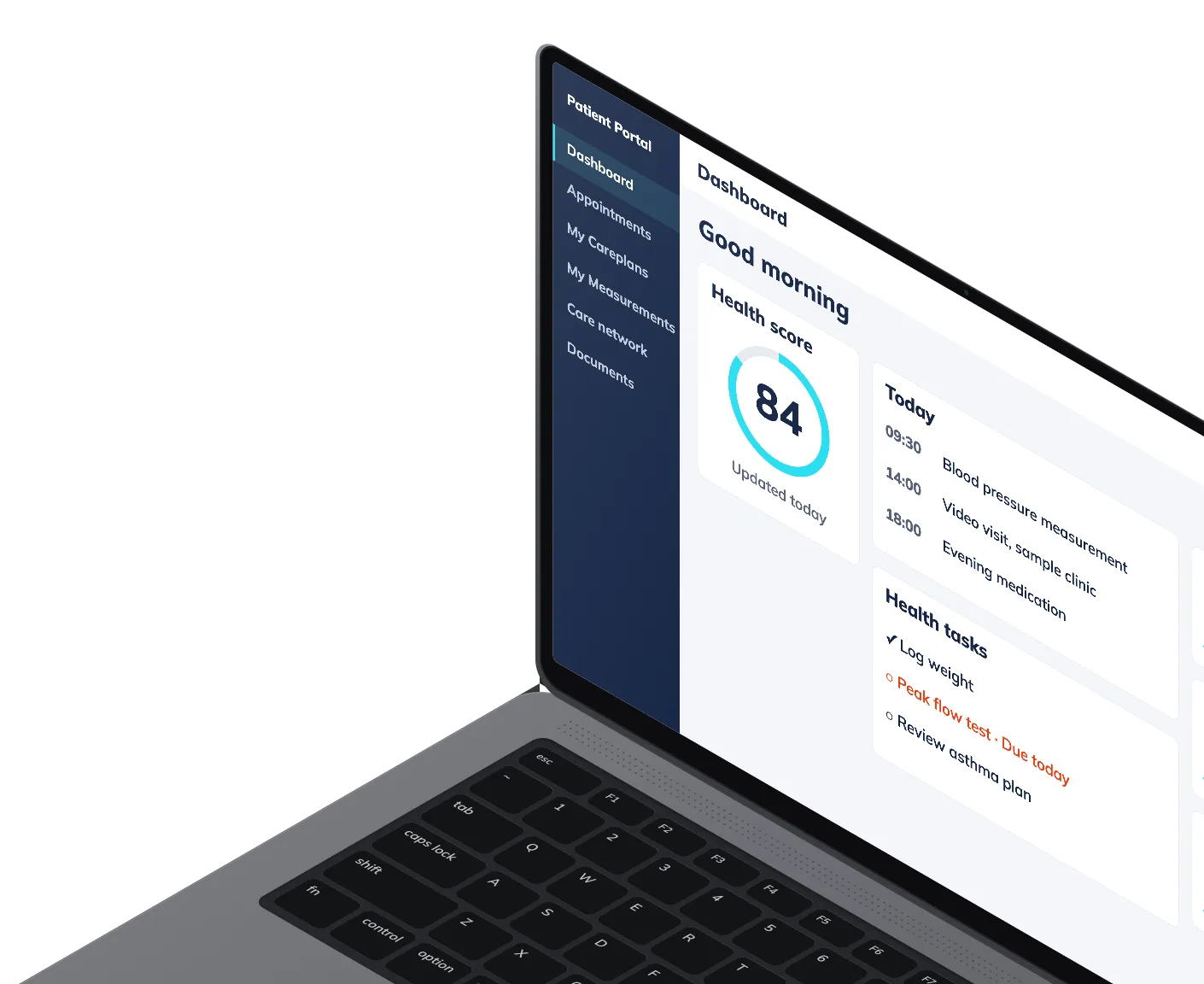
For a Dutch eHealth provider that came back for a second project, we built a Java and Angular patient portal on the certified platform we had delivered first. The team on it included full-stack engineers.
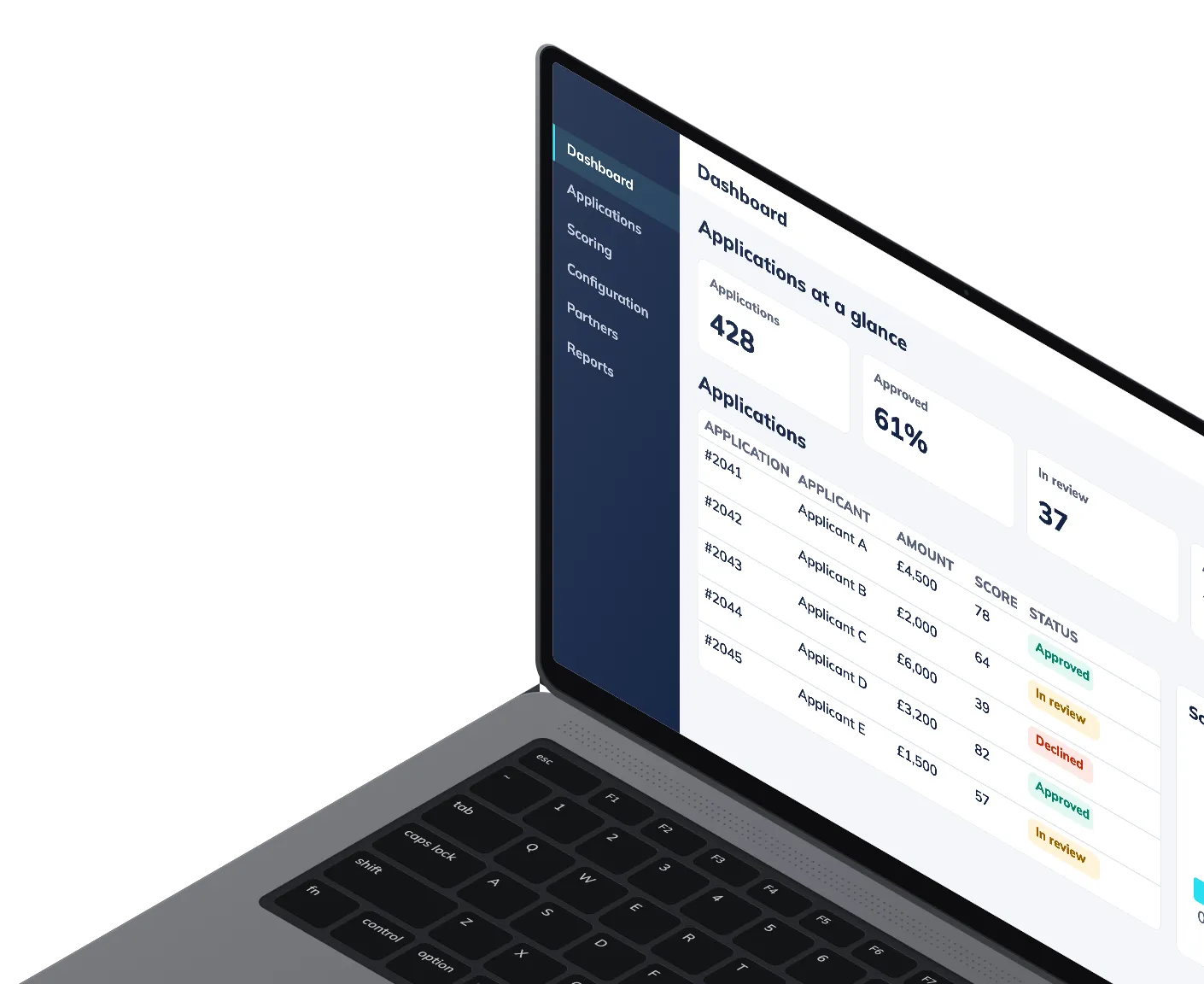
The teams on two more products included full-stack engineers as well: a fair lending platform in Java, Angular and TypeScript for a UK-based fintech startup, and a PIM solution for a German company, whose Angular front end replaced one written in Adobe Flex, on a Java back end.
PROCESS
These are usual times for each step. What we commit to is presenting matched candidates within 7 days of your request. If the work outgrows one person, we also staff specialists for every part of the stack.

STEP 1
We agree the seniority, the frontend and backend you run, and how the work splits between them.
1 day

STEP 2
We shortlist candidates whose frameworks, tested in our assessment, match your frontend and backend.
1–2 days

STEP 3
You interview the candidates you pick and decide who joins your team.
1 day

STEP 4
Contracts, an NDA, security and access to your repositories and tools are settled before the engineer touches your code.
1–2 days
TERMS OF WORK
Our engineers join your team and work in your process and tools. You manage them; we source, vet and contract them.
Hourly rate per engineer by role and seniority, invoiced monthly.
An agreed team capacity that we manage. We coordinate delivery and handle the team's make-up. You set the priorities and own the backlog.
Per-engineer rates, or a fixed monthly fee for the agreed capacity.
We deliver an agreed scope end to end: plan, team, milestones, QA and release. You make the product decisions and accept each milestone.
Fixed price per milestone after discovery, or time and materials against an estimate.
WHY OCTALANCE

Our technical assessment tests each frontend and backend framework a candidate claims, at the seniority they claim. A soft-skills evaluation and a check of their job history follow.
Our engineers work through named accounts in your own identity system, with only the access their role needs. When an engineer leaves, all of that access is removed.
Nothing AI-written is merged before a human engineer reviews it, and another AI agent checks it first. Where your rules allow, our engineers use tools such as GitHub Copilot, Cursor or Claude Code.
We pick the location and shift the schedule to match your hours, CET/CEST by default. For US teams we can arrange 4+ hours of daily overlap with the West Coast, and more with the East Coast.
BY THE NUMBERS
7 years
Average experience, company-wide
80%+
Senior-level or above, company-wide
50+
Projects delivered by our team

"The first full-stack hire rarely goes wrong. The second one does, when the product needs depth on one side and gets another generalist."

Dzmitry Kuchynski, Chief Operating Officer, Octalance
FAQ
Matched candidates reach you within 7 days of your request. It can happen sooner, but that isn't guaranteed, and it is the time to a shortlist rather than a start date. The start depends on how quickly you can interview, and on onboarding, where the paperwork and access to your systems get settled. Booking interviews in the same week is the simplest way to bring the start forward.
Under staff augmentation, you pay an hourly rate per engineer by role and seniority, invoiced monthly. What moves the total is how many engineers you use, their role and their seniority. Rates are agreed per client, so we quote one for your role once we have its details.
Yes. You can add engineers one at a time: a frontend or backend specialist arrives next to the full-stack engineer you already have, who knows the codebase by then and can walk them through it. Each new engineer goes through the same matching and your own interview. If the team grows to a size you would rather not manage yourself, augmented engineers can move into a managed team that we run.
Yes. A full-stack engineer can follow one feature through the whole codebase, from the screen down to the query behind it. That is the quickest way to learn how inherited code fits together, and it shows which parts are safe to change first. A rewrite is a later decision, taken once the code has shown what it can't do. On the legacy PIM solution, we evaluated several options before recommending the Angular rewrite. Under staff augmentation, the engineer works in your process and tools, so every change follows your review rules.
Under staff augmentation, we replace them within 14 days at no extra cost. Tell us early, and say what didn't fit, whether a skill, the pace or the way they work with your team. You interview the replacement before they start.
You do. IP transfers to you on payment, and the NDA comes before the start. The code usually lives in your repositories, sometimes in ours, and handing everything over at the end of an engagement is routine for us.