Hire data engineers when reports run slow and numbers disagree across systems

Teams hire data engineers through us to fix the pipelines under their reports. Company-wide, 80%+ of our engineers are senior-level or above.

Abstract 3D illustration of white pipe segments running from a funnel to a drum, one valve segment in orangeAbstract 3D illustration of white pipe segments running from a funnel to a drum, one valve segment in orange

WHAT THE ROLE FIXES

What does a data engineer fix on your team?

Through us, you get data engineers who build and run the pipelines, the data model and the warehouse your reports read from, which is where slow and conflicting numbers often start. You interview each candidate first. The engineer works under your lead, in your tools and cloud account.

You can augment your data team under your own lead, or have us run a managed data engineering team. If no one on your team can direct engineers day to day, we deliver data engineering as a project end to end.

Pipelines and orchestration

A nightly load written as one long script fails whole, often silently. Engineers split it into tasks Airflow can schedule and retry one by one, with Fivetran where a managed connector exists.

ELT is the default now that warehouse compute is cheap, though masking sensitive fields before they land still calls for ETL. Renting a connector beats writing one, until the source is your own.

One model, agreed metrics

Two reports disagree when each was built on its own copy of the data and its own idea of revenue. One shared model fixes it, with each metric agreed once with the person who owns it.

The modeling approach, Kimball, Inmon or Data Vault, is picked to fit your sources and the reports on top. Transformations live in dbt as SQL models your team can read.

A warehouse people can use

When sales and finance still wait on exports, the data exists but can't reach them. Engineers shape tables for the analysts and BI tools that read them, with access set per role.

Our engineers set up Redshift, Snowflake, BigQuery or Databricks for how it is queried. On Snowflake, loading and reporting get their own virtual warehouses, with zero-copy clones for dev and test.

Validation and monitoring

A bad load should stop at a check. Row counts, null and freshness checks and dbt tests are the usual tools, so a broken source fails loudly.

Which pipeline or report hurts most?

Send us the role and seniority, your cloud and warehouse stack, and the load that breaks most often, and we start matching.

CASE STUDIES

What our data projects fixed

Nested views replaced with incremental tables

A biopharma company's warehouse was built mostly on views that fed other views. One ordinary request could take up to 2 days and block the database, and changing one view could disrupt the whole process. We moved it to tables with incremental loads that Airflow runs in parallel overnight, and no table is built at query time. Processing now fits a 4–5-hour overnight window, and the Customer 360 dashboards are ready each morning.

Analytics-ready datasets for reporting

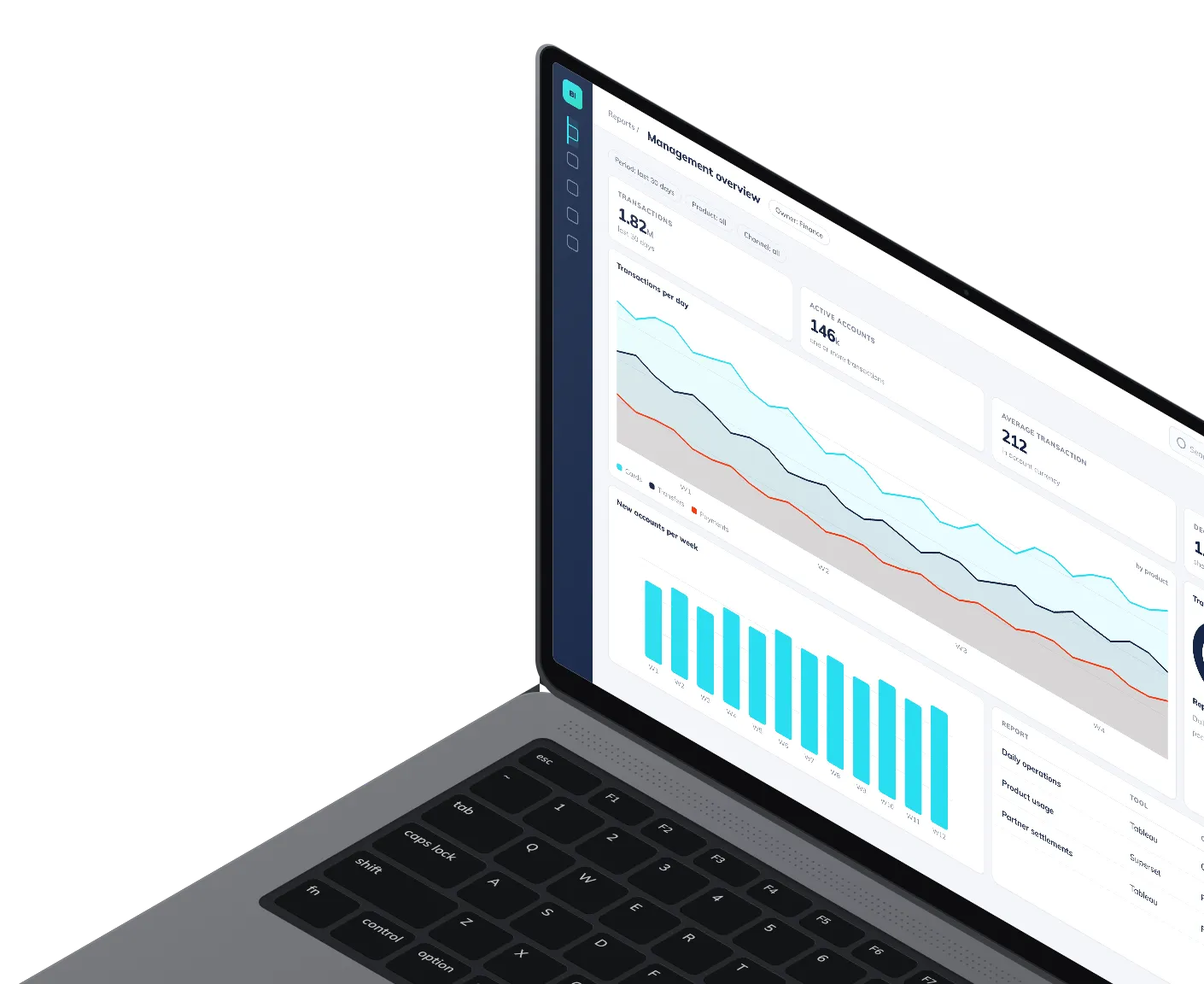
The warehouse already ran on Amazon Redshift but had no pipelines to fill it. After analyzing the sources and reporting needs, we built Fivetran and dbt pipelines for an education company, which turn Salesforce, Shopify and SAP data into analytics-ready tables. Dashboards now refresh daily, a report that took days to assemble takes hours, and validation flags broken data before a dashboard shows it.

Competitor prices, one workflow per source

We built price monitoring for a bus travel company, which collects competitor prices from carriers and ticket aggregators. Airflow runs one Python workflow per source, so a new aggregator is one more workflow, and the others stay as they are. Requests run on EC2 Spot instances, and a request cut off by a reclaimed instance is retried. Our client reported 42% more bus tickets sold within four months of launch, with pricing informed by the data.

10 review sources in one data model

Guest reviews sat on 10 different sites. We built the review dashboard for a hotel chain in Power BI on one data model, so a review from any source is sorted by the same parameters, such as price, staff and cleanliness. One hotel compares directly with another, and the topic pulling a score down shows without reading each site. Our client's guest rating stood at 4.40 before the launch and 4.85 after.

Abstract 3D illustration of white pipe segments feeding a white cylinder, one segment in orangeAbstract 3D illustration of white pipe segments feeding a white cylinder, one segment in orange

BY THE NUMBERS

7 years

Average experience, company-wide

80%+

Senior-level or above, company-wide

50+

Projects delivered by our team

THE RIGHT HIRE

Is an engineer what your data problem needs?

Where the fix sits decides who you hire

The usual moment to hire a data engineer is the third meeting about whose number is right. The instinct is sound, and another dashboard tool would fix nothing, because the trouble sits in how the data was loaded and defined. What you are hiring for is the morning a load fails or a source changes shape. The tool list on the CV matters less.

Engineer or analyst?

If figures arrive late, wrong or different between systems, the fix lives upstream of the report. Ingestion, orchestration and the warehouse itself are engineering work. Data analysts start from the tables that come out the other end and explain why a figure moved. Put an analyst on a broken load and you get a very well-explained broken number.

Forecasts belong to data scientists

When the question is what happens next quarter, the job is a forecast or a model with honest validation. That calls for data scientists for analysis and modeling. They still need the clean tables an engineer builds, so the two roles often arrive in that order.

Pipeline code without warehouse design

Sometimes the warehouse design is settled and what remains is mostly Python, such as connectors to in-house APIs, scheduled jobs and transformation scripts. For that backlog, a Python engineer is the better hire.

The warehouse follows your cloud

Amazon Redshift sits on AWS. On Azure, look at Microsoft Fabric for a new warehouse. An estate already on Azure Synapse is a starting point, not a reason to move. BigQuery is Google Cloud's serverless warehouse, so there is no cluster to size. Snowflake runs on all three major clouds and keeps storage and compute separate. Databricks fits when Spark processing and ML share one platform with SQL.

Kafka earns its place only when data has to arrive as a stream. Most reporting runs on batch loads, and a scheduled batch is simpler to keep running than a stream.


Abstract 3D illustration of stacked white layers with an orange lens resting over one of themAbstract 3D illustration of stacked white layers with an orange lens resting over one of them

TECHNOLOGIES

Tools our data engineers work with

Airflow

dbt

Fivetran

Python

SQL

Snowflake

Databricks

BigQuery

Amazon Redshift

AWS Athena

AWS Glue

Microsoft Fabric

Azure Synapse

Azure Data Factory

Apache Spark and PySpark

Kafka

BEFORE YOUR SHORTLIST

What a candidate passes before you meet them

Every candidate passes three steps before reaching your shortlist. For a data engineer, the technical part is SQL on large tables, data modeling and a pipeline design task, pitched at the seniority they claim.

For some roles there is also a live coding interview: the candidate writes code and explains each choice as they go. Under staff augmentation, our technical interview and live coding can be part of your own selection process, if you want. A background check runs only at a client's request.

Technical skills assessment

Tests the languages and tools on the CV, at the seniority level the candidate claims.

Soft-skills evaluation

We look at communication in English, taking feedback and teamwork. Your engineer will have to tell someone their dashboard is wrong, and how they say it matters.

Job-history analysis

We go through the CV and the work history behind it before the candidate reaches your shortlist.

PROCESS

How hiring through us works

Each of the four steps shows its usual time in days. What we commit to is presenting candidates within 7 days of your request. Hiring for other roles too? Browse engineers and developers by technology.

  1. STEP 1

    Define the role and the stack

    We agree the role, seniority and cloud and warehouse stack, and list the pipelines the engineer will own.

    1 day

  2. STEP 2

    Match tested candidates

    We shortlist engineers whose tested skills fit your stack and the pipelines you described.

    1–2 days

  3. STEP 3

    Interview your shortlist

    You interview the candidates you choose and decide who joins, and nobody starts before you have.

    1 day

  4. STEP 4

    Contracts and access

    We handle contracts and security setup, and you issue named accounts in your own IAM for the warehouse, cloud account and source systems, limited to the role.

    1–2 days

HOW WE WORK

Engagement models and terms

Staff augmentation

Our engineers join your team and work in your process and tools. You manage them; we source, vet and contract them.

Hourly rate per engineer by role and seniority, invoiced monthly.

  • If an engineer isn't the right fit, we replace them within 14 days at no extra cost.
  • Knowledge transfer to the replacement engineer isn't billed.
  • There is no free trial period.
  • 30 days' notice to take an engineer off or end the engagement, with no minimum term beyond it.
  • Out-of-hours on-call only if agreed with you; we set its hours and billing together.
  • After two years, moving an engineer onto your own staff is something we can discuss.

Managed team

An agreed team capacity that we manage. We coordinate delivery and handle the team's make-up. You set the priorities and own the backlog.

Per-engineer rates, or a fixed monthly fee for the agreed capacity.

  • We handle replacements ourselves, and the team keeps its agreed capacity and pace.
  • Engineers work full-time for your team only.

Project delivery

We deliver an agreed scope end to end: plan, team, milestones, QA and release. You make the product decisions and accept each milestone.

Fixed price per milestone after discovery, or time and materials against an estimate.

  • Scope changes go through change requests.
  • On fixed-price projects, a warranty period agreed in the contract, usually 30–60 days.

Whichever model you choose

  • We reply to an inquiry from the contact form within 24 hours.
  • We sign an NDA before work starts, and IP passes to you on payment.

MORE DATA PROJECTS

Pipelines and warehouses we built or rebuilt

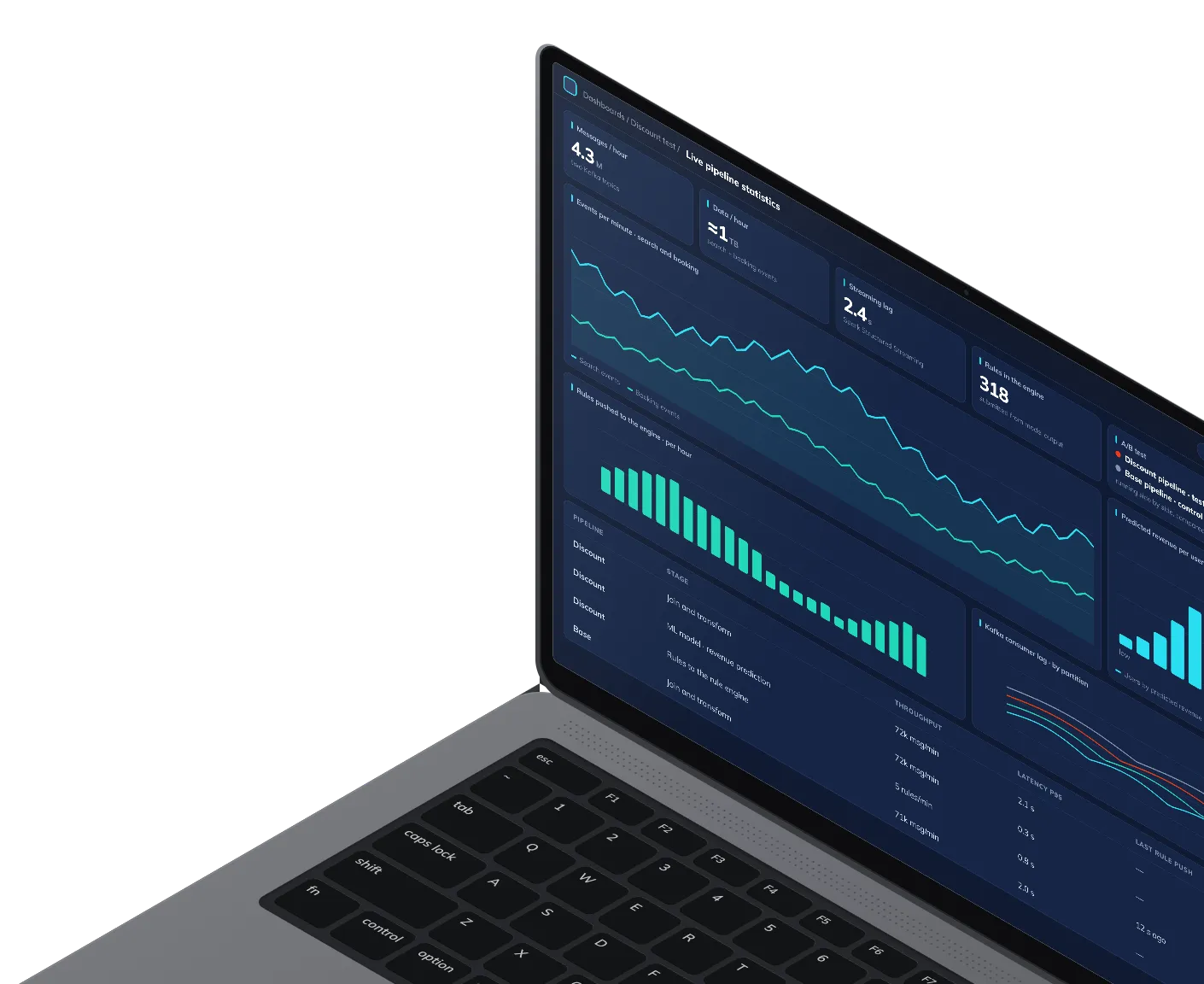
Two of these projects are streaming pipelines. A travel company's discount test read about 1 TB of search and booking events an hour from Kafka. A health app's pipeline joins two live streams as events arrive. The other four are orchestrated in Airflow.

Not every job needs a pipeline. A trading platform for crypto and tokenized assets got its analytics data from one API it couldn't change, with few rows per request and a cap on requests. Our Python wrapper library splits each pull to fit those limits, and the same pull runs 3x faster.

Healthcare

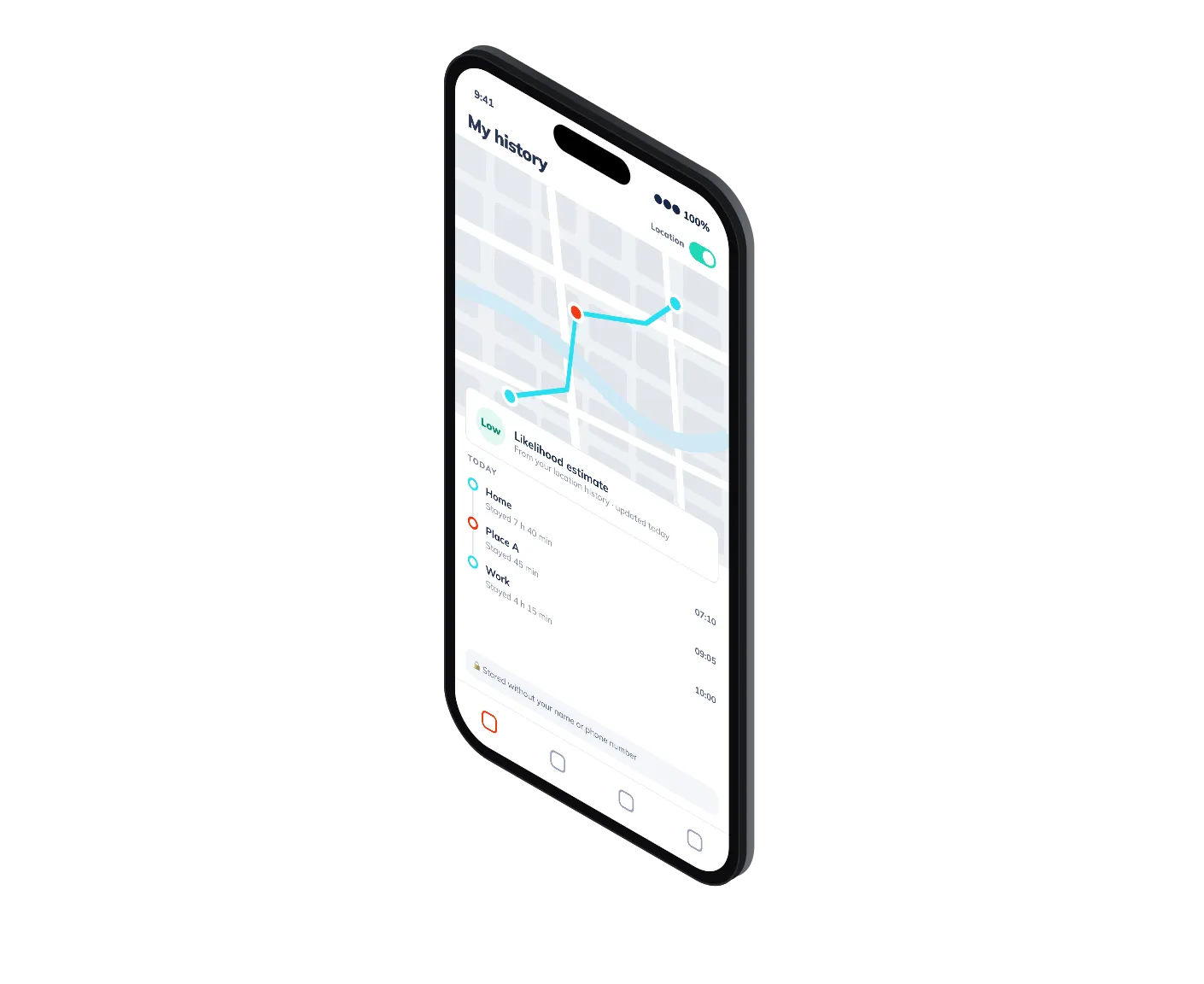
Health app pipeline designed for 10 users or 1 million

Health app on a smartphone: a map of today's location history, a likelihood estimate and the places visited, stored without name or phone number

Who owns each number in your reports?

"A good data engineer knows a number is wrong before anyone else. The ones worth hiring say so while the report can still be fixed."

Dzmitry Kuchynski, Chief Operating Officer at Octalance

Dzmitry Kuchynski, Chief Operating Officer, Octalance

FAQ

What to settle with us before you hire

Who directs a data engineer's work day to day?

Under staff augmentation, your lead does, inside your process and tools. That works when someone on your side can say what a number is meant to show and accept a table as finished. If nobody can, project delivery fits better, because then we run the work.

How soon can an engineer start?

We present matched candidates within 7 days of your request. It can happen sooner, but that isn't guaranteed. Those 7 days are for sourcing. The start follows your interview and an onboarding step of 1 to 2 days for contracts, security setup and the accounts you issue.

What if the engineer turns out to be the wrong fit?

You can turn a candidate down on the CV or after your interview, before anyone starts. If someone placed through staff augmentation still isn't right, we replace them within 14 days at no extra cost. The other terms are in the Engagement models and terms section.

What access to our warehouse and cloud account does an engineer get?

Only what the role needs, through named accounts you issue in your own IAM. The accounts live in your system, so you can see and change them at any time, and all of an engineer's access is removed when they leave the engagement. Where we handle your data, we sign a DPA.

Do you have engineers certified on our platform?

We have certified AWS, Azure, Databricks and Snowflake engineers, plus hands-on Google Cloud experience. Our published Databricks case is the logistics demand forecasting system we rebuilt with Spark ML in Scala, running on Azure. Snowflake has no published case yet. On both platforms our engineers take on new warehouse or lakehouse builds, migration from a legacy warehouse or Hadoop, dbt pipelines, and cost and performance tuning.

Will an engineer overlap with our working hours?

For a US team, we choose the location and shift the schedule, and can arrange 4+ hours of daily overlap with the West Coast, more with the East Coast. Our engineers work across Eastern Europe, so UK and EU teams get the full working day on the default CET/CEST hours. Overlap comes from the schedule we set, not from geography alone. We run no shifts, so there is no 24/7 cover.

Can your engineers work on a warehouse we already run?

Yes. Under staff augmentation the engineer joins your repositories, schedules and tables, under your lead. Give them the list of jobs that run and who reads each output in the first week. It saves a lot of guessing. If the estate is too tangled to staff into straight away, a fixed-price discovery phase, usually 2 to 4 weeks, maps it first, and you keep its outputs either way.