Most data models are worked out at three levels, from business terms down to platform detail, and dimensional modeling is usually counted as the fourth type.
Conceptual model
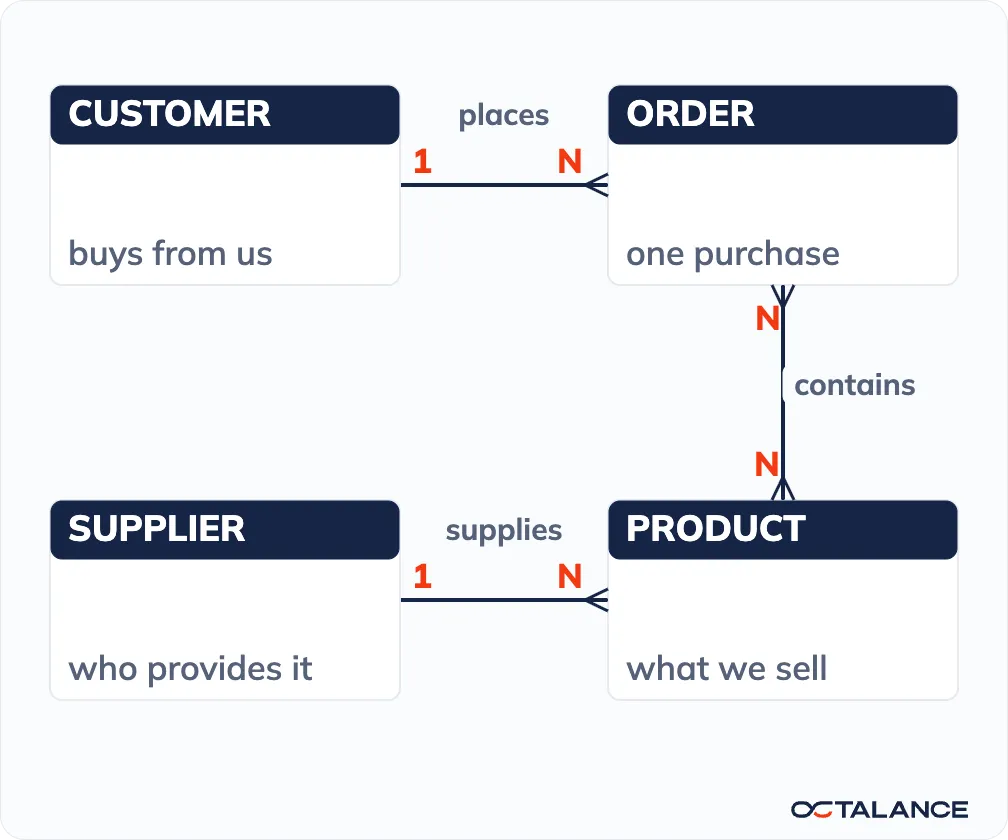
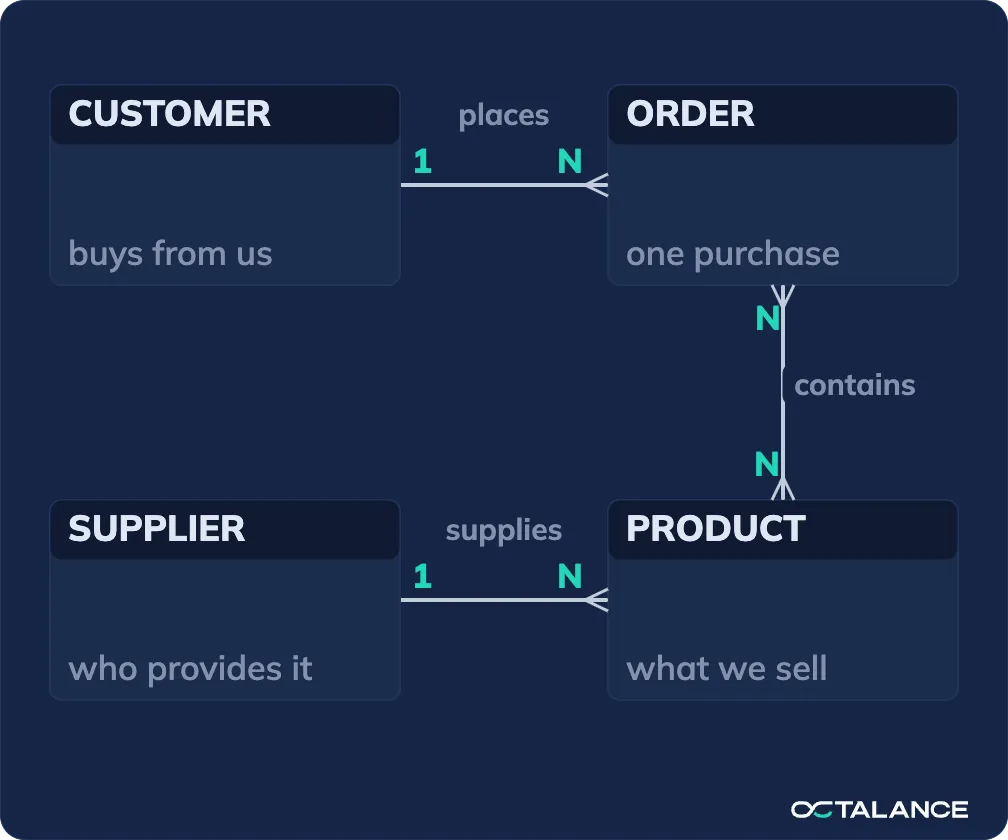
The business view. Core entities such as customer, order or policy, how they relate, and the words people use for them. There are no columns or data types yet. Business owners and engineers agree on it before anyone designs a table.
Logical model
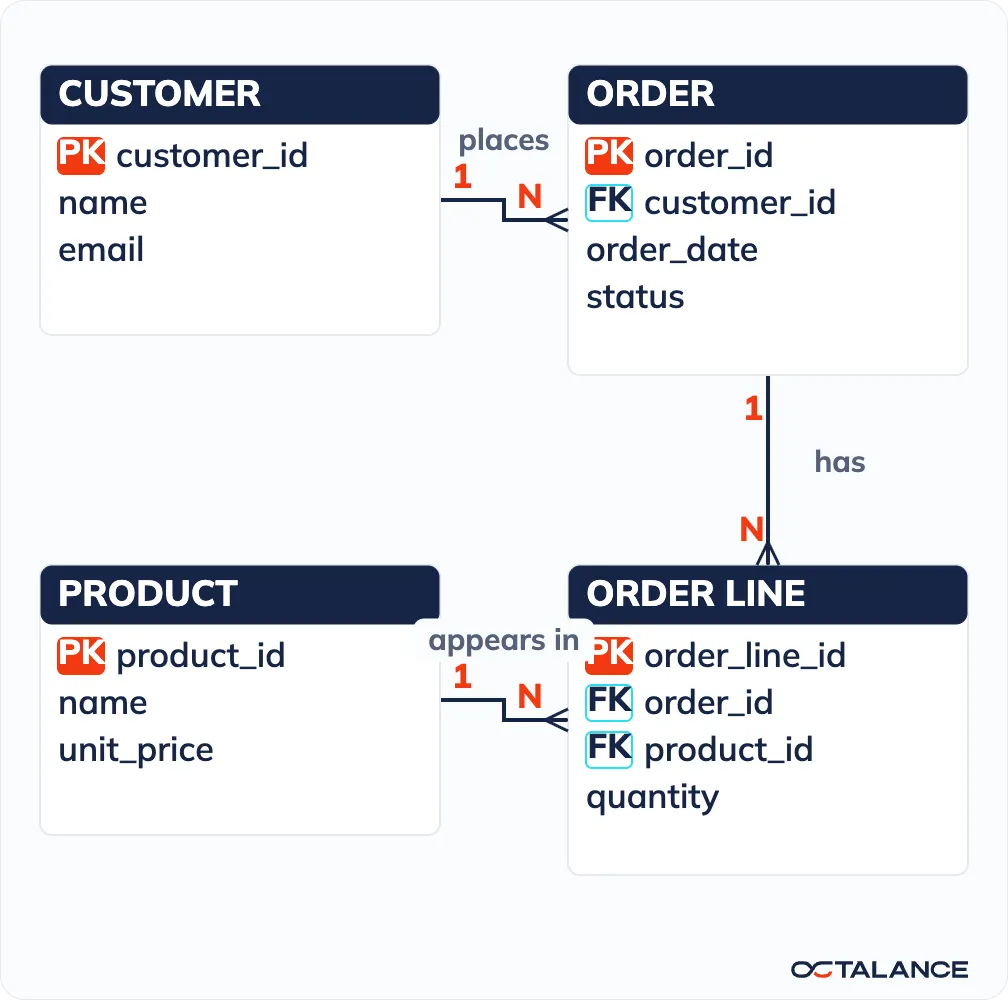
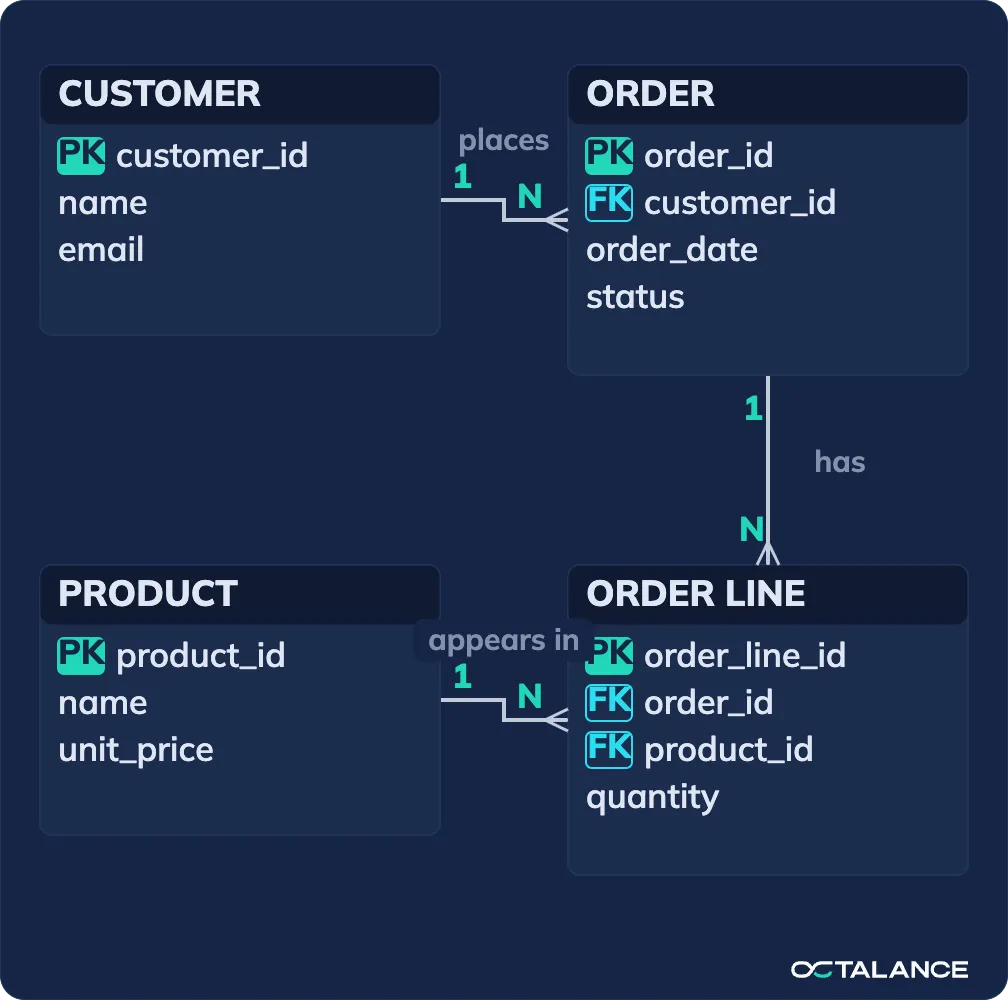
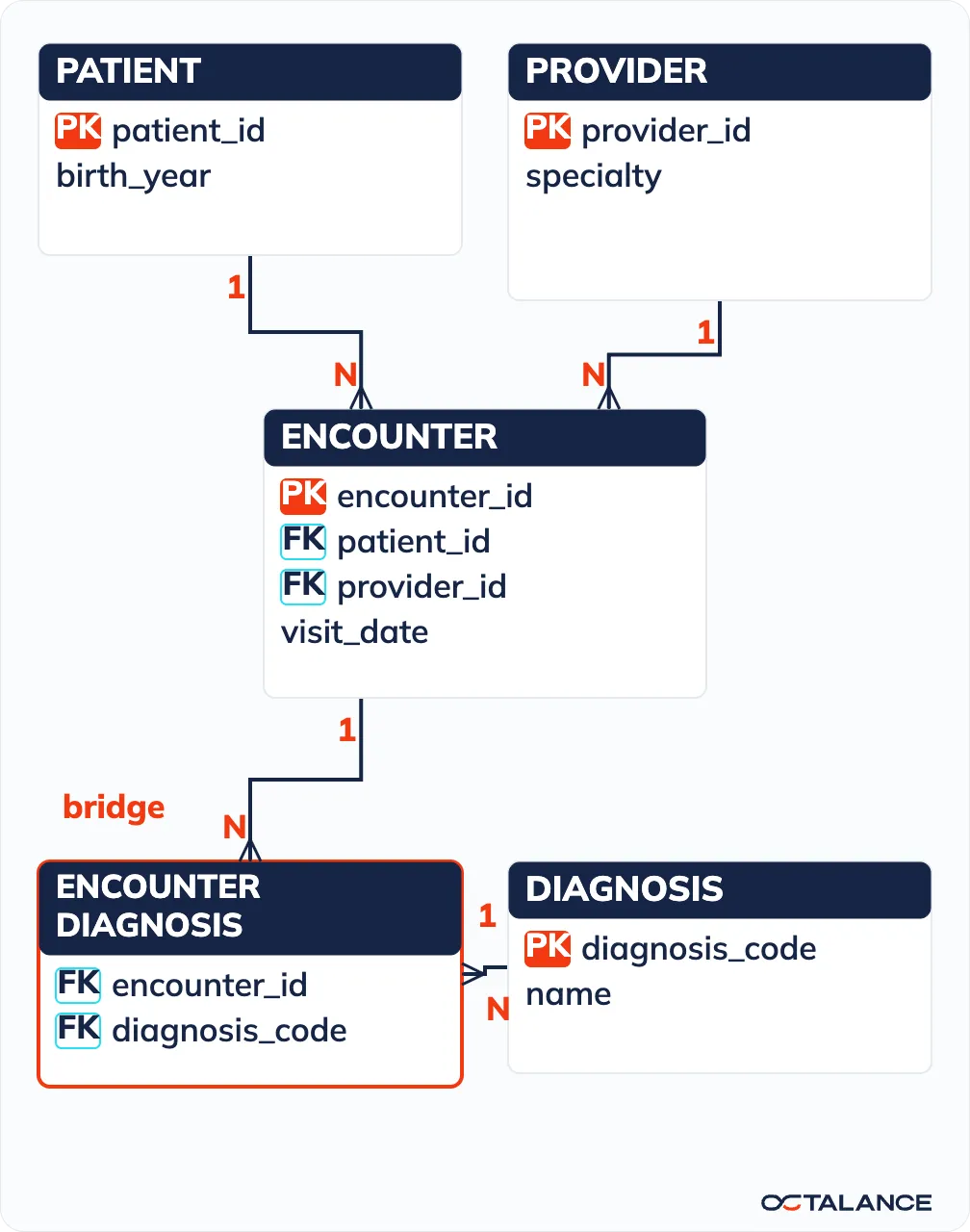
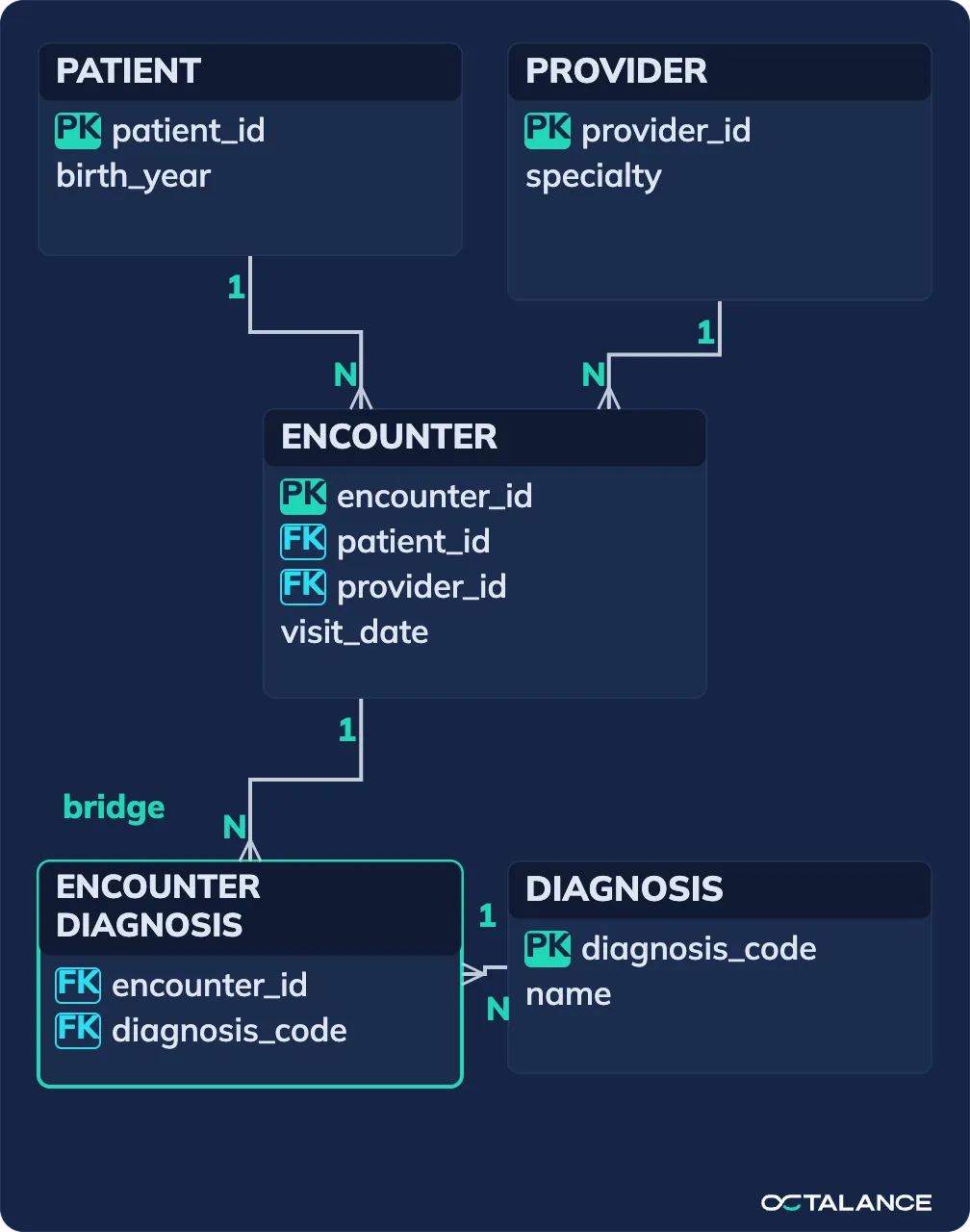
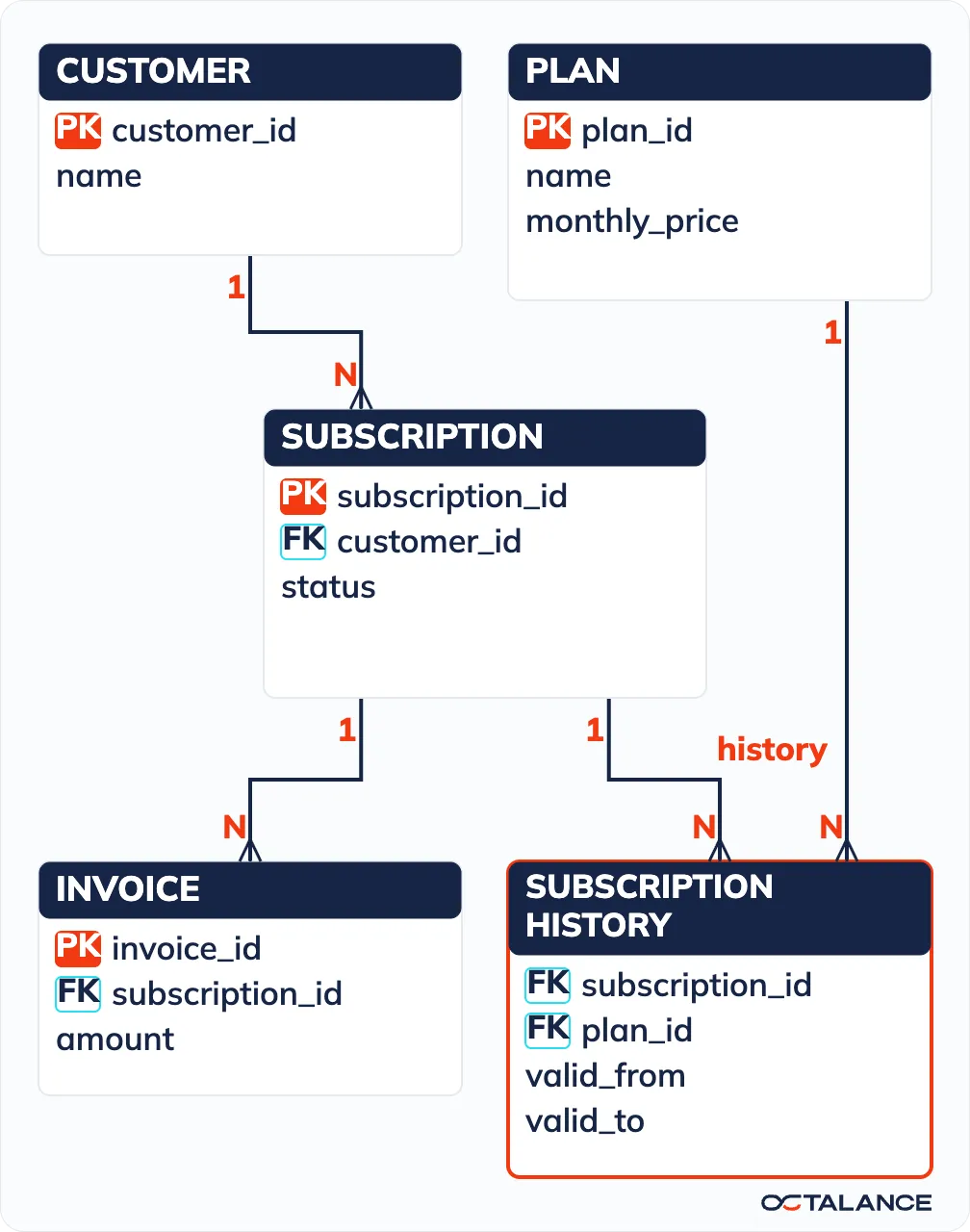
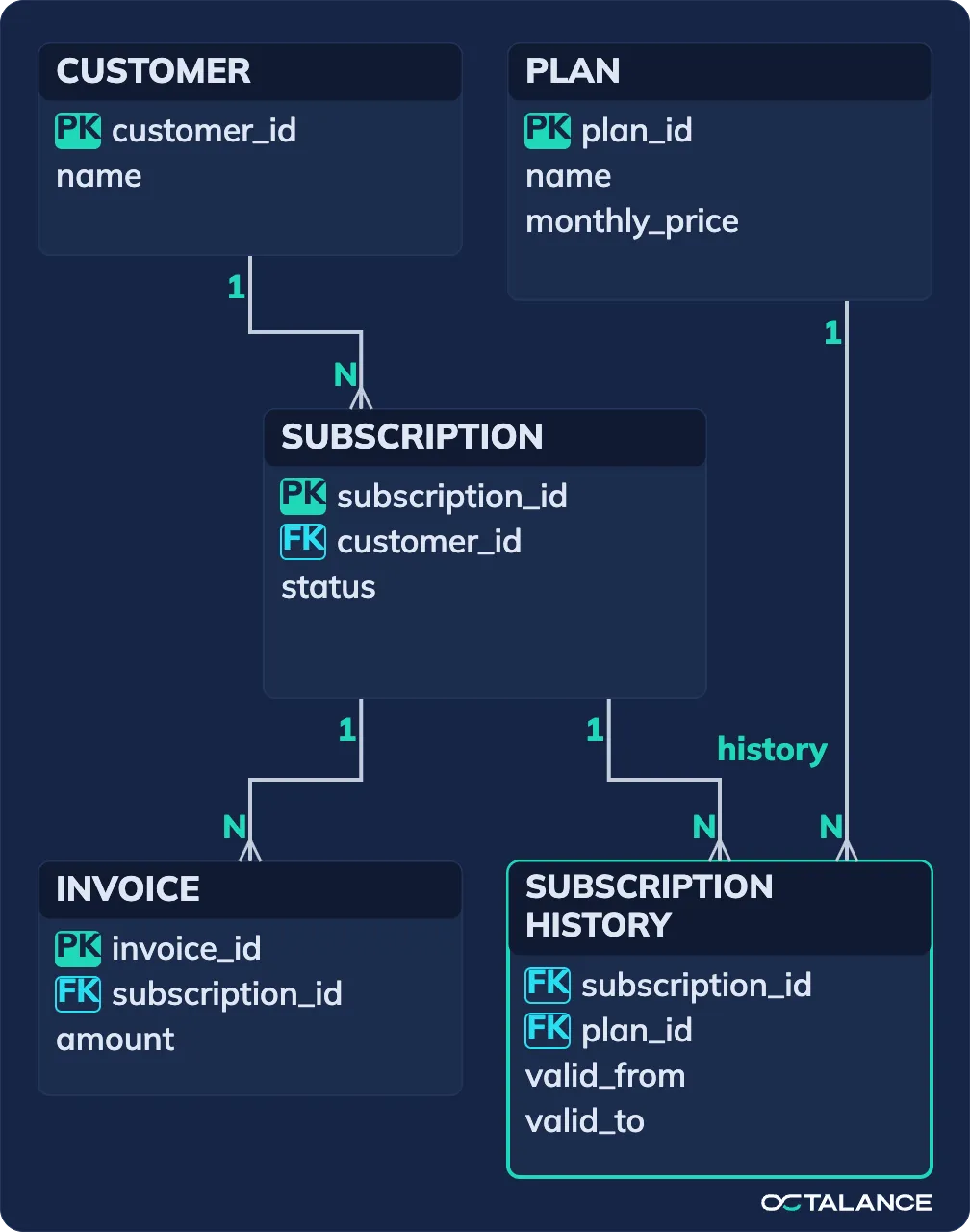
Entities get attributes, keys and relationships, still independent of any database product. This is where ER modeling and normalization happen, usually drawn as an ER diagram, and where most schema design decisions are made.
Physical model
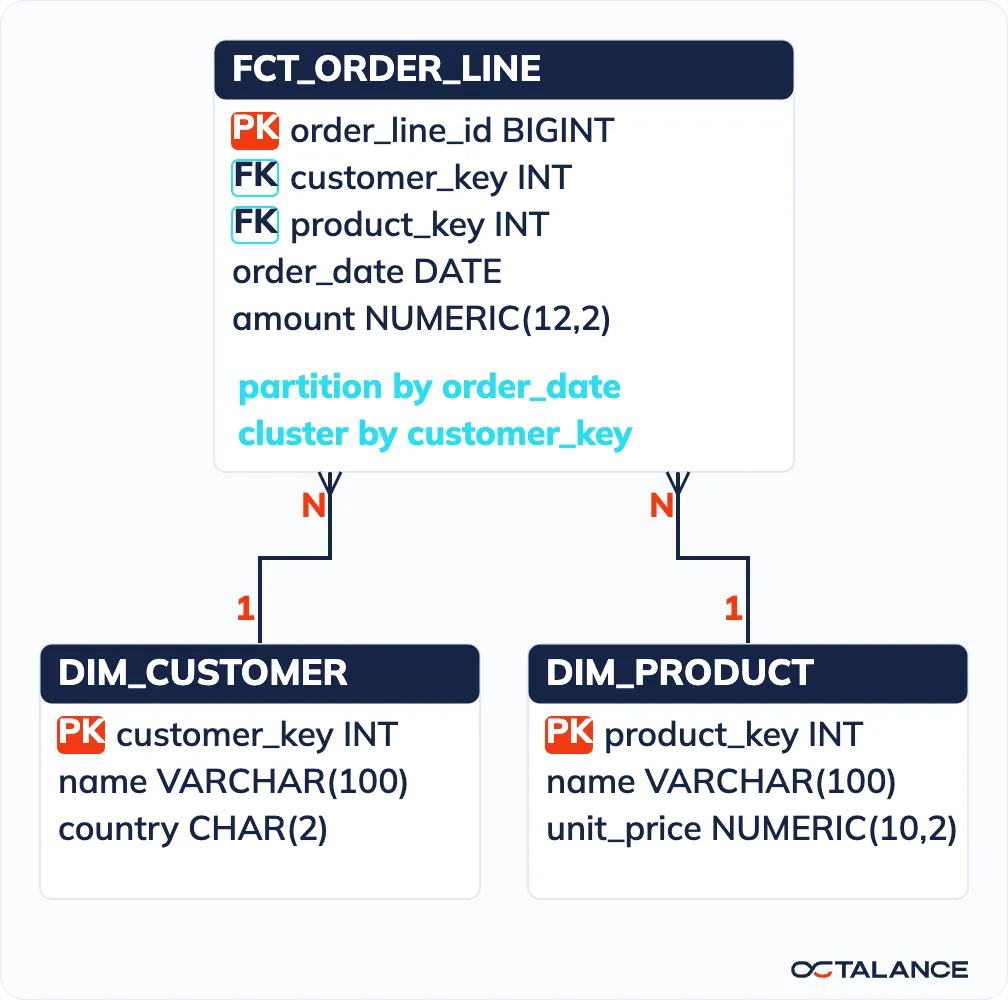
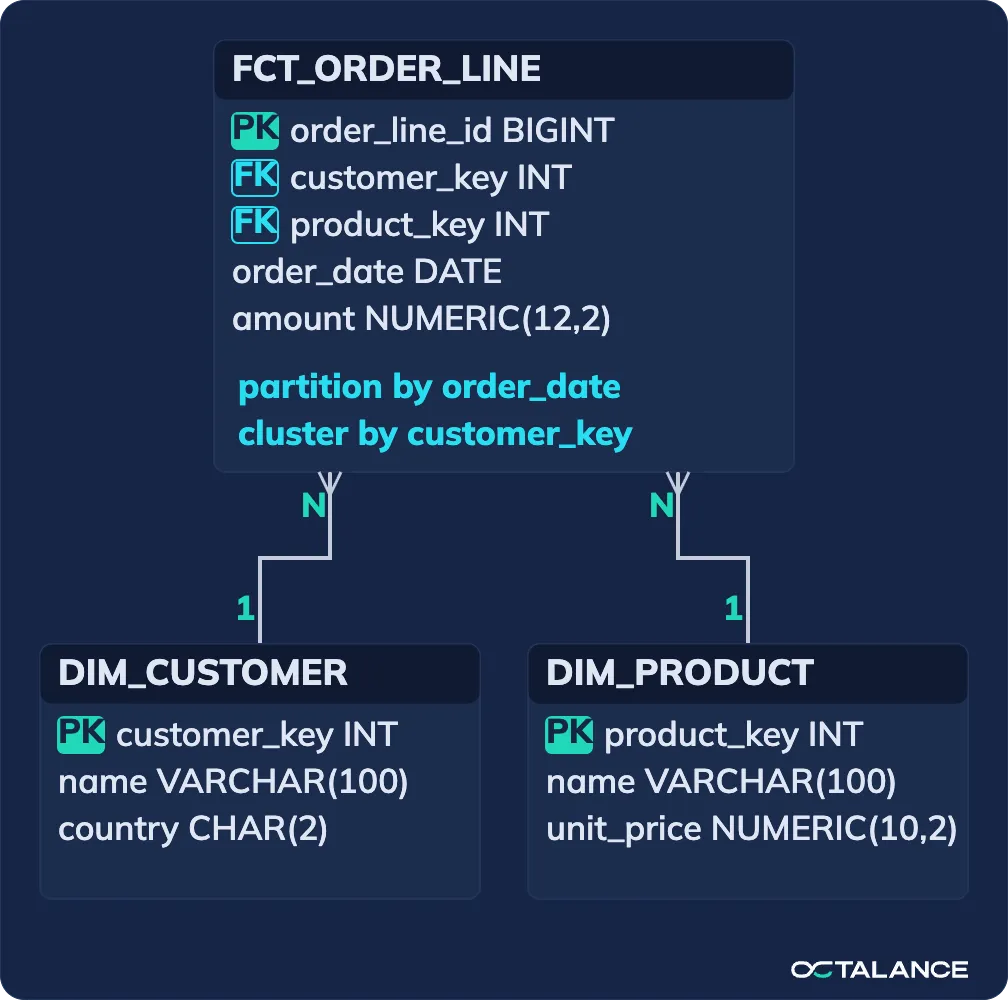
The logical model fitted to your platform, for example Snowflake, BigQuery or Amazon Redshift, with tables, data types and the storage choices that platform offers, such as partitions, clustering, or sort and distribution keys. This is where modeling stops. Creating the tables and loading data into them is warehouse implementation, which we deliver as its own service.
Dimensional model
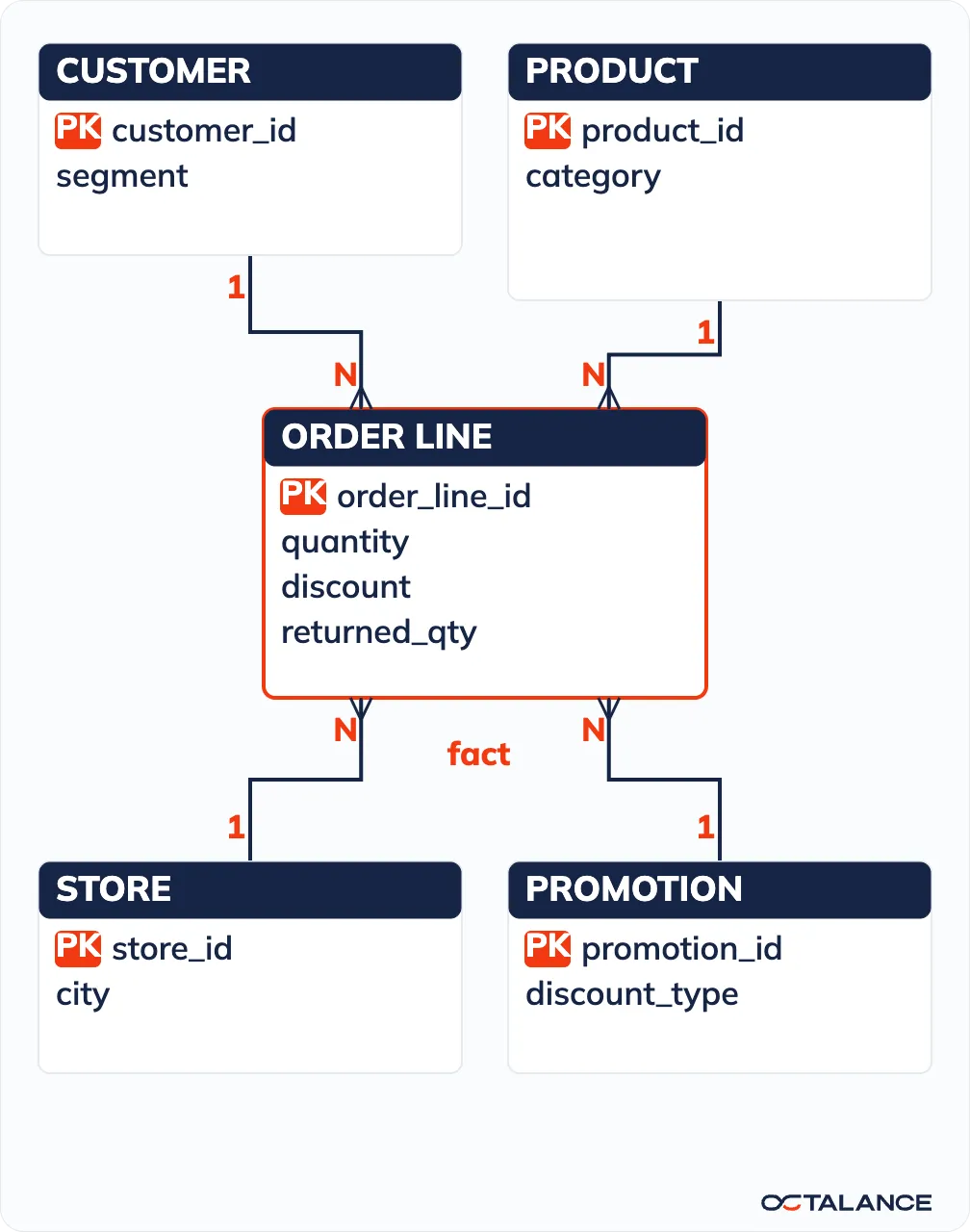
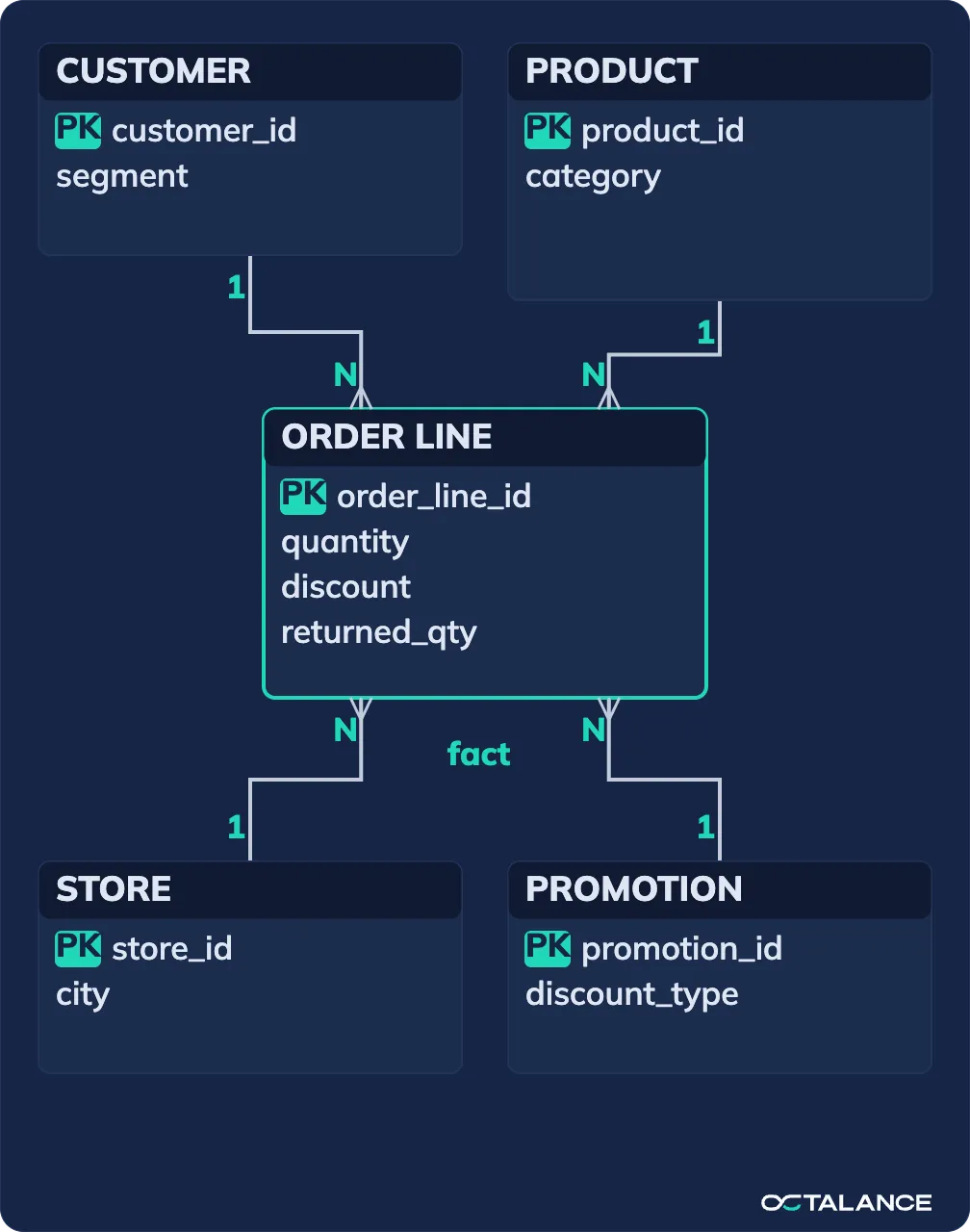
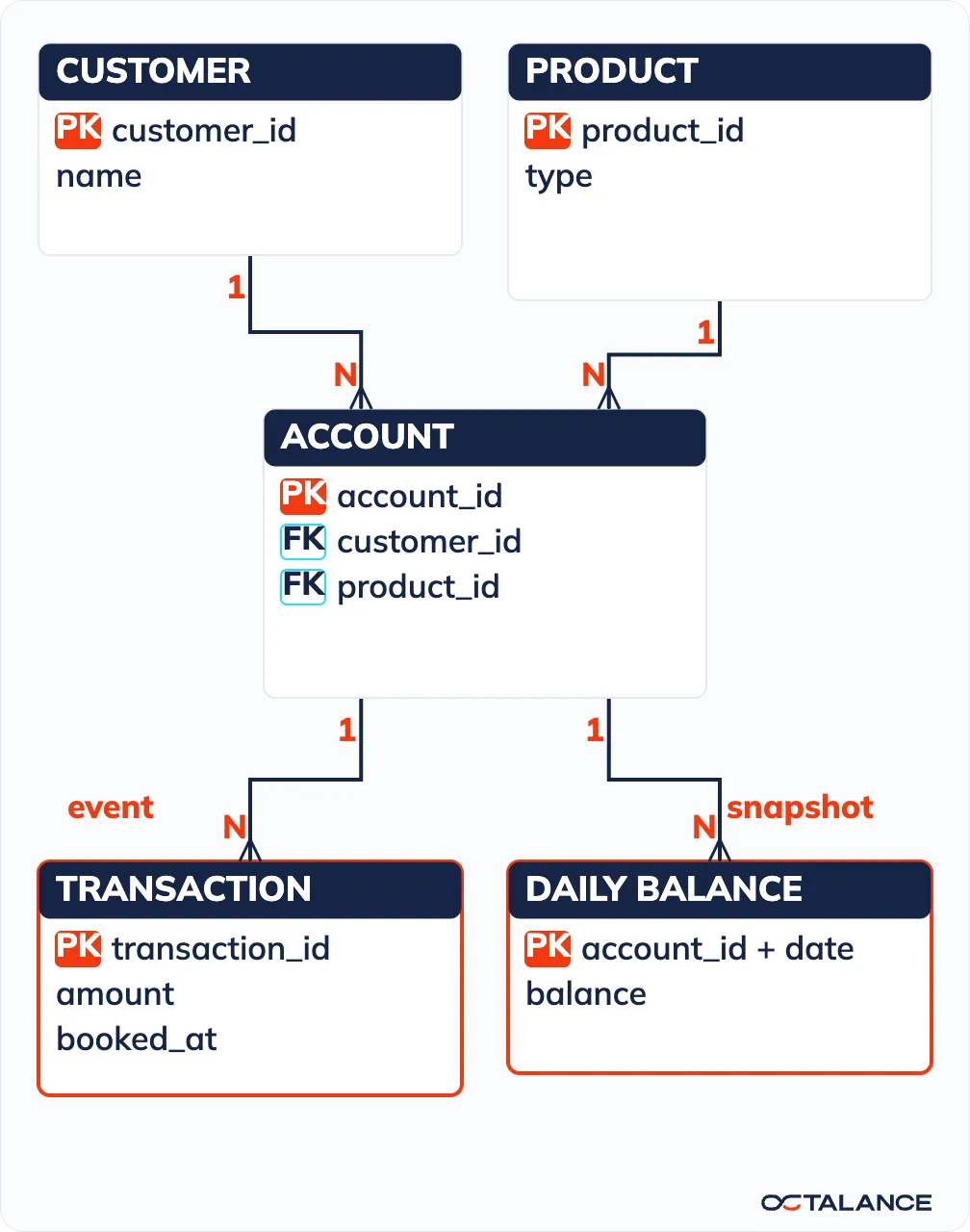
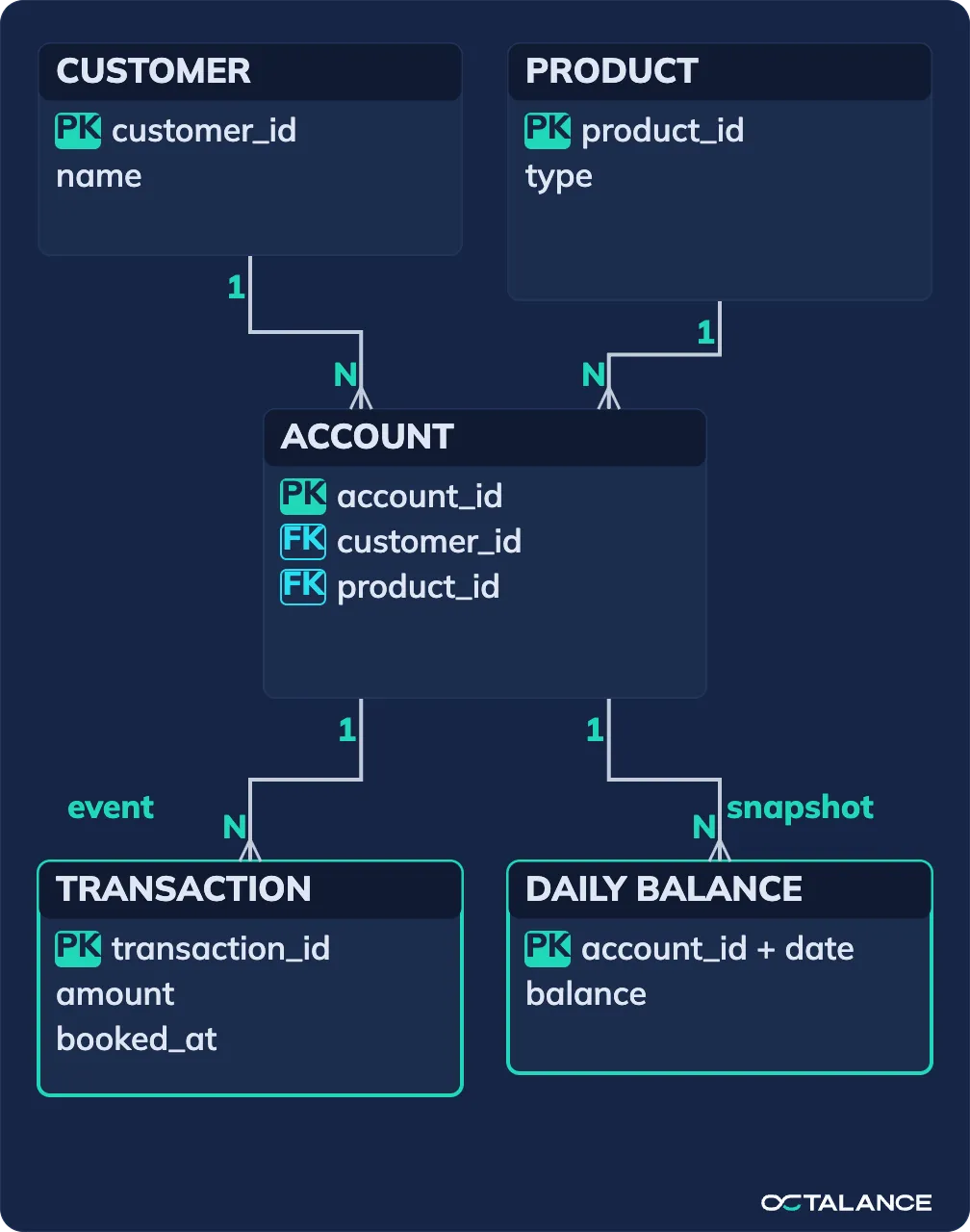
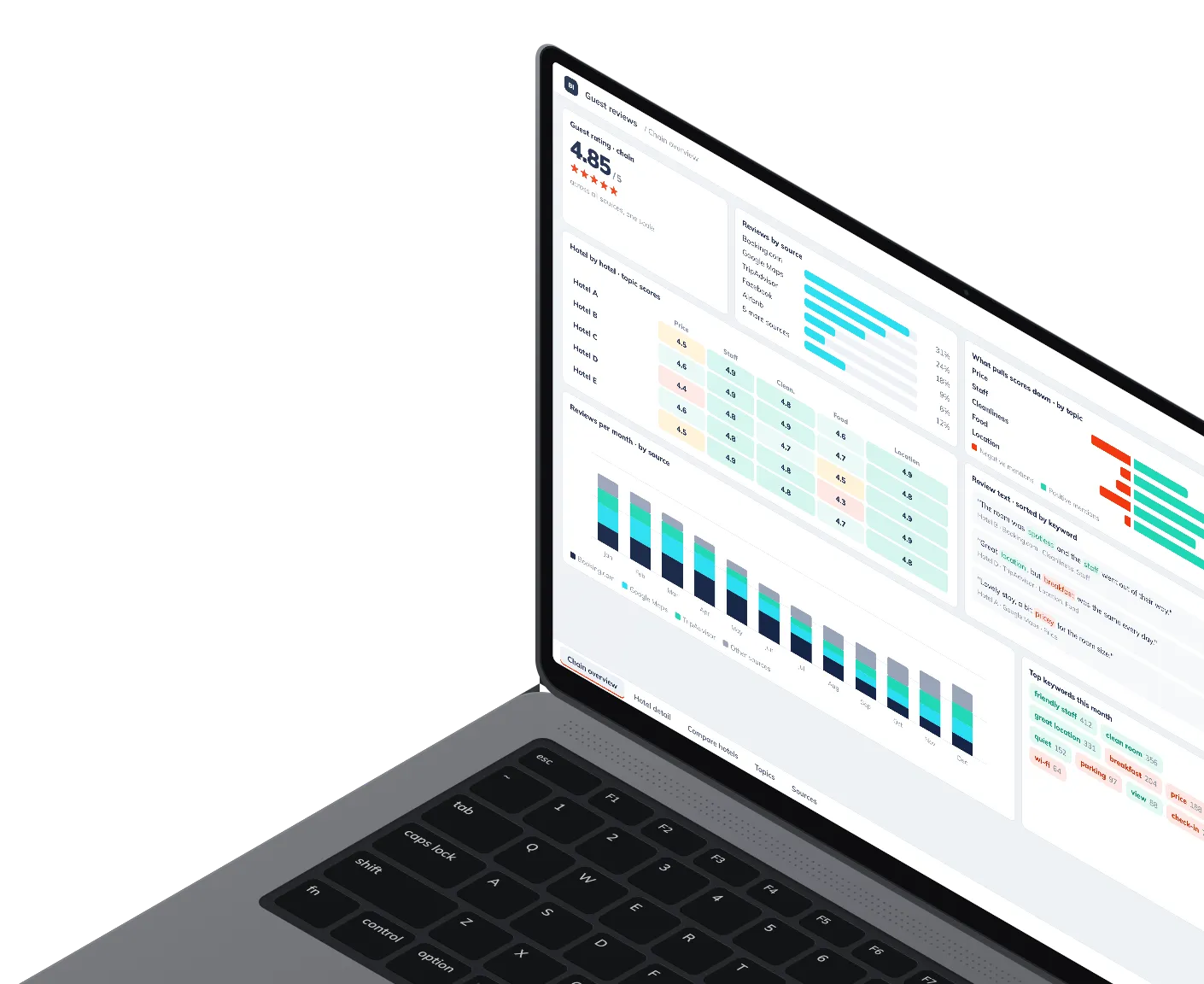
Built for reporting and BI. Measurable events sit in fact tables, and their context, such as date, customer or product, sits in dimension tables, usually arranged as a star schema. The method comes from Ralph Kimball's bottom-up approach. Splitting dimensions further, into a snowflake schema, is worth the extra joins mainly when a dimension is very large or changes in parts.
Two decisions shape it. The first is the grain, meaning what one fact row stands for, such as one order line rather than one order. The second is how to handle slowly changing dimensions. Type 1 overwrites an attribute, and Type 2 keeps the old value in a new row so last year's reports still add up.