Compliance software
Compliance training module live in time for customers' move off their legacy platform
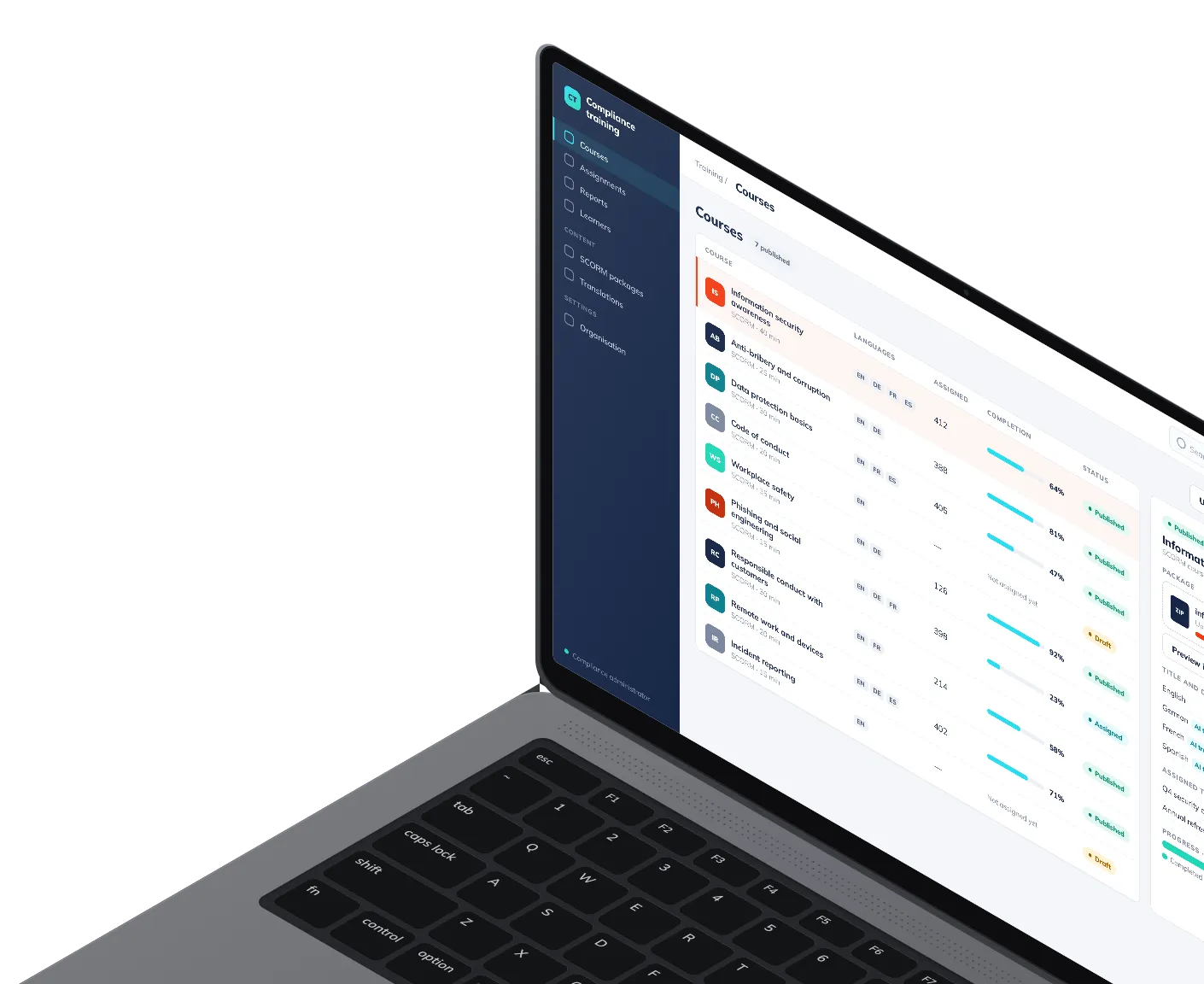
SCORM courses, assignments and progress tracking built into the modern platform, first as a minimum working version and then as the full module.
Custom software development
9 months
Who we worked with
Governance, risk and compliance software company
Our client builds governance, risk and compliance software. It ran a modern platform alongside a legacy one it was retiring, and the plan was to move its customers across.
What we did
From a retirement date to a native module
The feature some customers wouldn't move without
Training was one of the features our client's customers depended on, and several of them were expected to leave if it was missing from the modern platform. The legacy platform's retirement date set the deadline. The module had to fit an architecture already in place, play SCORM courses, track each learner's progress and accept large course packages.
One module for compliance teams and employees
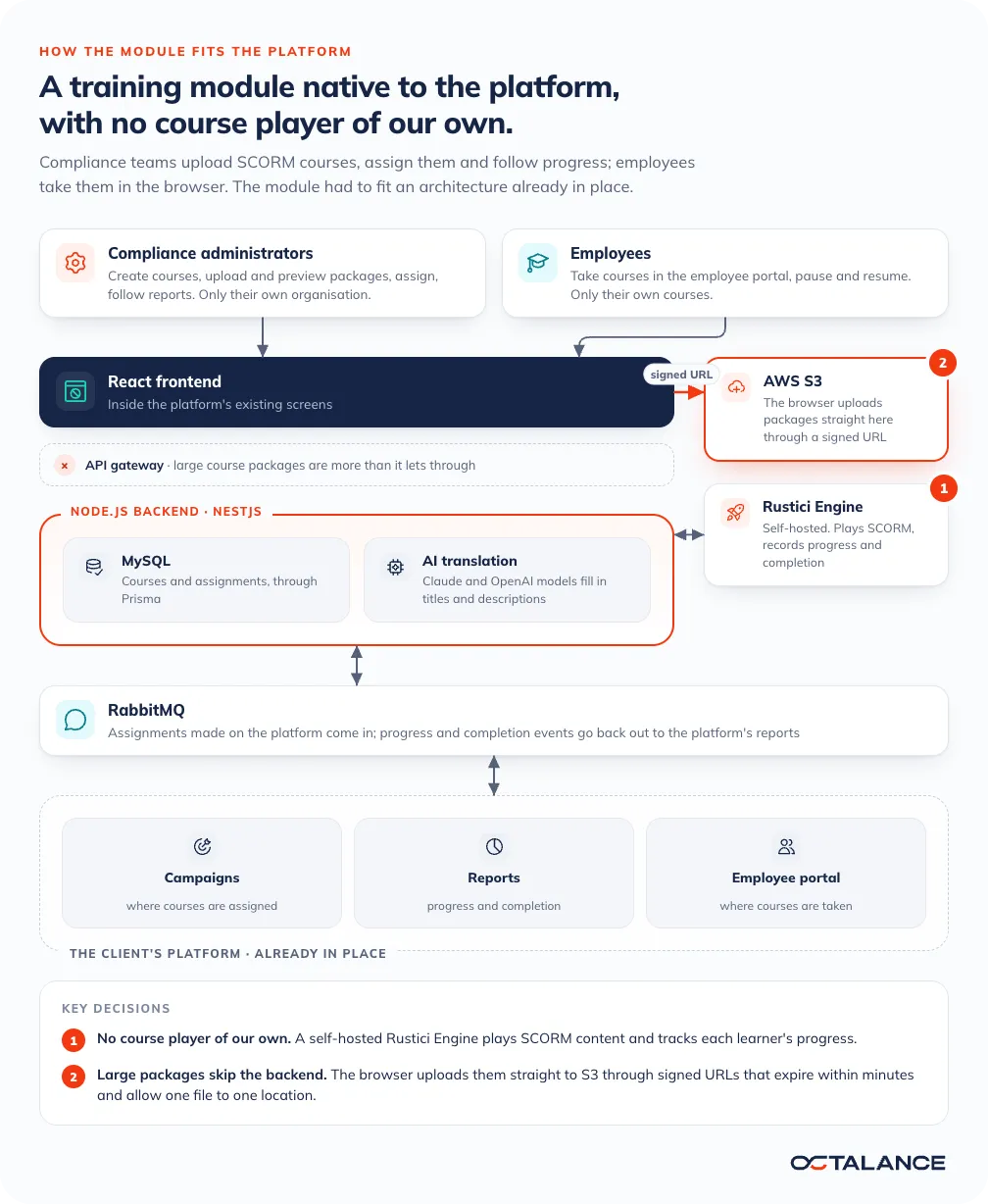
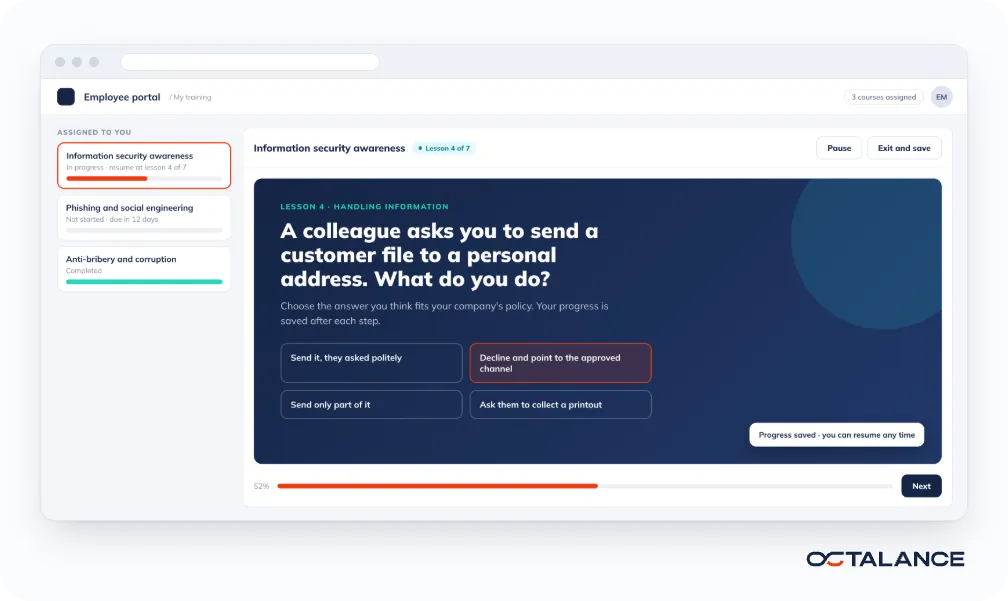
We built the React frontend and NestJS backend, and set up the automated tests and DevOps. Compliance teams upload SCORM packages, preview them, assign courses in the platform's campaigns and follow completion in reports. AI translation on Claude and OpenAI models fills in titles and descriptions in other languages. Employees take courses in the browser, pause and resume, and progress is recorded automatically. They see only their own courses, and administrators only their own organization's.
Wired into the platform, tested on data we made
The module runs in containers on Amazon ECS, with its data in Amazon RDS for MySQL, and talks to the rest of the platform over RabbitMQ. Campaign assignments arrive as messages, and progress and completion events flow back into the platform's reports. Realistic customer data wasn't available, so we generated synthetic courses, learners and progress for the integration and end-to-end tests. We set up the CI/CD pipelines, the Docker images and the infrastructure as code in Terraform.
Two calls on what to build
The work customers were paying for
A proven engine plays the courses
We didn't write our own course player. SCORM content comes out of many authoring tools, and a player has to cope with all of them before it can be trusted with every course. A self-hosted Rustici Engine plays the content and tracks each learner's progress. Our code sits around it, in course management, assignments, reports and the messages to the rest of the platform.
Large packages skip the backend
Course packages could be larger than the platform's API gateway lets through, and that limit protects every other request too. So large packages never touch the backend. The browser uploads them straight to AWS S3 through signed URLs, each one expiring within minutes and good for one file to one location.
What came of it
From the first version to the full module
A minimum working version reached production in time for customers to move off the legacy platform.
The full module followed, and compliance training now runs inside our client's modern platform.
Our client reports that the customers flagged as likely to leave stayed.
Tech stack
React, NestJS and a self-hosted SCORM engine
React
Node.js
NestJS
MySQL
Prisma
RabbitMQ
Rustici Engine
SCORM
AWS S3
Amazon ECS
Amazon RDS for MySQL
Docker
Terraform
CI/CD
Claude and OpenAI models
Customers waiting on one missing feature?
Tell us which feature has to reach the new platform first, and what it has to fit into. We reply to every inquiry within 24 hours.

Case studies