IT services
IT services back office moves 40+ processes into Camunda workflows behind one portal
Onboarding, timesheets, contractor billing and project reports now run as BPMN workflows, with finance dashboards fed from project tracking, Jira and HR data
Custom software development
About 18 months
Who we worked with
IT services and consulting company
Our client is an IT services and consulting company, and the work covered the other companies of its group too. Each of those companies did the same administrative work on its own.
What we did
From copy and paste to workflows in one portal
Data copied by hand between tools that didn't connect
Projects and logged hours lived in a project tracking system, with Jira and the HR and invoicing tools beside it. Routines such as onboarding an external specialist or billing contractors ran on spreadsheets and chat threads, and the tools holding the data did not talk to each other. Nobody had one place to see where an approval or an onboarding stood.
A React portal over the Camunda engine
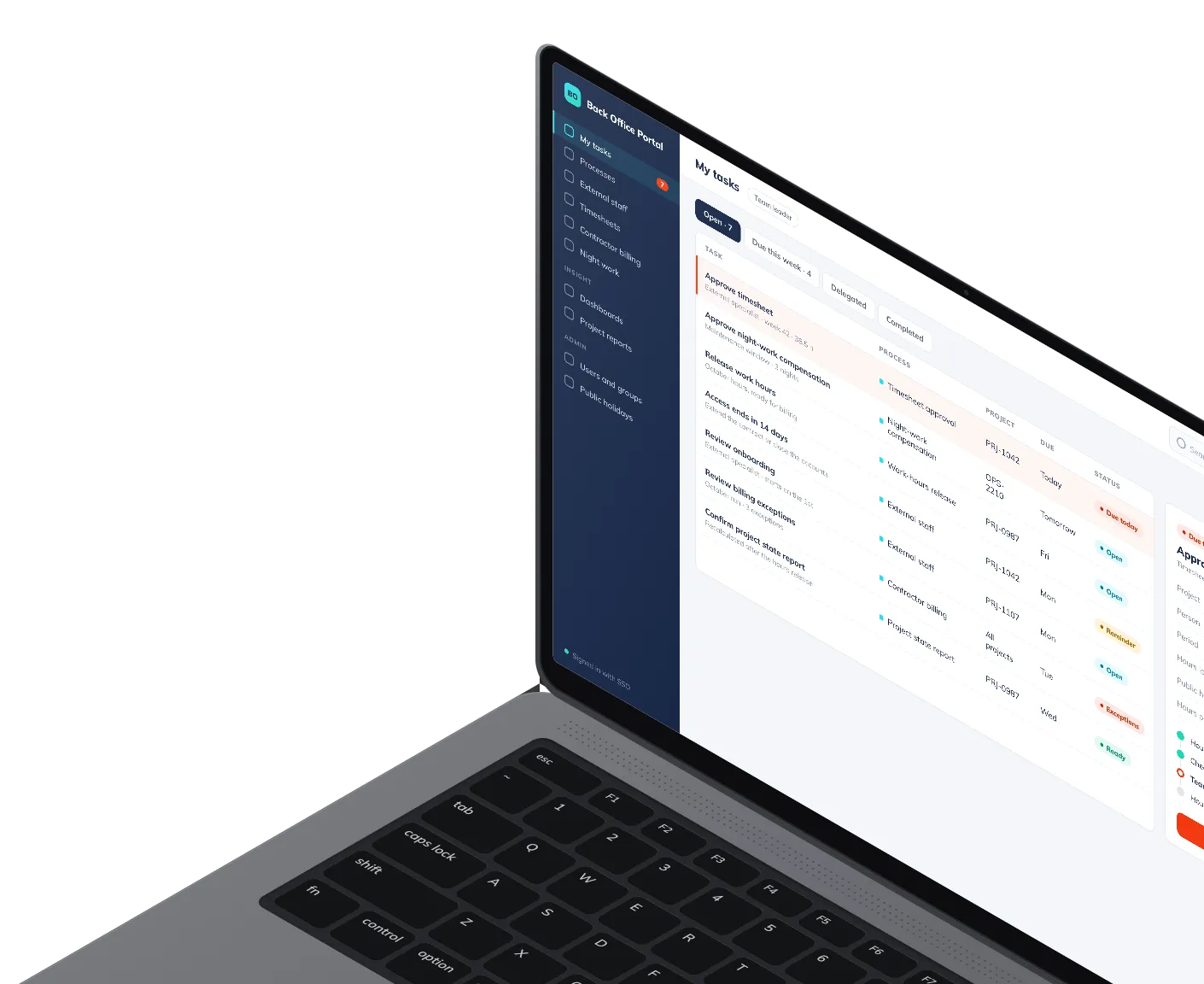
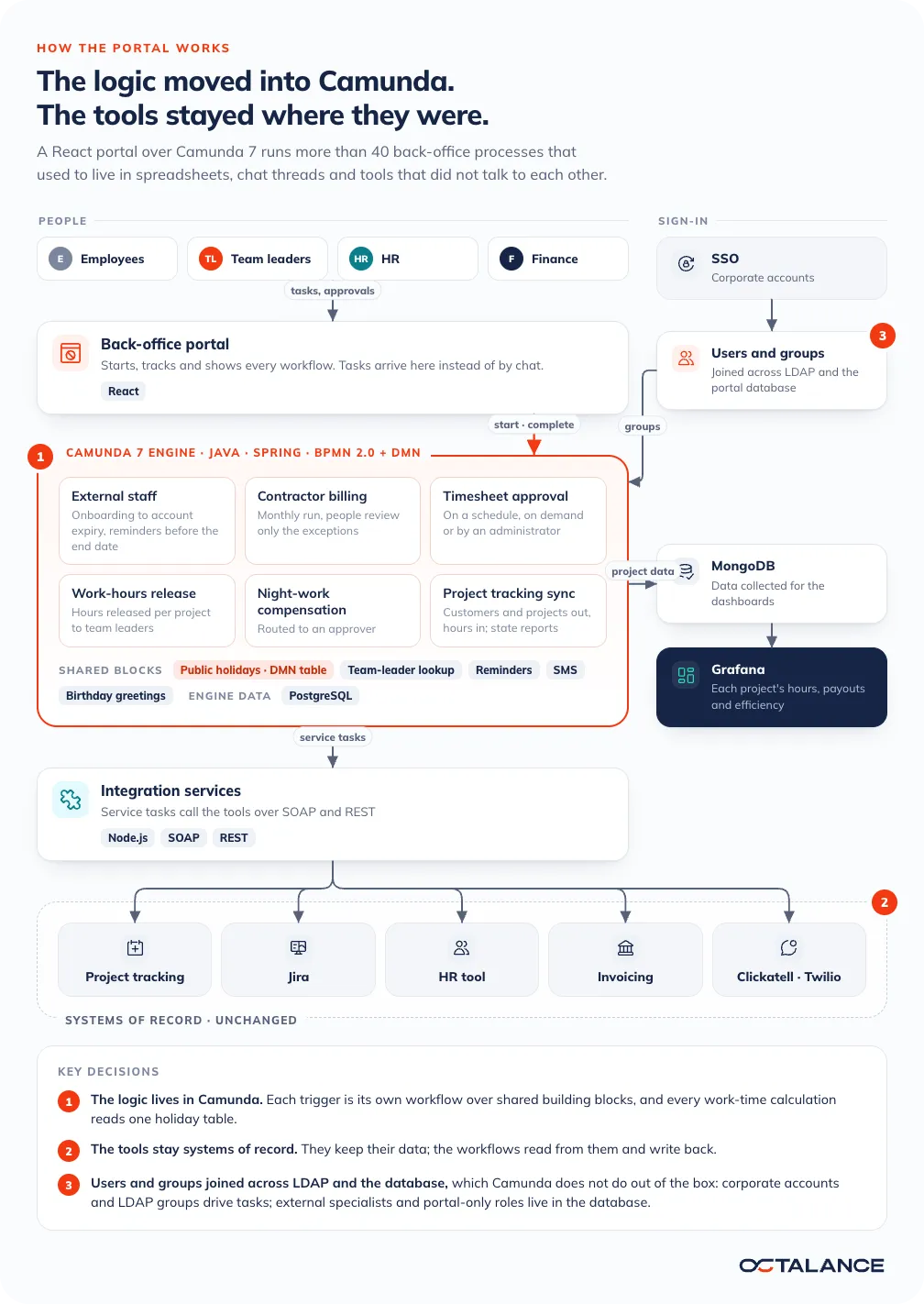
We designed and built an internal portal with a React front end over the Camunda BPMN engine, on Java and Spring, plus Node.js services for the integrations. Each process became a workflow that the portal starts, tracks and shows, and people get their tasks there instead of by chat. We have since moved a telecommunications provider's service management workflows into Camunda as well.
Project finances on one dashboard
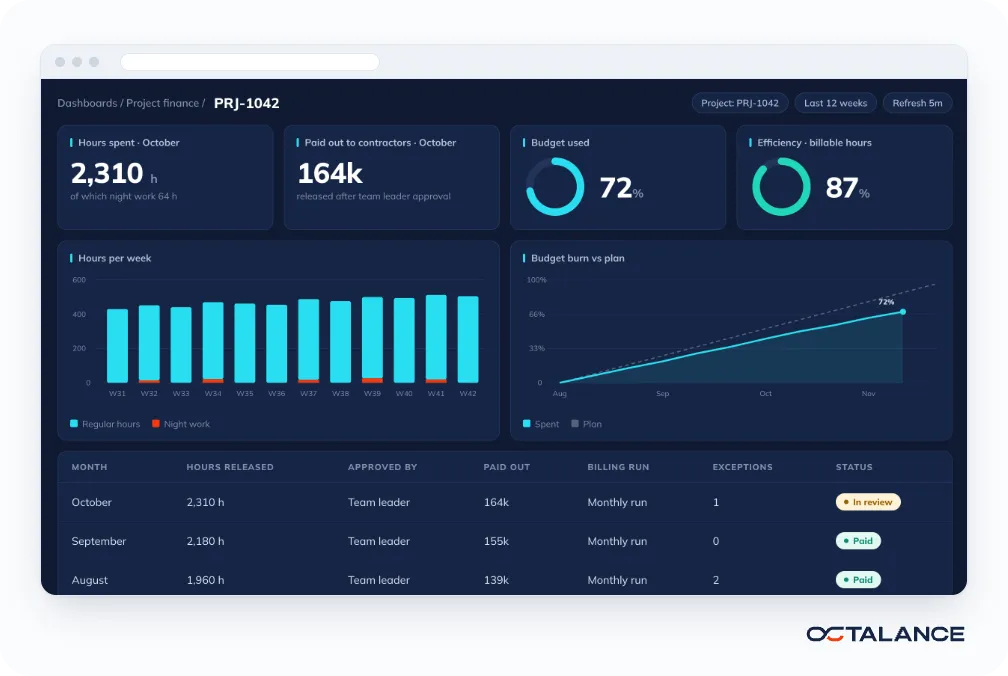
Each project's hours spent, contractor payouts and efficiency now show on Grafana dashboards. The data is pulled from the project tracking, Jira and HR systems into MongoDB. Customers and projects are created in the project tracking system from the portal, and logged time comes back. PostgreSQL holds the Camunda engine's own data, and the portal talks to the connected systems over SOAP and REST.
How it's built
Built for rules that keep changing
A back office changes its rules more often than its tools, and most of what we chose follows from that.
The rules live in BPMN workflows
The project tracking system, Jira and the HR and invoicing tools remain the systems of record. Who approves what, when an external specialist's account expires and how night-work compensation is calculated live in BPMN workflows, which the business can read as diagrams. Changing a rule means editing one workflow. Nobody patches every tool and hopes they agree.
LDAP groups decide who gets a task
Camunda keeps users and groups in its own database or reads them from LDAP, but it doesn't combine the two out of the box. We built the join. Employees sign in with their corporate accounts through SSO, and their LDAP groups decide who receives which task. External specialists and portal-only roles live in Camunda's own database.
One small workflow per trigger
Timesheet approval can start on a schedule, on demand or from an administrator. Each of those triggers is its own small workflow, and all of them call the same approval logic. Public holidays sit in one DMN decision table that every work-time calculation reads, and team-leader lookup, reminders and SMS through Clickatell or Twilio are shared sub-processes. New routines can reuse parts that already run. Even HR's birthday greetings, sent on behalf of the company, are one of those parts.
What changed for our client
40+
Company processes run as workflows
Minutes
Billing run, from about a working day
People review the exceptions
Monthly contractor billing used to mean collecting and checking every bill by hand. The workflow now does the run itself.
Every approval has a visible status
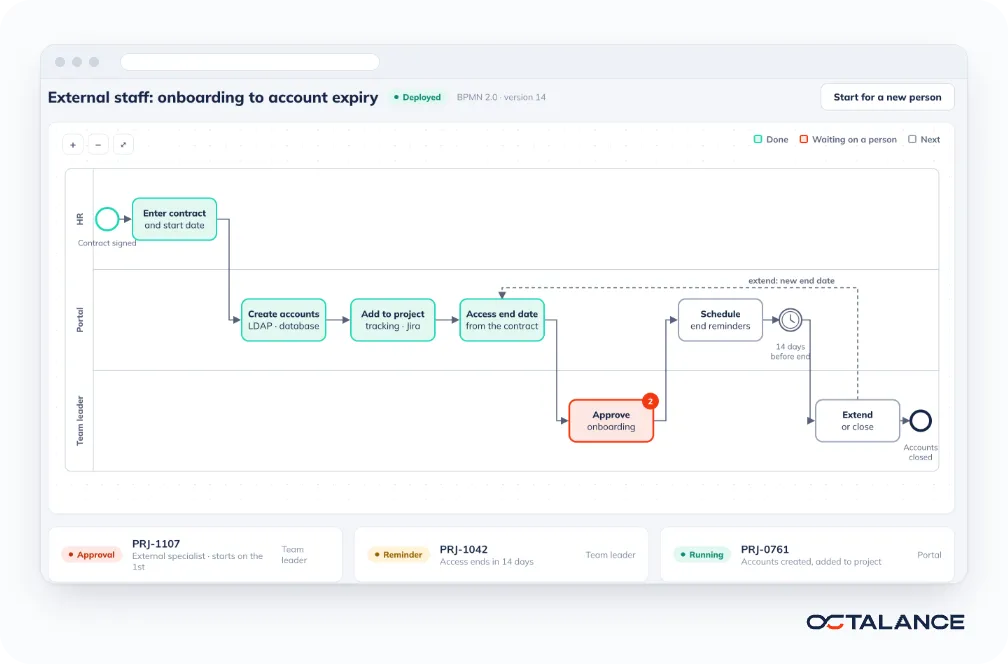
One portal shows where each approval and each onboarding stands, down to the timesheet a team leader has yet to sign.
Reminders before access ends
Reminders now go out before an external specialist's account expires, on an end date the portal works out from the contract.
The stack
Camunda on Java and Spring, with a React portal
Camunda
BPMN
DMN
React
Java
Spring
Node.js
PostgreSQL
MongoDB
Grafana
SSO
LDAP
Jira
Clickatell
Twilio
Approvals still chased through chat?
Tell us which processes you still run by hand and which tools hold their data. We reply to every inquiry within 24 hours.

Case studies