Proper data models improve reporting consistency, data quality, scalability, governance, and analytics performance.
Data modeling services
Get data models that keep reporting consistent, analytics trustworthy, and data platform scalable as your business grows.
Data modeling services
Get data models that keep reporting consistent, analytics trustworthy, and data platform scalable as your business grows.
Problems
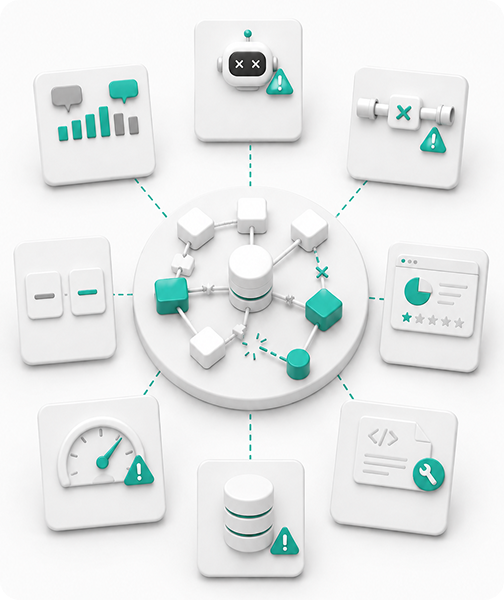
Signs you have a poor data model
- Reports show conflicting numbers
- Teams define KPIs differently
- Analytics becomes slower as data grows
- New integrations constantly break pipelines
- AI initiatives fail because of inconsistent data structures
- Business users can’t trust dashboards
- Engineering teams spend more time fixing schemas than delivering features
Problems
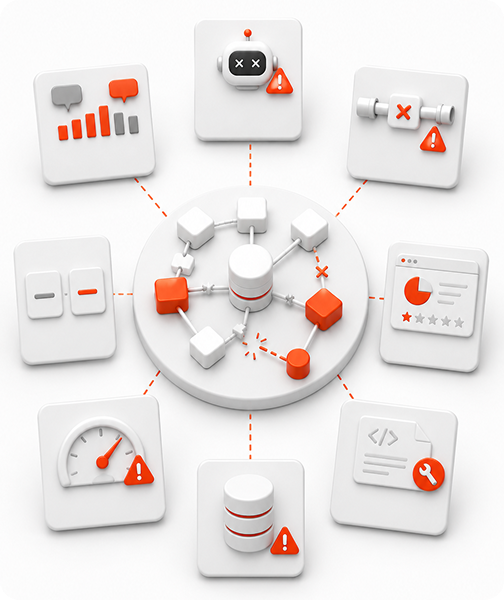
Signs you have a poor data model
- Reports show conflicting numbers
- Teams define KPIs differently
- Analytics becomes slower as data grows
- New integrations constantly break pipelines
- AI initiatives fail because of inconsistent data structures
- Business users can’t trust dashboards
- Engineering teams spend more time fixing schemas than delivering features
PROCESS
Our data modeling process
Here’s how we’ll help you fix the situation:

STEP 1
Discovery & assessment
We’ll analyze your business processes, reporting needs, and existing architecture.
Duration: 1-2 weeks

STEP 2
Model design
We’ll create conceptual, logical, and physical data models.
Duration: 1–3 weeks

STEP 3
Validation
We’ll conduct workshops with stakeholders and engineering teams.
Duration: 1-2 weeks

STEP 4
Implementation
Upon request, we’ll implement the new model and ensure its maintainability.
Duration: 2-6 weeks
PROCESS
Our data modeling process
Here’s how we’ll help you fix the situation:
STEP 1
Discovery & assessment
We’ll analyze your business processes, reporting needs, and existing architecture.
Duration: 1-2 weeks
STEP 2
Model design
We’ll create conceptual, logical, and physical data models.
Duration: 1–3 weeks
STEP 3
Validation
We’ll conduct workshops with stakeholders and engineering teams.
Duration: 1-2 weeks
STEP 4
Implementation
Upon request, we’ll implement the new model and ensure its maintainability.
Duration: 2-6 weeks
Get your data modeled
And start deriving insights from it
Get your data modeled
And start deriving insights from it
Types
Data model types
We’ll design 3 data model levels so that all your stakeholders had a comprehensive understanding of your company’s data:
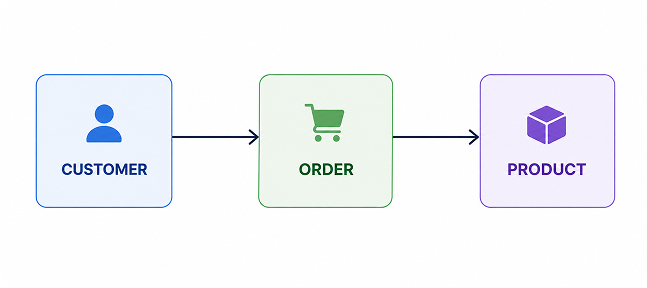
Conceptual data model
We’ll translate your business processes and terminology into high-level models that define core entities, relationships, and KPIs, providing a clear shared understanding for all stakeholders.
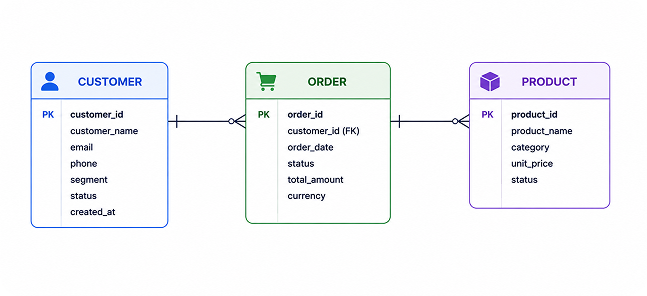
Logical data model
We’ll design structured, platform-agnostic schemas detailing entities, attributes, relationships, and historical tracking for analytics and reporting.
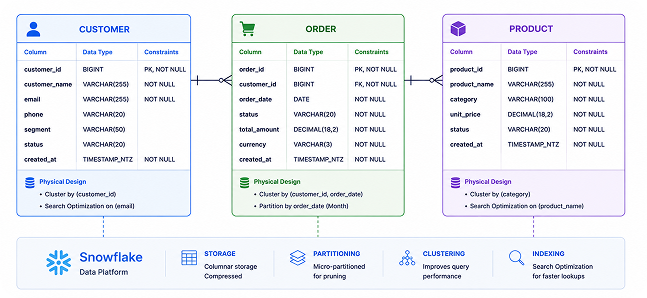
Physical data model
We’ll map logical models to your chosen data platform, defining platform-specific structures and optimizing tables, partitions, indexes, and storage for performance, scalability, and cost-efficiency.
About Interface
Data model types
We’ll design 3 data model levels so that all your stakeholders had a comprehensive understanding of your company’s data:
Conceptual data model
We’ll translate your business processes and terminology into high-level models that define core entities, relationships, and KPIs, providing a clear shared understanding for all stakeholders.
Logical data model
We’ll design structured, platform-agnostic schemas detailing entities, attributes, relationships, and historical tracking for analytics and reporting.
Physical data model
We’ll map logical models to your chosen data platform, defining platform-specific structures and optimizing tables, partitions, indexes, and storage for performance, scalability, and cost-efficiency.
Use cases
Best data modeling use cases
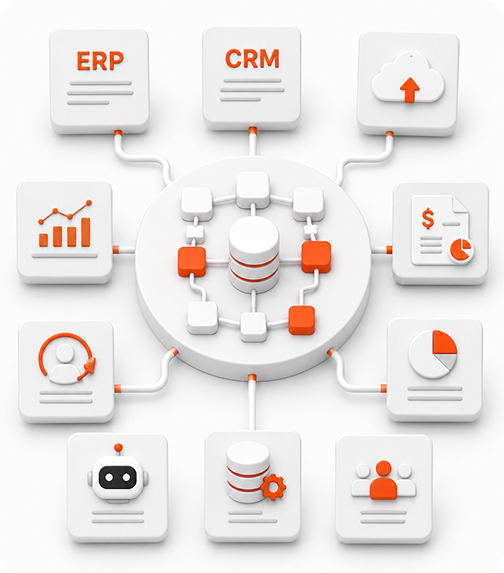
- Enterprise data warehouse modernization
- BI platform redesign
- Cloud migration
- ERP/CRM integration
- Customer 360 initiatives
- Financial reporting standardization
- Multi-source analytics consolidation
- AI/ML data foundation preparation
- Master data management support
Use cases
Best data modeling use cases
- Enterprise data warehouse modernization
- BI platform redesign
- Cloud migration
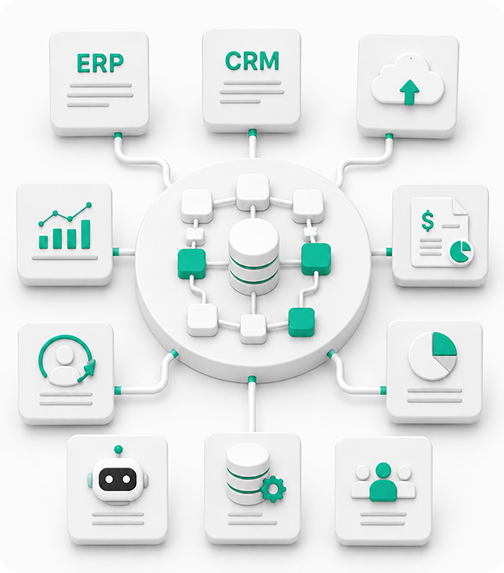
- ERP/CRM integration
- Customer 360 initiatives
- Financial reporting standardization
- Multi-source analytics consolidation
- AI/ML data foundation preparation
- Master data management support
Examples
Data modeling examples
Different industires have their own peculiarities of organizing business entities into structured data models. Below are some common relationships used in analytical and operational data platforms:
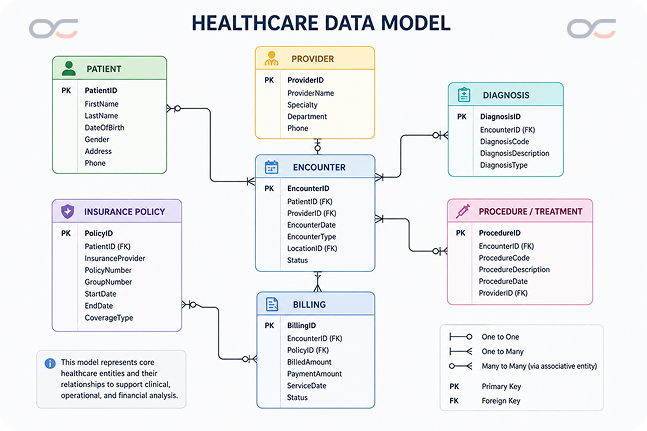
Healthcare data model
Connects patients, encounters, diagnoses, treatments, providers, insurance policies, and billing records. Enables the analysis of patient journeys, treatment outcomes, operational efficiency, and healthcare costs.
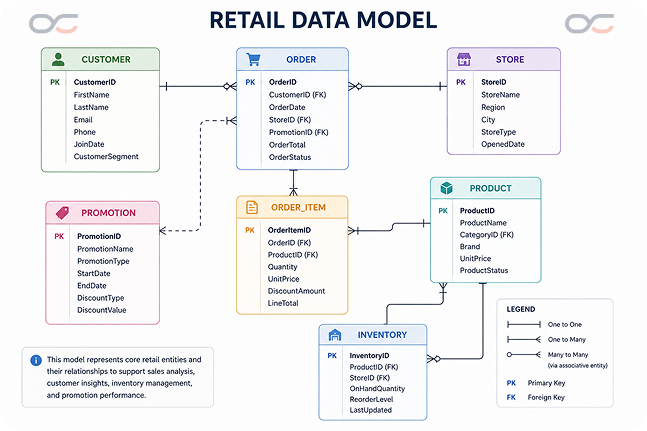
Retail data model
Connects customers, orders, products, stores, promotions, and inventory records. Enables the analysis of sales performance, customer purchasing behavior, inventory levels, and promotion effectiveness.
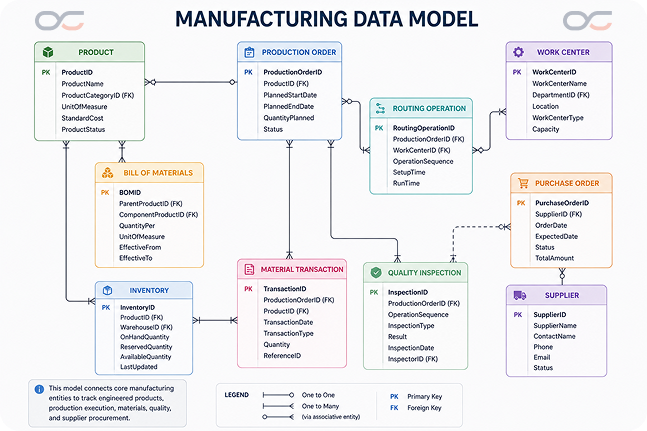
Manufacturing data model
Connects products, production orders, machines, suppliers, materials, and maintenance events. Enables analysis of production efficiency, supply chain performance, machine utilization, and quality control metrics.
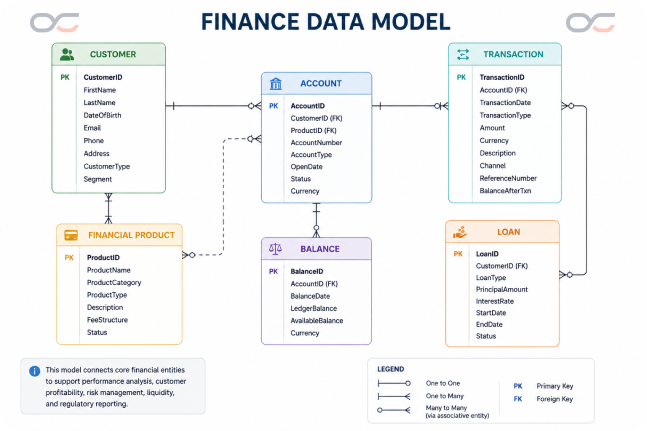
Finance data model
Connects customers, accounts, transactions, balances, loans, and financial products in a relational model. Enables the analysis of financial performance, customer profitability, risk exposure, liquidity, and regulatory compliance.
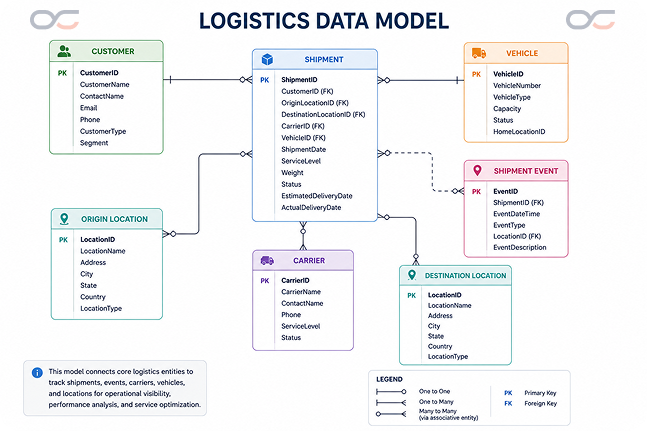
Logistics data model
Connects shipments, vehicles, warehouses, routes, inventory, and customers. Enables the analysis of delivery performance, route optimization, warehouse stock levels, and overall supply chain efficiency.
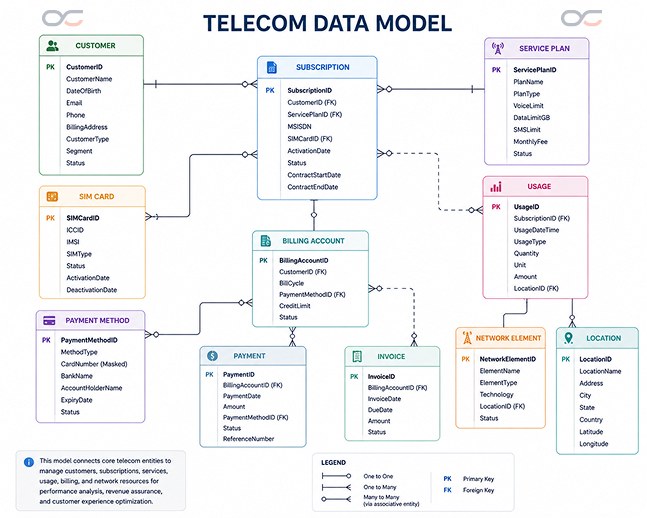
Telecom data model
Connects subscribers, plans, devices, call detail records, cell towers, and invoices. Enables the analysis of network usage, service performance, revenue, customer behavior, and churn risk.
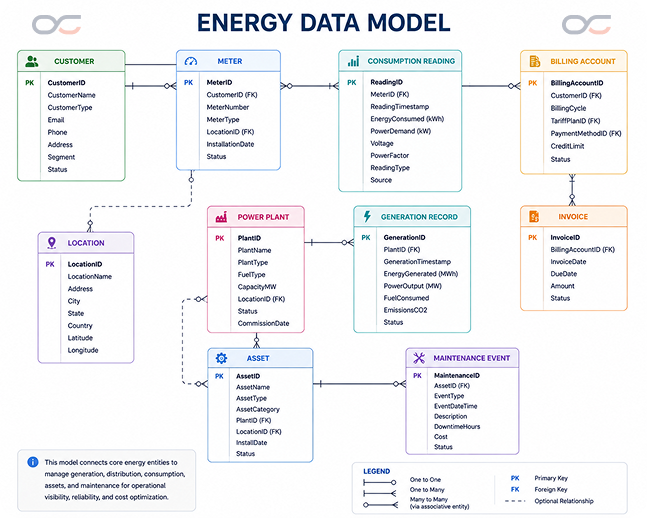
Energy data model
Connects customers, meters, consumption readings, power plants, energy generation records, assets, and maintenance events. Enables the analysis of energy consumption patterns, generation efficiency, asset performance, grid reliability, and operational costs.
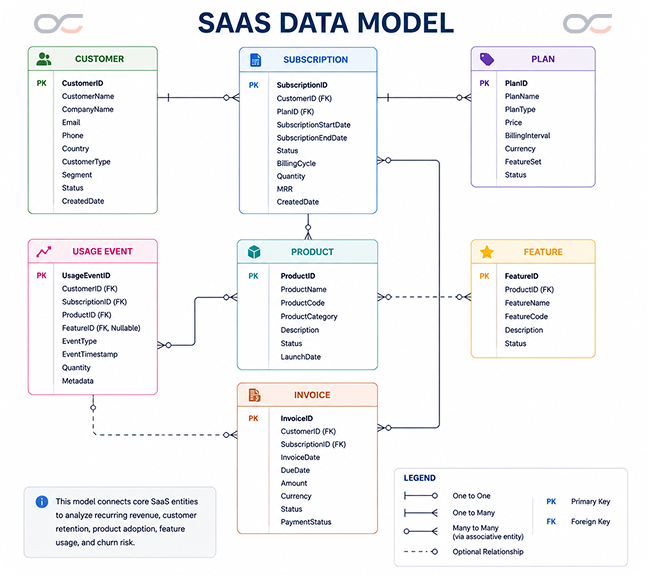
SaaS data model
Connects customers, subscriptions, plans, products, usage events, and invoices. Enables the analysis of recurring revenue, customer retention, product adoption, feature usage, and churn risk.
Examples
Data modeling examples
Different industires have their own peculiarities of organizing business entities into structured data models. Below are some common relationships used in analytical and operational data platforms:
Healthcare data model
Connects patients, encounters, diagnoses, treatments, providers, insurance policies, and billing records. Enables the analysis of patient journeys, treatment outcomes, operational efficiency, and healthcare costs.
Retail data model
Connects customers, orders, products, stores, promotions, and inventory records. Enables the analysis of sales performance, customer purchasing behavior, inventory levels, and promotion effectiveness.
Manufacturing data model
Connects products, production orders, machines, suppliers, materials, and maintenance events. Enables analysis of production efficiency, supply chain performance, machine utilization, and quality control metrics.
Finance data model
Connects customers, accounts, transactions, balances, loans, and financial products in a relational model. Enables the analysis of financial performance, customer profitability, risk exposure, liquidity, and regulatory compliance.
Logistics data model
Connects shipments, vehicles, warehouses, routes, inventory, and customers. Enables the analysis of delivery performance, route optimization, warehouse stock levels, and overall supply chain efficiency.
Telecom data model
Connects subscribers, plans, devices, call detail records, cell towers, and invoices. Enables the analysis of network usage, service performance, revenue, customer behavior, and churn risk.
Energy data model
Connects customers, meters, consumption readings, power plants, energy generation records, assets, and maintenance events. Enables the analysis of energy consumption patterns, generation efficiency, asset performance, grid reliability, and operational costs.
SaaS data model
Connects customers, subscriptions, plans, products, usage events, and invoices. Enables the analysis of recurring revenue, customer retention, product adoption, feature usage, and churn risk.
Technologies
Our data modeling tools:
/
IBM IDA
ER/Studio
ERwin Data Modeler
/
/
Oracle Data Modeler
SAP PowerDesigner
/
/
Toad Data Modeler
dbt
/
WHY US
Why clients choose us


100 years of combined expertise
We know how to create solutions that deliver results.
Top 3% talent
We rigorously vet candidates for skill, experience, and communication.
Up-to-date tech stack
We keep track of the latest industry advancements, attend workshops and share knowledge with experts.
Transparent communication
We are all English-speaking professionals, aligned with your timezone.
Proven track record
We are trusted by clients in finance, healthcare, logistics and e-commerce.
WHY US
Why clients choose us

100 years of combined expertise
We know how to create solutions that deliver results.
Top 3% talent
We rigorously vet candidates for skill, experience, and communication.
Up-to-date tech stack
We keep track of the latest industry advancements, attend workshops and share knowledge with experts.
Transparent communication
We are all English-speaking professionals, aligned with your timezone.
Proven track record
We are trusted by clients in finance, healthcare, logistics and e-commerce.
CONTACT US
Model your success
Set up reliable analytics and take your revenue to the next level.

Mikhail Hishkialiuk
Head of Technology Partnerships

Dmitri Kuchinski
Chief Operating Officer

Ula Dzenisevich
Chief Business Development Officer
About you
About your project
FAQS
Frequently asked questions
Why is data modeling important?
When should we redesign our data model?
Typical indicators include inconsistent reporting, slow analytics, difficult integrations, growing technical debt, or cloud migration initiatives.
What modeling methodologies do you support?
We work with dimensional modeling, Data Vault 2.0, normalized enterprise models, and domain-oriented approaches depending on business requirements.
Do you support cloud data platforms?
Yes. We design models optimized for modern cloud ecosystems including Snowflake, Databricks, BigQuery, Redshift, and Microsoft Fabric.
What platforms offer visual data modeling tools?
Many modern data platforms provide visual modeling capabilities, including Microsoft Power BI, SQL Server Data Tools, Oracle Data Modeler, ER/Studio, SAP PowerDesigner, and cloud-native solutions such as Snowflake and Databricks ecosystem tools.
What software enables multi-level data modeling?
Multi-level data modeling tools support conceptual, logical, and physical models within a single environment. Popular examples include ER/Studio, SAP PowerDesigner, Oracle SQL Developer Data Modeler, and erwin Data Modeler.
What platforms allow self-service data modeling?
Self-service data modeling is commonly available in Power BI, Tableau, Qlik, Looker, and modern cloud analytics platforms, allowing business users to define relationships and build analytical models with minimal technical support.
What is data modeling in power BI?
Data modeling in Power BI involves defining relationships between datasets, creating calculated measures and hierarchies, and organizing data into a structure optimized for reporting and analytics.
What BI platforms support advanced data modeling?
Advanced data modeling features are available in Power BI, Tableau, Qlik Sense, Looker, and MicroStrategy, supporting complex relationships, semantic layers, calculations, and enterprise-scale analytics.
What is data warehouse modeling?
Data warehouse modeling is the process of designing how data is organized within a warehouse to support reporting, analytics, and decision-making. Common approaches include dimensional modeling, Data Vault, and normalized enterprise models.
What is data modeling in a database?
Database data modeling is the practice of defining entities, attributes, relationships, and business rules to create a structured representation of data before implementation.
What is data modeling in SQL?
Data modeling in SQL refers to designing database schemas, tables, keys, constraints, and relationships that will be implemented and managed within a SQL-based database system.
What is dimensional data modeling?
Dimensional data modeling organizes data into fact and dimension tables to simplify reporting and analytical queries. It is widely used in data warehouses, BI platforms, and executive dashboards.
FAQS
Frequently asked questions
Why is data modeling important?
Proper data models improve reporting consistency, data quality, scalability, governance, and analytics performance.
When should we redesign our data model?
Typical indicators include inconsistent reporting, slow analytics, difficult integrations, growing technical debt, or cloud migration initiatives.
What modeling methodologies do you support?
We work with dimensional modeling, Data Vault 2.0, normalized enterprise models, and domain-oriented approaches depending on business requirements.
Do you support cloud data platforms?
Yes. We design models optimized for modern cloud ecosystems including Snowflake, Databricks, BigQuery, Redshift, and Microsoft Fabric.
What platforms offer visual data modeling tools?
Many modern data platforms provide visual modeling capabilities, including Microsoft Power BI, SQL Server Data Tools, Oracle Data Modeler, ER/Studio, SAP PowerDesigner, and cloud-native solutions such as Snowflake and Databricks ecosystem tools.
What software enables multi-level data modeling?
Multi-level data modeling tools support conceptual, logical, and physical models within a single environment. Popular examples include ER/Studio, SAP PowerDesigner, Oracle SQL Developer Data Modeler, and erwin Data Modeler.
What platforms allow self-service data modeling?
Self-service data modeling is commonly available in Power BI, Tableau, Qlik, Looker, and modern cloud analytics platforms, allowing business users to define relationships and build analytical models with minimal technical support.
What is data modeling in power BI?
Data modeling in Power BI involves defining relationships between datasets, creating calculated measures and hierarchies, and organizing data into a structure optimized for reporting and analytics.
What BI platforms support advanced data modeling?
Advanced data modeling features are available in Power BI, Tableau, Qlik Sense, Looker, and MicroStrategy, supporting complex relationships, semantic layers, calculations, and enterprise-scale analytics.
What is data warehouse modeling?
Data warehouse modeling is the process of designing how data is organized within a warehouse to support reporting, analytics, and decision-making. Common approaches include dimensional modeling, Data Vault, and normalized enterprise models.
What is data modeling in a database?
Database data modeling is the practice of defining entities, attributes, relationships, and business rules to create a structured representation of data before implementation.
What is data modeling in SQL?
Data modeling in SQL refers to designing database schemas, tables, keys, constraints, and relationships that will be implemented and managed within a SQL-based database system.
What is dimensional data modeling?
Dimensional data modeling organizes data into fact and dimension tables to simplify reporting and analytical queries. It is widely used in data warehouses, BI platforms, and executive dashboards.