A data warehouse becomes valuable when data is spread across multiple systems, reporting takes too much manual effort, or teams struggle to trust and reconcile numbers from different sources.
Data warehouse development services
Get a tailored storage for efficient analytics, confident decisions and tangible business results
Data warehouse development services
Get a tailored storage for efficient analytics, confident decisions and tangible business results
Problems
Struggle to make sense of your data?
- Data scattered across multiple systems
When sales, marketing, finance, and operations data live separately, getting a complete picture takes hours or days. Teams end up reconciling numbers manually, often with conflicting results.
- Slow decision making
Waiting for reports or dashboards slows down strategy. By the time you have numbers in hand, market conditions or internal priorities may have already shifted.
- Mistrust in the numbers
Discrepancies between spreadsheets and reports create constant doubt. Teams double-check everything, which drains time and confidence.
- Scaling analytics feels impossible
As your company grows, manual aggregation and one-off scripts start breaking. Adding new data sources becomes a headache instead of a smooth process.
- Limited forecasting and insights
Without centralized data, predictive analytics and scenario modeling are difficult. You can’t answer “what if” questions quickly, which slows growth and experimentation.

Problems
Struggle to make sense of your data?
- Data scattered across multiple systems
When sales, marketing, finance, and operations data live separately, getting a complete picture takes hours or days. Teams end up reconciling numbers manually, often with conflicting results.
- Slow decision making
Waiting for reports or dashboards slows down strategy. By the time you have numbers in hand, market conditions or internal priorities may have already shifted.
- Mistrust in the numbers
Discrepancies between spreadsheets and reports create constant doubt. Teams double-check everything, which drains time and confidence.
- Scaling analytics feels impossible
As your company grows, manual aggregation and one-off scripts start breaking. Adding new data sources becomes a headache instead of a smooth process.
- Limited forecasting and insights
Without centralized data, predictive analytics and scenario modeling are difficult. You can’t answer “what if” questions quickly, which slows growth and experimentation.
Industry solutions
Data warehouse for your industry
Every industry has its own data challenges. Here’s how a data warehouse will help you in yours:
Retail data warehouse
Juggle inventory, sales, marketing, and customer data from multiple systems? A data warehouse lets you combine all this information to track product performance, spot trends, and optimize stock levels—without manually reconciling spreadsheets.


Finance data warehouse
Need accurate, timely data to manage risk, regulatory reporting, and performance analytics? A data warehouse consolidates transactions, customer accounts, and market data, giving teams a single source of truth for faster, more confident decision-making.
Healthcare data warehouse
Handle patient records, lab results, billing, and operational data across systems? Centralizing this information in a warehouse improves reporting, compliance, and population health analysis while reducing errors from fragmented records.


Logistics data warehouse
Track shipments, warehouse inventory, and transport operations in separate platforms? A data warehouse connects these data streams to optimize routes, reduce delays, and predict demand more reliably.
SaaS / technology data warehouse
Collect usage data, customer behavior, and operational metrics from multiple applications? A data warehouse unifies this data to improve product analytics, monitor KPIs, and make data-driven growth decisions faster.

Industry solutions
Data warehouse for your industry
Every industry has its own data challenges. Here’s how a data warehouse will help you in yours:
Retail data warehouse
Juggle inventory, sales, marketing, and customer data from multiple systems? A data warehouse lets you combine all this information to track product performance, spot trends, and optimize stock levels—without manually reconciling spreadsheets.
Finance data waarehouse
Need accurate, timely data to manage risk, regulatory reporting, and performance analytics? A data warehouse consolidates transactions, customer accounts, and market data, giving teams a single source of truth for faster, more confident decision-making.
Healthcare data warehouse
Handle patient records, lab results, billing, and operational data across systems? Centralizing this information in a warehouse improves reporting, compliance, and population health analysis while reducing errors from fragmented records.
Logistics data warehouse
Track shipments, warehouse inventory, and transport operations in separate platforms? A data warehouse connects these data streams to optimize routes, reduce delays, and predict demand more reliably.
SaaS / technology data warehouse
Collect usage data, customer behavior, and operational metrics from multiple applications? A data warehouse unifies this data to improve product analytics, monitor KPIs, and make data-driven growth decisions faster.
Want a more in-depth demo?
Drop us a line and we’ll show you a data warehouse design, use cases and benefits for your industry
Want a more in-depth demo?
Drop us a line and we’ll show you a data warehouse design, use cases and benefits for your industry
PROCESS
Data warehouse development process
Here’s how we’ll bring your data warehouse to life:

STEP 1
Discovery and assessment
We start by understanding your data sources, business goals, and reporting needs. We make sure the warehouse we build solves your real problems, not just stores data.
Duration: 1-2 weeks

STEP 2
Design and planning
Next, we design a blueprint for your warehouse architecture, data models, and integration points. You’ll see how data will flow and how reports and dashboards will work.
Duration: 2-3 weeks

STEP 3
Development
We build the warehouse, connect your data sources, and implement ETL processes. You’ll have regular updates and early access to validate that everything matches your expectations.
Duration: 4-6 weeks

STEP 4
Testing and deployment
We run thorough tests, deploy the warehouse, and provide ongoing support. This ensures accurate reporting, smooth operations, and the ability to scale as your company grows.
Duration: 2-3 weeks
PROCESS
Data warehouse development process
Here’s how we’ll bring your data warehouse to life:
STEP 1
Discovery and assessment
We start by understanding your data sources, business goals, and reporting needs. We make sure the warehouse we build solves your real problems, not just stores data.
Duration: 1-2 weeks
STEP 2
Design and planning
Next, we design a blueprint for your warehouse architecture, data models, and integration points. You’ll see how data will flow and how reports and dashboards will work.
Duration: 2-3 weeks
STEP 3
Development
We build the warehouse, connect your data sources, and implement ETL processes. You’ll have regular updates and early access to validate that everything matches your expectations.
Duration: 4-6 weeks
STEP 4
Testing & deployment
We run thorough tests, deploy the warehouse, and provide ongoing support. This ensures accurate reporting, smooth operations, and the ability to scale as your company grows.
Duration: 2-3 weeks
Our data warehouse solutions
01.
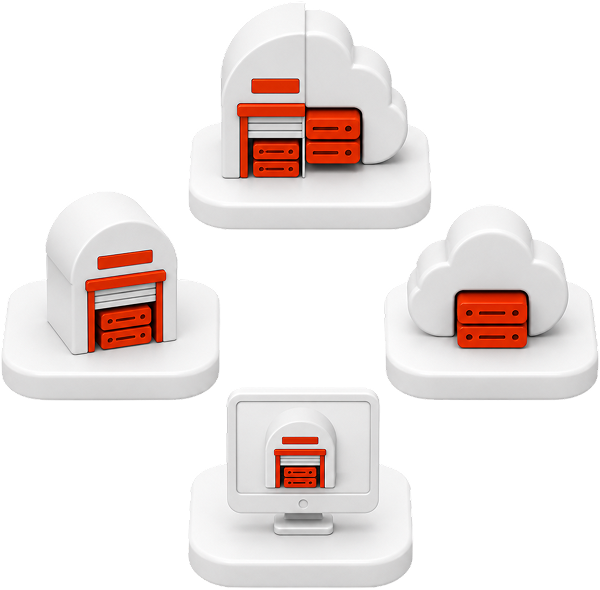
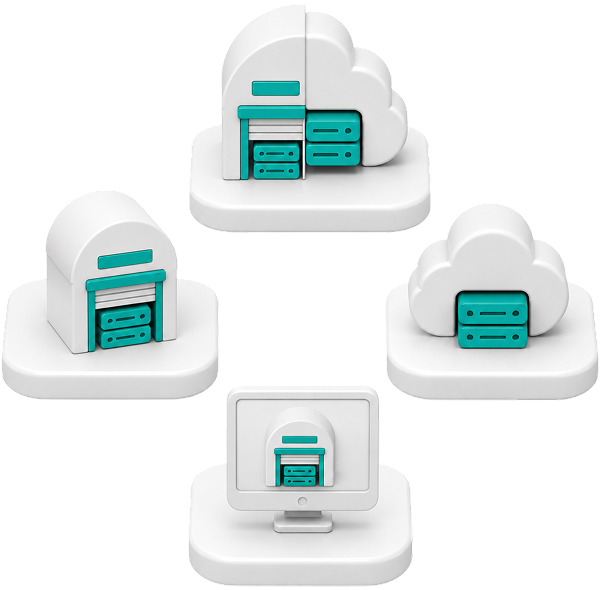
On-premises data warehouse
Built and hosted on your own servers, an on-premises warehouse gives you full control over data, security, and infrastructure. Ideal if you have strict compliance requirements or legacy systems.
02.
Cloud data warehouse
Hosted in the cloud, this option offers flexibility, scalability, and lower upfront costs. You can access and analyze data from anywhere, while handling growth without major hardware investments.
03.
Hybrid data warehouse
A hybrid setup combines on-premises and cloud systems. It lets you keep sensitive data on-site while leveraging the cloud for analytics and scalability, providing a balance of control and flexibility.
04.
Virtual data warehouse
A virtual warehouse connects multiple data sources without physically moving all the data. You get unified insights on demand, speeding up reporting and reducing storage overhead.
05.
Data mart
A data mart is a smaller, focused warehouse for a specific business line or team, data mart is your option. It simplifies reporting and analysis for departments like marketing, sales, or finance without building a full-scale warehouse.
06.
Operational data store (ODS)
ODS consolidates current operational data from various sources. It’s optimized for day-to-day reporting and short-term analysis, bridging the gap between transactional systems and a full data warehouse.
07.
Streaming data warehouse
Designed to process data as it arrives, a streaming warehouse supports immediate insights from operational systems, IoT devices, or event-driven applications. It’ll help you react quickly to changes and maintain up-to-date dashboards.
08.
Analytics-optimized data warehouse
This warehouse is tuned for high-speed analytics at scale. Using columnar storage, parallel processing, and pre-aggregated structures, it accelerates complex queries and large-scale reporting. Ideal if you have data-heavy teams that rely on fast insights.
Need help choosing a solution?
We’ll be glad to consult you
Need help choosing a solution?
We’ll be glad to consult you
Methodologies
Data warehouse development approaches
There are three main ones:
Top-down approach (Inmon)
Building a highly centralized, enterprise-wide data warehouse first. Data is normalized to eliminate redundancy. Departmental data marts are then carved out afterthe central warehouse is completed.

Bottom-up approach (Kimball)
Building smaller, independent data marts tailored to specific business units first. These local marts are subsequently connected using a “Bus Architecture” to create the overall enterprise warehouse. Utilizes dimensional modeling.

Hybrid approach (Data Vault)
The way to structure a warehouse so it’s highly scalable and audit-ready. Using a hub-and-spoke design, it captures all data in raw form and tracks changes over time. Provides flexibility for rapidly changing sources and maintaining a clear history of all data.

Methodologies
Data warehouse development approaches
There are three main ones:
Top-down approach (Inmon)
Building a highly centralized, enterprise-wide data warehouse first. Data is normalized to eliminate redundancy. Departmental data marts are then carved out afterthe central warehouse is completed.

Bottom-up approach (Kimball)
Building smaller, independent data marts tailored to specific business units first. These local marts are subsequently connected using a “Bus Architecture” to create the overall enterprise warehouse. Utilizes dimensional modeling.

Hybrid approach (Data Vault)
The way to structure a warehouse so it’s highly scalable and audit-ready. Using a hub-and-spoke design, it captures all data in raw form and tracks changes over time. Provides flexibility for rapidly changing sources and maintaining a clear history of all data.

Technologies
Our data warehouse development tools:
/
BigQuery
Snowflake
Databricks
Airflow
/
/
Redshift
Azure
dbt
AWS
GCP
/
/
Power BI
Tableau
PySpark
Apache Spark
/
WHY US
Why clients choose us


100 years of combined expertise
We know how to create solutions that deliver results.
Top 3% talent
We rigorously vet candidates for skill, experience, and communication.
Up-to-date tech stack
We keep track of the latest industry advancements, attend workshops and share knowledge with experts.
Transparent communication
We are all English-speaking professionals, aligned with your timezone.
Proven track record
We are trusted by clients in finance, healthcare, logistics and e-commerce.
WHY US
Why clients choose us

100 years of combined expertise
We know how to create solutions that deliver results.
Top 3% talent
We rigorously vet candidates for skill, experience, and communication.
Up-to-date tech stack
We keep track of the latest industry advancements, attend workshops and share knowledge with experts.
Transparent communication
We are all English-speaking professionals, aligned with your timezone.
Proven track record
We are trusted by clients in finance, healthcare, logistics and e-commerce.
CONTACT US
Unlock data potential
Leave us your details and we’ll show you what’s possible.

Mikhail Hishkialiuk
Head of Technology Partnerships

Dmitri Kuchinski
Chief Operating Officer

Ula Dzenisevich
Chief Business Development Officer
About you
About your project
FAQS
Frequently asked questions
When should we use a data warehouse?
How does a data warehouse work?
A data warehouse collects information from multiple systems, transforms and organizes it, and stores it in a central repository optimized for analytics. Users can then access trusted data through reports, dashboards, and analytical tools.
How to create a data warehouse?
Start with identifying data sources and business requirements. Then design the data model, build data pipelines, integrate source systems, test data quality, and create reporting and analytics layers.
How much does a data warehouse cost?
Costs vary based on scale, technology, and integration complexity. Cloud solutions often have lower upfront costs, while on-premises setups may require more investment in hardware and maintenance. We provide tailored estimates after understanding your needs.
Will our team be able to use it easily?
Yes. We design warehouses with your end users in mind. Dashboards, reporting tools, and data marts are structured for intuitive access, so analysts and business users can get insights without heavy technical knowledge.
What kind of data sources can you connect?
Almost anything: databases, SaaS applications, ERP systems, spreadsheets, IoT streams, and more. We ensure data flows reliably into your warehouse so you get accurate, up-to-date insights.
How do you ensure data quality and consistency?
We implement automated checks, cleansing routines, and auditing processes throughout the ETL/ELT pipelines. This ensures your warehouse data is accurate, consistent, and trustworthy for reporting and analysis.
Should we choose cloud or on-premises?
It depends on your priorities. Cloud warehouses offer flexibility, faster setup, and scalability, while on-premises solutions give you full control over infrastructure and compliance. Many organizations also opt for hybrid setups to get the best of both worlds.
Will the warehouse accomodate our business growth?
Absolutely. Whether it’s adding new data sources, handling more users, or scaling analytics workloads, we design warehouses to expand with your business.
Which tools are used for a data warehouse?
A typical solution combines a warehouse platform such as Snowflake, BigQuery, Amazon Redshift, or Azure Synapse with ETL/ELT tools like dbt, Fivetran, Airflow, or Informatica and reporting tools such as Power BI or Tableau.
What is the reporting layer of a data warehouse?
The reporting layer is the part of the data platform that business users interact with. It includes dashboards, reports, analytics applications, and BI tools that transform warehouse data into actionable insights.
What is a model in a data warehouse?
A data model defines how information is organized inside the warehouse. It describes entities, relationships, metrics, and business rules, ensuring data remains consistent and easy to analyze.
Which schema is best for a data warehouse?
The best schema depends on your requirements. Star schemas are often preferred because they simplify reporting and improve query performance. Snowflake schemas can reduce data redundancy but are usually more complex to manage.
FAQS
Frequently asked questions
When should we use a data warehouse?
A data warehouse becomes valuable when data is spread across multiple systems, reporting takes too much manual effort, or teams struggle to trust and reconcile numbers from different sources.
How does a data warehouse work?
A data warehouse collects information from multiple systems, transforms and organizes it, and stores it in a central repository optimized for analytics. Users can then access trusted data through reports, dashboards, and analytical tools.
How to create a data warehouse?
Start with identifying data sources and business requirements. Then design the data model, build data pipelines, integrate source systems, test data quality, and create reporting and analytics layers.
How much does a data warehouse cost?
Costs vary based on scale, technology, and integration complexity. Cloud solutions often have lower upfront costs, while on-premises setups may require more investment in hardware and maintenance. We provide tailored estimates after understanding your needs.
Will our team be able to use it easily?
Yes. We design warehouses with your end users in mind. Dashboards, reporting tools, and data marts are structured for intuitive access, so analysts and business users can get insights without heavy technical knowledge.
What kind of data sources can you connect?
Almost anything: databases, SaaS applications, ERP systems, spreadsheets, IoT streams, and more. We ensure data flows reliably into your warehouse so you get accurate, up-to-date insights.
How do you ensure data quality and consistency?
We implement automated checks, cleansing routines, and auditing processes throughout the ETL/ELT pipelines. This ensures your warehouse data is accurate, consistent, and trustworthy for reporting and analysis.
Should we choose cloud or on-premises?
It depends on your priorities. Cloud warehouses offer flexibility, faster setup, and scalability, while on-premises solutions give you full control over infrastructure and compliance. Many organizations also opt for hybrid setups to get the best of both worlds.
Will the warehouse accomodate our business growth?
Absolutely. Whether it’s adding new data sources, handling more users, or scaling analytics workloads, we design warehouses to expand with your business.
Which tools are used for a data warehouse?
A typical solution combines a warehouse platform such as Snowflake, BigQuery, Amazon Redshift, or Azure Synapse with ETL/ELT tools like dbt, Fivetran, Airflow, or Informatica and reporting tools such as Power BI or Tableau.
What is the reporting layer of a data warehouse?
The reporting layer is the part of the data platform that business users interact with. It includes dashboards, reports, analytics applications, and BI tools that transform warehouse data into actionable insights.
What is a model in a data warehouse?
A data model defines how information is organized inside the warehouse. It describes entities, relationships, metrics, and business rules, ensuring data remains consistent and easy to analyze.
Which schema is best for a data warehouse?
The best schema depends on your requirements. Star schemas are often preferred because they simplify reporting and improve query performance. Snowflake schemas can reduce data redundancy but are usually more complex to manage.